On this day in military history…
The German counteroffensive at Cambrai, beginning in force on 27 November 1917, marked a dramatic reversal of fortune after the initial British penetration of the Hindenburg Line. While the early stages of the battle are often remembered for the unprecedented mass use of tanks and the surprise British advance, the later phase belongs unmistakably to the German army, which recovered swiftly from the shock and launched one of its most successful counterattacks of the war. Overall responsibility for German operations in this sector fell to General Georg von der Marwitz, commander of the German Second Army, who oversaw the rapid regrouping and counter-blow that began restoring the line within days.
The Germans had been stunned by the collapse of parts of the Hindenburg defences on 20 November, but by the 27th they had reorganised their shattered formations, reinforced threatened sectors, and put into practice the infiltration tactics refined earlier that year. Stormtrooper units moved swiftly and independently, using the terrain—sunken roads, shallow valleys, early-morning mist—to mask their approach. Instead of launching broad, rigid assaults, they probed for weak points, bypassed strongholds, and aimed to isolate pockets of British resistance. This flexible method proved ideally suited to regaining ground before the British could consolidate.
On the southern flank near Gouzeaucourt the counterattack achieved some of its most dramatic results. Here British forces had advanced quickly but were stretched thin, with limited reserves and faltering tank support. German troops drove into these exposed positions, retaking villages, capturing guns and supply dumps, and inflicting heavy casualties. Their recapture of territory shocked British commanders, who suddenly found themselves fighting desperately merely to prevent a rout. Although some ground changed hands repeatedly over the next days, the overall trajectory was clear: German units were clawing back the battlefield piece by piece.
The moment of greatest success came on 30 November, when the Germans launched a major coordinated assault that overwhelmed several British divisions. Spearheaded by stormtroopers and backed by highly concentrated artillery fire, the attack tore open the British line in places and created temporary crises along the whole front. Marwitz’s forces advanced several miles in some sectors—an unusual achievement in late-war trench fighting—and seized thousands of prisoners. The British countered as best they could, sometimes managing local recoveries such as the spirited defence and partial recapture efforts by the 29th Division, but the Germans had clearly regained the initiative.
Despite these achievements, the German army could not convert the regained ground into a decisive victory. Exhaustion, mounting casualties, and the limits of their own supply lines prevented a deeper breakthrough. By early December both armies were too worn down to continue major operations, and the front settled once more into stalemate. Still, the Germans had recovered most of the territory they had lost in the initial British assault, a remarkable feat given the scale of the earlier breach.
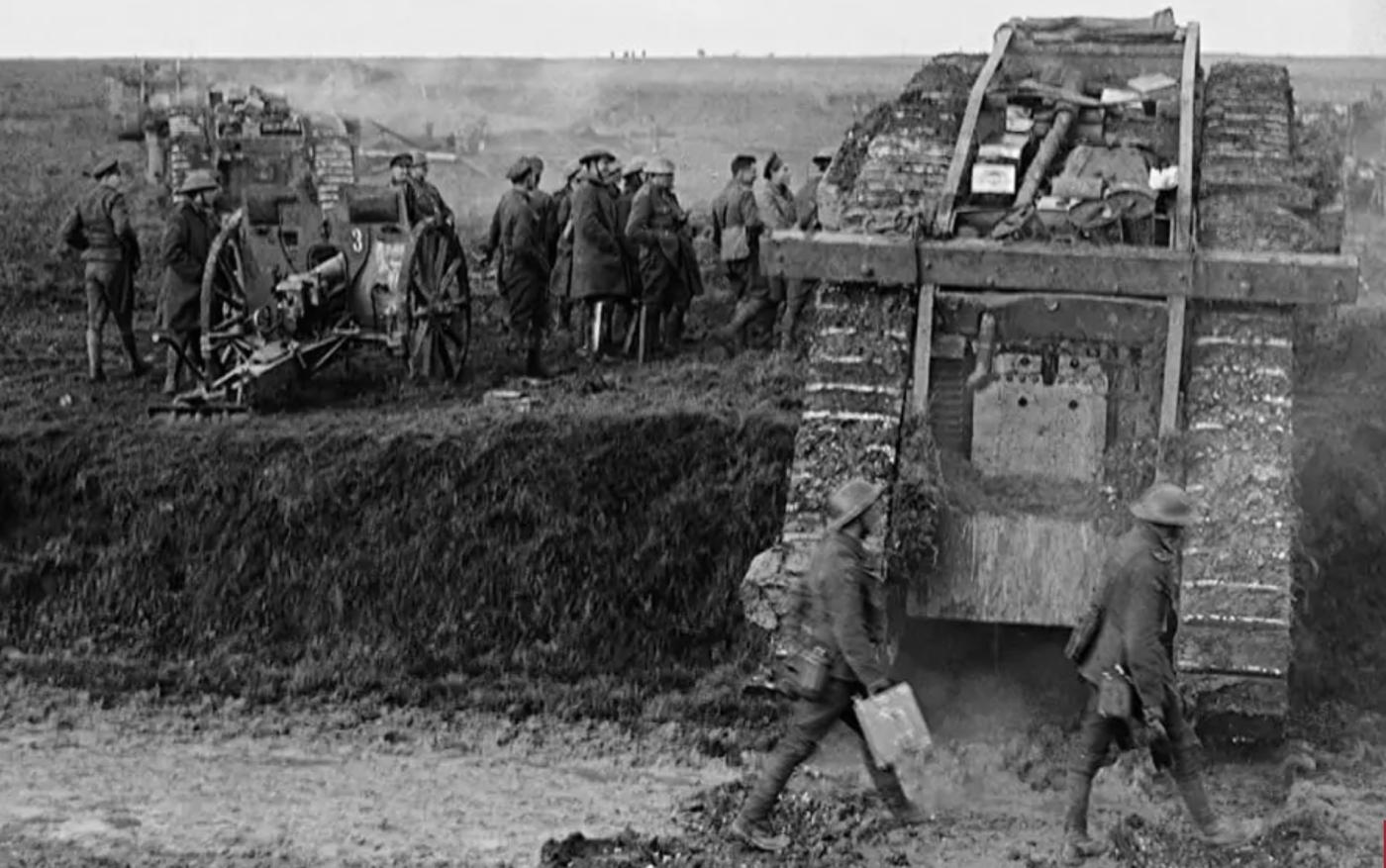
Losses on both sides during this phase were significant. German casualties across the whole battle reached just over 40,000, with many falling during the fierce fighting to retake villages and strongpoints. British losses were slightly higher, around 44,000, driven in part by the vulnerability of infantry in exposed positions after the initial advance and by the destruction of numerous immobilised tanks, which became targets for German artillery. German accounts describe the psychological impact of facing tanks in the early days, but once the British momentum stalled, artillery crews regained confidence and destroyed many of the stranded machines methodically.
Interesting episodes from this period include the rapid and almost stealthy German infiltration around Gouzeaucourt, which some British soldiers initially mistook for friendly troops due to the speed and audacity of the manoeuvre. Another is the notable German ability to convert chaos into coordinated action: officers and NCOs improvised ad-hoc battle groups that moved independently toward objectives without waiting for detailed orders, a key reason for the success of the counterattack. The sudden disappearance and later recovery of the church bell known as Anna—taken by German troops and subsequently reclaimed by the British Guards Division—added a curious cultural footnote to the otherwise grim struggle.
In the final assessment, the late-November phase of the battle of Cambrai stands as a testament to the German army’s resilience, adaptability, and capacity for rapid counteraction. While the British had demonstrated that the Hindenburg Line could be shattered, the Germans proved with equal clarity that they could restore it under immense pressure. Their counteroffensive, directed by General von der Marwitz, remains one of the most effective defensive recoveries of the First World War, shaping the outcome of the battle and tempering the optimism generated by the British breakthrough.