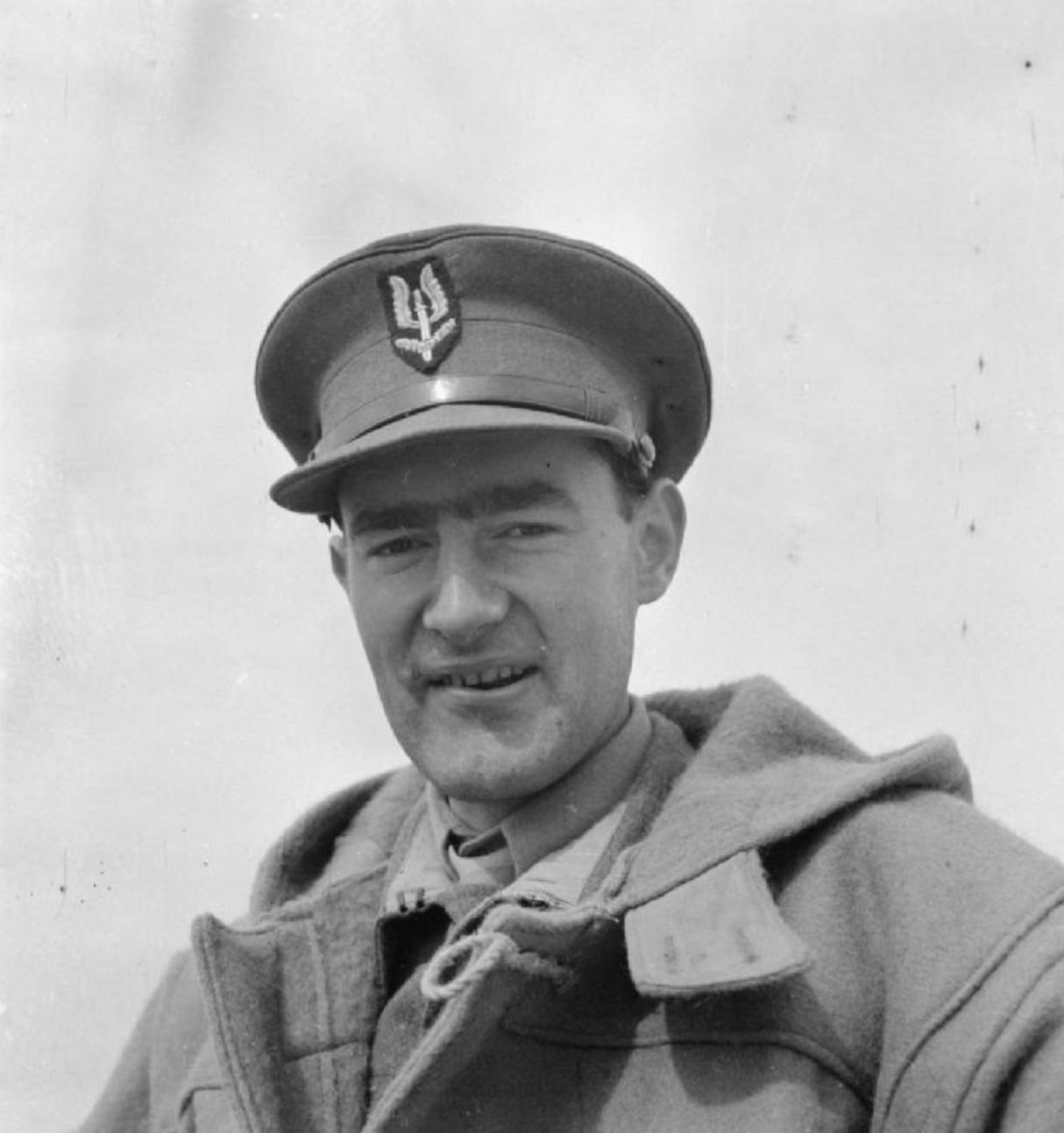
David Sterling
David Stirling was born on 15 November 1915 into a wealthy Scottish family with strong military traditions. He grew up at Keir House near Bridge of Allan in Stirlingshire, an upbringing that encouraged independence, physical endurance and confidence. From an early age he showed a tendency to challenge authority and convention, traits that would later define his military career. He was educated at Ampleforth College and then Trinity College, Cambridge, where he studied archaeology. Although he was not noted as a scholar, he excelled in adventurous activities such as mountaineering, developing resilience, leadership and a willingness to accept risk.
Stirling joined the Scots Guards in 1937 and was commissioned as an officer. When the Second World War began, he was eager for active service and was posted to the Middle East. His early service exposed him to desert warfare and convinced him that traditional military methods were often slow, predictable and wasteful of manpower. In 1941 he volunteered for a new airborne force and was injured during parachute training, suffering a serious spinal injury. While recovering in hospital in Cairo, he began to formulate an unorthodox idea for conducting war behind enemy lines.
Stirling believed that small, highly trained units operating independently could inflict significant damage by striking key targets far behind the front, particularly enemy airfields. Destroying aircraft on the ground, he argued, was more efficient than fighting them in the air. His ideas ran against established thinking, but Stirling bypassed conventional command structures and directly presented his proposal to senior officers in Middle East Command. His persistence paid off, and in July 1941 he was authorised to form a small experimental unit. To mislead the enemy, it was given the deliberately deceptive title L Detachment, Special Air Service Brigade, implying a much larger formation.
Promoted to captain, he selected volunteers who were physically tough, adaptable and capable of independent action. Early operations were hazardous, and the first mission, a parachute insertion during severe weather, ended in heavy losses. Stirling quickly adapted his tactics, working closely with the Long Range Desert Group to insert his men by vehicle rather than parachute. This shift proved decisive. Operating across vast stretches of the North African desert, the SAS infiltrated Axis-held territory and launched surprise night attacks on airfields, fuel dumps and supply depots. Using explosives and stealth, they destroyed large numbers of German and Italian aircraft, forcing the Axis to divert troops and resources to rear-area security.
Stirling led from the front and encouraged initiative, deception and improvisation. His leadership style was informal but demanding, and he placed great trust in his men. As the SAS expanded and its success grew, he was promoted to lieutenant colonel. His unit’s achievements in North Africa played a significant role in establishing the value of special forces and unconventional warfare. However, Stirling’s habit of operating close to enemy lines carried risks. In January 1943, during operations in Tunisia, he was captured by German forces after his vehicle broke down during a reconnaissance mission.
Considered a dangerous and persistent escape risk, Stirling spent the remainder of the war as a prisoner of war. He was moved between several camps and eventually held at Colditz Castle, which housed Allied officers known for escape attempts. Despite repeated efforts, he did not succeed in escaping and remained in captivity until the end of the war in Europe in 1945. Although he was absent from the later wartime campaigns of the SAS in Europe, his vision and early leadership had already secured the unit’s reputation and shaped its future.
After the war, David chose not to pursue a conventional military career. Instead, he became involved in a range of ventures, often connected to defence and security. In the 1960s he played a key role in founding Watchguard International, a private military and security organisation that provided training and advice to governments, particularly in the Middle East and Africa. These activities were controversial and reflected Stirling’s continued belief in elite forces and unconventional approaches to conflict.
In his later years, David remained a formidable and sometimes divisive figure, admired for his originality and influence, but criticised for his political views and private military activities. He lived long enough to see the SAS become one of the most respected special forces units in the world, a lasting testament to the ideas he first conceived in a Cairo hospital ward. David Stirling died on 4 November 1990, just short of his seventy-fifth birthday. He was buried in the family plot at Keir Cemetery near Bridge of Allan in Stirlingshire, close to Keir House where he had grown up, marking the final resting place of the man who transformed modern special forces warfare.