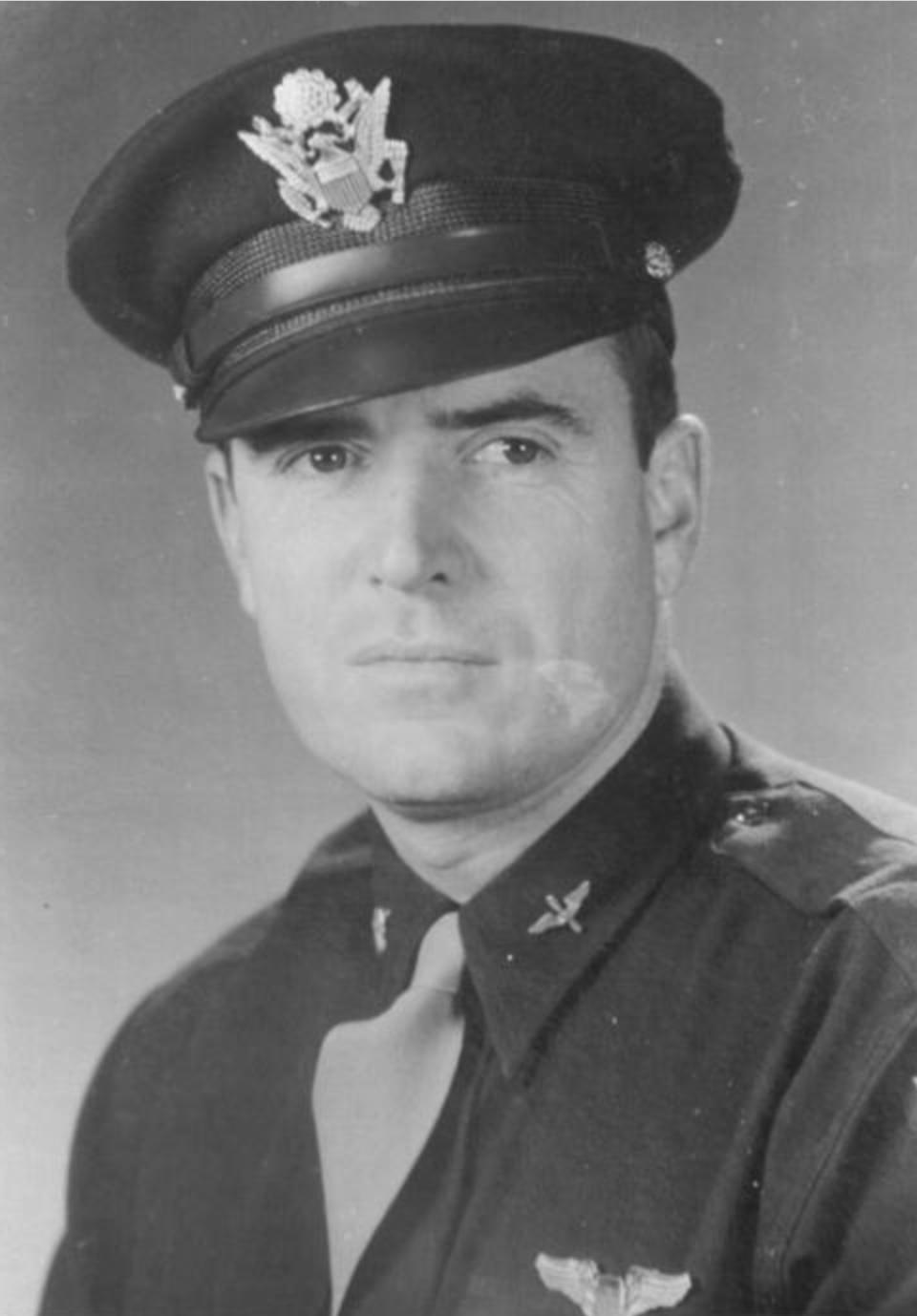
Colonel John A Bennet
John A. Bennet belonged to that generation of American officers whose adulthood was shaped almost entirely by war. Born in the years between the world wars, he grew up in a country still finding its confidence after the First World War and the long shadow of the Depression. Aviation fascinated him from an early age, not in a romantic sense at first, but as a technical challenge. He was known as a methodical boy, more interested in how things worked than in how they looked, and this practical curiosity would shape his entire military career.
Bennet entered the Army Air Corps in the late 1930s, initially training as a technical officer rather than a pilot. He learned engines, airframes, fuel systems, and the unglamorous realities of keeping aircraft operational under pressure. Those early years gave him an understanding that many future commanders lacked: he knew what it meant to keep aircraft flying in poor weather, with limited parts, and under constant strain. When the United States entered the war, his competence and calm under pressure accelerated his promotion, and he soon transitioned into flight training, earning his wings later than many of his peers but with a deeper appreciation of the machine he commanded.
By the time he was assigned to a bomber group overseas, Bennet had already earned a reputation as an officer who listened carefully and spoke sparingly. He flew combat missions alongside his crews rather than directing them solely from headquarters, and he paid close attention to casualty reports. The early bombing campaigns shocked him. Loss rates were appalling, aircraft were being lost faster than they could be replaced, and crews were being pushed through missions with little margin for error. Where some commanders accepted these losses as inevitable, Bennet questioned them openly.
When he was promoted to colonel and given command of a bomber wing, he inherited a unit that was technically capable but exhausted and demoralized. Almost immediately, he began to challenge prevailing doctrine. He pushed for tighter formation discipline not for appearance, but for mutual protection. He encouraged flexible routing rather than rigid adherence to pre-planned tracks when conditions changed. He supported longer preparation times and more thorough briefings, even when higher command pressed for speed. Most controversially, he insisted that mission success could not be measured solely by bombs dropped, but by crews returned alive and able to fly again.
These changes were not always welcomed. Some senior officers saw his approach as overly cautious, even bordering on insubordination. Yet results gradually spoke for themselves. Loss rates declined, bombing accuracy improved, and morale within his command rose noticeably. Crews trusted him because he flew the same risks they did and because he was willing to argue their case up the chain of command. By the latter stages of the war, his unit was regarded as one of the most reliable in the theater, not because it avoided danger, but because it approached danger intelligently.
After the war, Bennet chose not to pursue high-profile political or strategic roles. He remained in the service for a short period, helping to shape postwar training doctrine, particularly in the areas of crew coordination and operational planning. Eventually, he retired quietly, returning to civilian life with little interest in public recognition. He worked in aviation consulting and later in education, where he taught young engineers and pilots the lessons he believed mattered most: preparation, responsibility, and the value of human life in an age of machines.
In later years, those who sought him out found a man uncomfortable with praise but deeply reflective about the cost of war. He spoke rarely of heroism and often of mistakes—his own and others’—and of the men who did not come home. To him, leadership was not about daring or glory, but about reducing unnecessary loss and giving others the best possible chance to survive their duty. That philosophy, forged in the pressure of wartime command, became the quiet legacy of Colonel John A. Bennet.