Chevrolet desert raiding truck
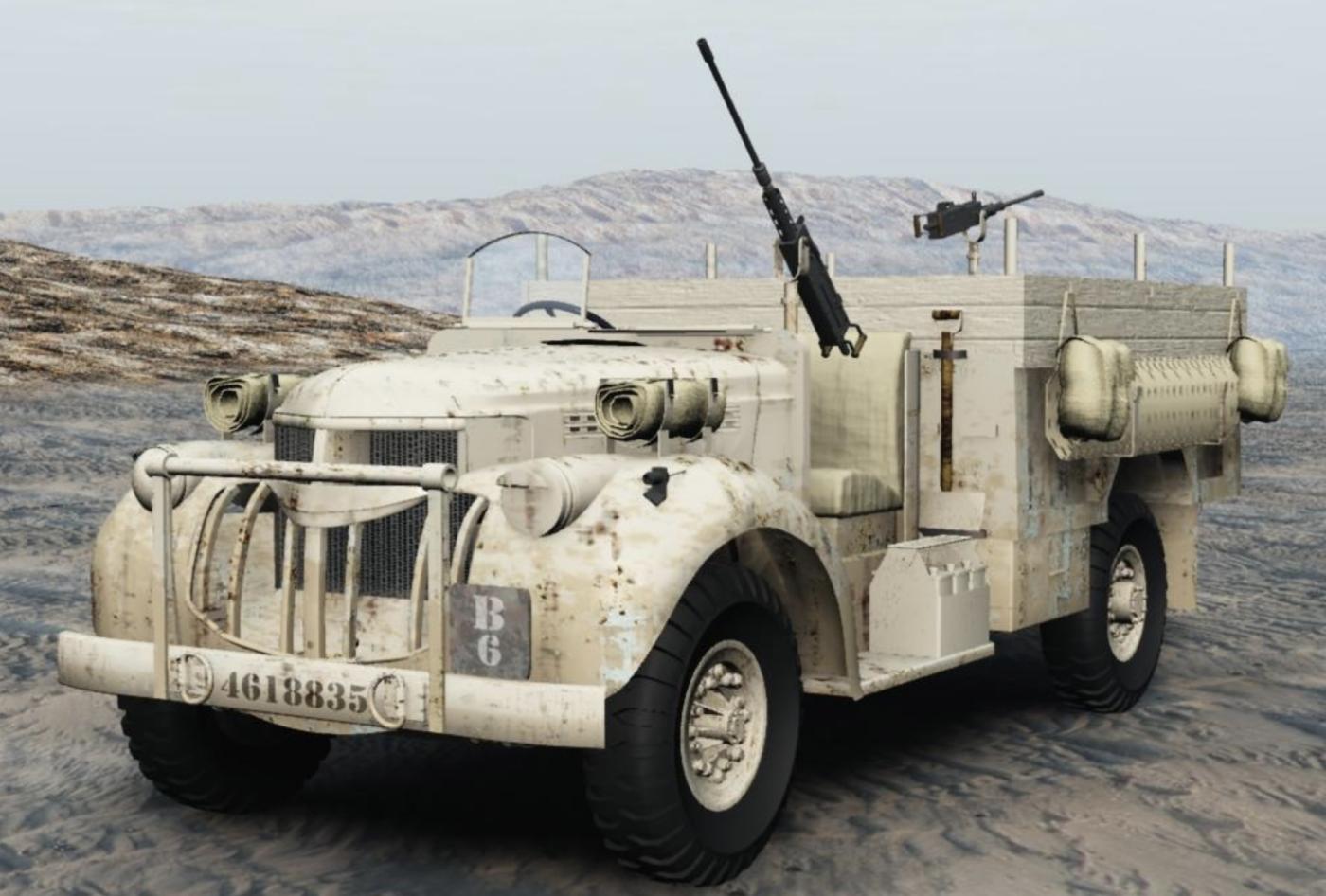
The Chevy 30-cwt is one of those vehicles that looks almost too spindly to have shaped a campaign, yet in the North African desert it became the trademark mount of the Long Range Desert Group and a quiet masterpiece of improvisation.
The basic truck was a Canadian-built General Motors product, sold under the Chevrolet name as part of the Commonwealth’s standardised wartime truck programme. The LRDG used the early long-wheelbase Chevrolet 30-cwt models and, later, the specially ordered Chevrolet 1533x2 1½-ton 4x2, which was essentially a civilian pattern chassis adapted for military use. These were mass-produced in Canada, but only a small number were diverted for the LRDG’s highly specialised needs.
Straight out of the factory, the 30-cwt Chevrolet was a simple, rear-wheel-drive truck with a payload of about 30 hundredweight – roughly 3,000 lb or 1.5 tons. It carried a straightforward and very reliable Chevrolet straight-six petrol engine of around 3.5 to 3.7 litres, a side-valve design delivering roughly 80 to 85 horsepower depending on the exact model year. This modest output was perfectly adequate for the LRDG’s preference for reliability over speed, and the engine’s tolerance of poor fuel and easy maintainability made it ideal for patrols hundreds of miles from any supply line.
What turned the Chevrolet from an ordinary utility truck into the desert raider’s hallmark was the modification process. Some strengthening and minor changes were done before the trucks left North America, but the true transformation happened in Egypt and in the LRDG’s own makeshift workshops. Anything not essential was stripped away: cab roofs, doors and windscreens were removed, the cargo body was cut down to a low open platform, and all unnecessary weight was discarded. Over the rough wadis and soft sand of the deep desert, every excess pound mattered. Local workshops reinforced the suspension again, added oversized desert tyres, extra fuel tanks, water carriers, sand mats, and makeshift stowage bins made from whatever timber or scrap metal was available.
A typical LRDG Chevrolet carried a crew of three to five men depending on the patrol’s composition and purpose. The load often seemed to exceed the truck’s nominal capacity: fuel for a thousand-mile round trip, 50-gallon drums lashed into the body, boxes of .303 ammunition, personal kit, trade goods for bartering with desert tribes, spare parts, jacks, tools, rations, and water. The trucks were deliberately overloaded by normal standards because self-sufficiency was the entire point; once a patrol vanished beyond the wire, it was expected to endure for weeks without resupply.
Weapons varied from patrol to patrol, but a common fit included a Vickers K gun mounted on a central pintle or twin Vickers K guns for high firepower at short notice. Many trucks also carried a Lewis gun or a Bren for general use, and some patrols fitted a .50-calibre Browning for long-range punch. Rifles, grenades, and sometimes captured Italian or German equipment were tucked wherever space allowed. The open layout made it easy to fire in virtually any direction, which was crucial during sudden skirmishes or hit-and-run raids.
In the featureless immensity of the Western Desert, the Chevrolet 30-cwt’s virtue was not glamour but endurance. It lacked four-wheel drive yet somehow kept going across the soft sand thanks to its light weight, long wheelbase, and skilled drivers who knew how to read the desert’s surface like a map. The truck became more than a vehicle; it was the backbone of the LRDG’s long-range reconnaissance, supply, and raiding missions.