Canadian Para WW2 Training
During the early years of the Second World War, Canada did not yet possess a fully developed airborne training establishment of its own, and the rapid formation of an elite parachute force demanded both expertise and facilities that only a few places in the world could offer. For that reason, when the Canadian Army authorized the creation of a parachute battalion in 1942, its first soldiers selected for airborne duties were sent to the United States. Their destination was Fort Benning, Georgia, home of the U.S. Army Airborne School, which at that time was one of the most advanced and experienced parachute training centres anywhere.
Fort Benning offered something Canada did not yet have: a comprehensive, refined program built from several years of American airborne experimentation and combat feedback. The Canadians entered a course that was physically punishing and mentally demanding, designed to weed out anyone who could not withstand the strain of jumping from aircraft into combat. The training typically lasted about four weeks, though some Canadians spent additional time there depending on scheduling and their own performance. The course included the familiar progression that U.S. paratroopers faced: ground training and physical conditioning, tower training using the famous 250-foot towers, mock door drills, and finally live jumps from aircraft. Most Canadians completed five qualifying jumps, matching the U.S. standard.
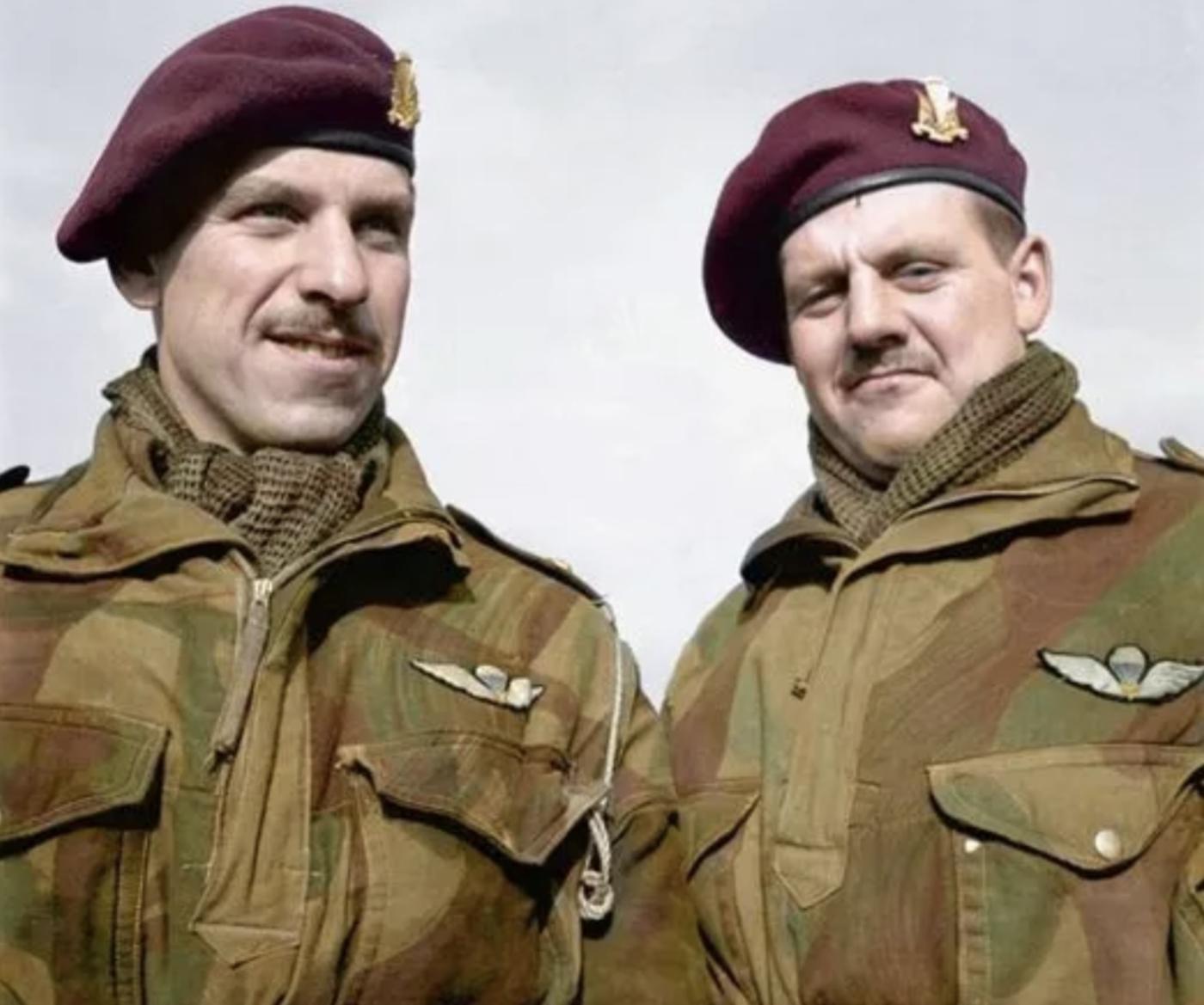
In total, roughly three hundred Canadian soldiers passed through Fort Benning for parachute qualification in 1942 and early 1943. They would later form the nucleus of what became the 1st Canadian Parachute Battalion. Although they trained under U.S. instruction, the Canadians did not receive U.S. jump wings. Instead, upon return to Canada they were awarded the newly designed Canadian Parachute Badge, which featured an open parachute flanked by stylized wings and a maple leaf at the centre. This badge became one of the most recognized symbols of Canadian elite forces during the war. For a brief period, however, some Canadians retained permission to wear U.S. wings on their work uniforms until administrative details were settled.
Once their time at Fort Benning was complete, these new Canadian parachutists returned north to help build a Canadian-run training system at Camp Shilo in Manitoba. With the cadre trained, Canada established its own Parachute Training Centre, eliminating the need to rely on American facilities. From Shilo, graduates went on to join their battalion in the United Kingdom, where they spent many months refining their airborne skills in preparation for active operations. Many of those originally trained at Fort Benning would eventually take part in major actions such as the D-Day landings, the Battle of the Bulge, and the crossing of the Rhine.
A number of interesting stories emerged from the Canadians’ time at Fort Benning. They often impressed the American instructors with their ruggedness, especially those drawn from Canadian regiments known for demanding fieldwork. Cultural differences produced memorable moments as well; Canadians joked about the intense Georgia heat, while Americans teased them about their unfamiliarity with Southern food and accents. Some U.S. instructors later commented that Canadian volunteers were among the most determined foreign trainees they had encountered, arriving with a sense that they were helping build something entirely new for their own country.
Though only a few hundred soldiers passed through Fort Benning, their influence was far larger. They returned to Canada as the nation’s first qualified airborne soldiers, carried the newly minted badge that would define Canadian paratroopers for decades, and helped create a domestic training system that prepared thousands more. Their experience in Georgia formed the foundation of Canadian airborne doctrine and left a lasting mark on Canada’s military history.