Cameronians Scottish Rifle Regiment
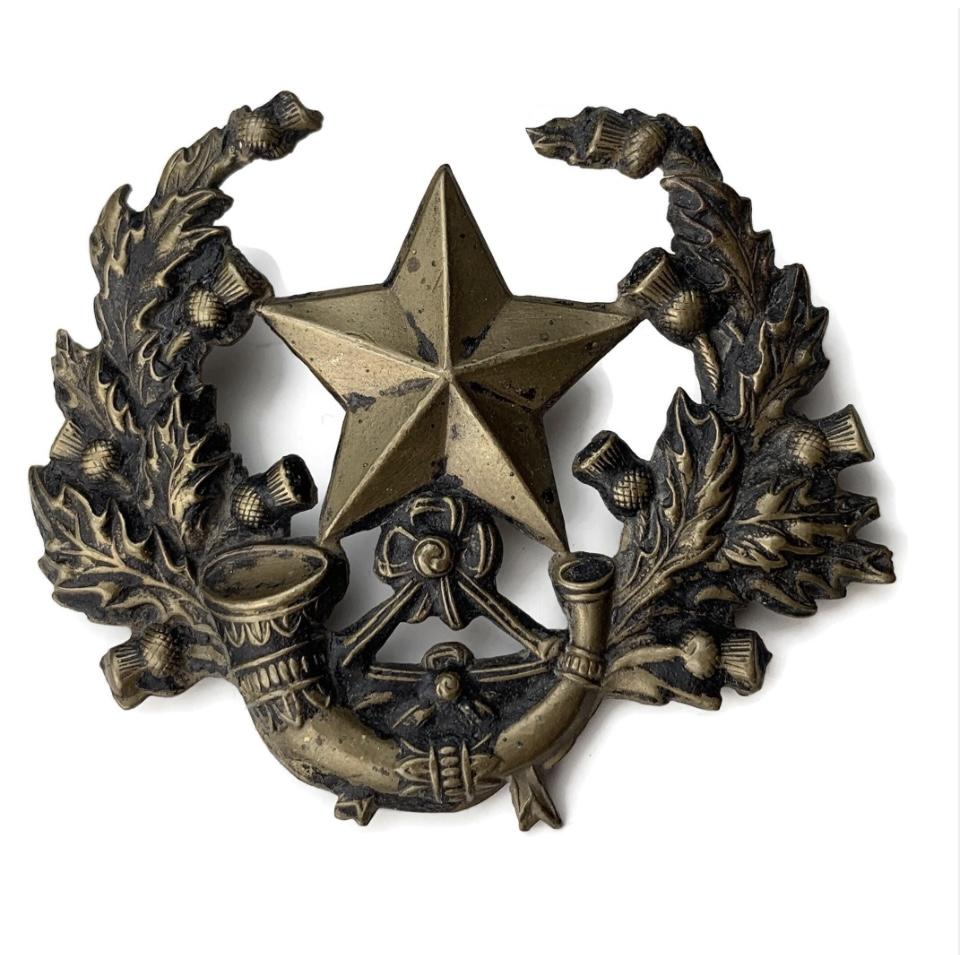
The Cameronians, officially known as The Cameronians (Scottish Rifles), were a uniquely Scottish infantry regiment whose origins combined religious conviction, Lowland Scottish identity and a long military tradition. Their lineage began in 1689 when the iconic 26th Regiment of Foot was raised from staunch Covenanters—strict Presbyterian followers who agreed to fight for King William III only if their right to worship freely was protected. At the same time, the 90th Perthshire Light Infantry was raised in 1794 by Thomas Graham of Balgowan. These two regiments eventually amalgamated in 1881 under the Childers Reforms to form The Cameronians (Scottish Rifles), the only rifle regiment of the Scottish infantry.
Their primary depots and peacetime bases shifted over the centuries, but Hamilton in Lanarkshire became the main spiritual and administrative home of the regiment. They were also associated with barracks in Perth, Glasgow and later the Scottish Borders. Their battalions often rotated through postings across the British Empire, with long stays in India, South Africa, Mauritius, Hong Kong and Ireland. Regimental tradition required every soldier to accept a Bible upon enlistment, a remnant of their Covenanter roots that remained until the regiment disbanded.
Throughout their long existence they were engaged in almost every major conflict involving British arms. In the 18th century the original 26th Foot served in the War of the Spanish Succession and later in the Seven Years’ War. During the Napoleonic period both antecedent regiments saw hard fighting, the 26th on the Portuguese and Spanish fronts and the 90th in the Caribbean, South Africa and during the Egyptian campaign. Later the Cameronians fought in frontier wars in India, the Opium Wars in China and the Crimean War, adding to an already imposing list of honours.
During the First World War, the regiment expanded dramatically, forming multiple active battalions. They served on the Western Front at battles such as Loos, the Somme, Arras, Ypres and Cambrai, while other battalions fought in Salonika and the Middle East. Like many Scottish units, they endured heavy losses but gained an enduring reputation for grim determination. Their battle honours of 1914–18 include Ypres, Loos, Somme 1916–18, Arras 1917, Passchendaele, Cambrai and Pursuit to Mons.
In the Second World War, the Cameronians again served across multiple theatres. The 1st Battalion fought in France and Belgium in 1940, later moving to India and then into the Burma campaign. The 2nd Battalion served in North Africa, Sicily and Italy. Additional Territorial battalions saw service in Europe during and after D-Day. Their wartime battle honours include Dunkirk, North-West Europe 1944–45, North Africa, El Alamein, Sicily, Italy, Burma and Kohima. One notable wartime commander was Major General Douglas Wimberley, who led the 51st (Highland) Division in North Africa with several Cameronians battalions under command; he was known as “Tartan Tam” for his fierce defence of Scottish traditions and his uncompromising leadership style. Battalion strength varied, but a typical Cameronians rifle battalion in the Second World War numbered around 800 to 900 men, depending on casualties and reinforcement cycles.
The regiment maintained a unique religious tradition: every year on the anniversary of its raising, the battalion would parade and hold an outdoor service, then symbolically post armed pickets around the congregation—a reminder of the Covenanters who had once worshipped in secret on Scottish hillsides while armed guards kept watch. This ceremony continued until the final years of the regiment.
After the war, the Cameronians served in Palestine, the Suez Canal Zone, Malaya during the Emergency and Borneo during the Indonesian Confrontation. They were one of the last British regiments to carry out active jungle operations. However, the restructuring of the British Army during the 1960s forced difficult decisions. Rather than amalgamate with another unit, the officers and soldiers voted to disband, preserving their identity on their own terms. On 14 May 1968, the regiment was officially stood down in a final ceremony at Douglas, Lanarkshire, ending nearly 280 years of service.
Their list of battle honours is long and distinguished. Among the most notable are Blenheim, Ramillies, Louisburg, Havannah, Seringapatam, Talavera, Corunna, Waterloo, Sevastopol, South Africa 1879, Relief of Ladysmith, Loos, Somme, Arras, Ypres, Cambrai, Dunkirk, El Alamein, Sicily, Burma and North-West Europe 1944–45. These honours reflect both the breadth and continuity of the regiment’s service across continents and centuries.
Even after disbandment, the Cameronians remain deeply woven into Scotland’s military heritage. Their museum, archives and regimental collections preserve the stories of a regiment shaped by faith, discipline and an unbroken sense of identity. Their legacy is that of a uniquely Scottish formation whose character was forged on covenanting hillsides, tested across the empire and remembered with pride long after the regiment itself chose to march into history.