Bronco OV-10
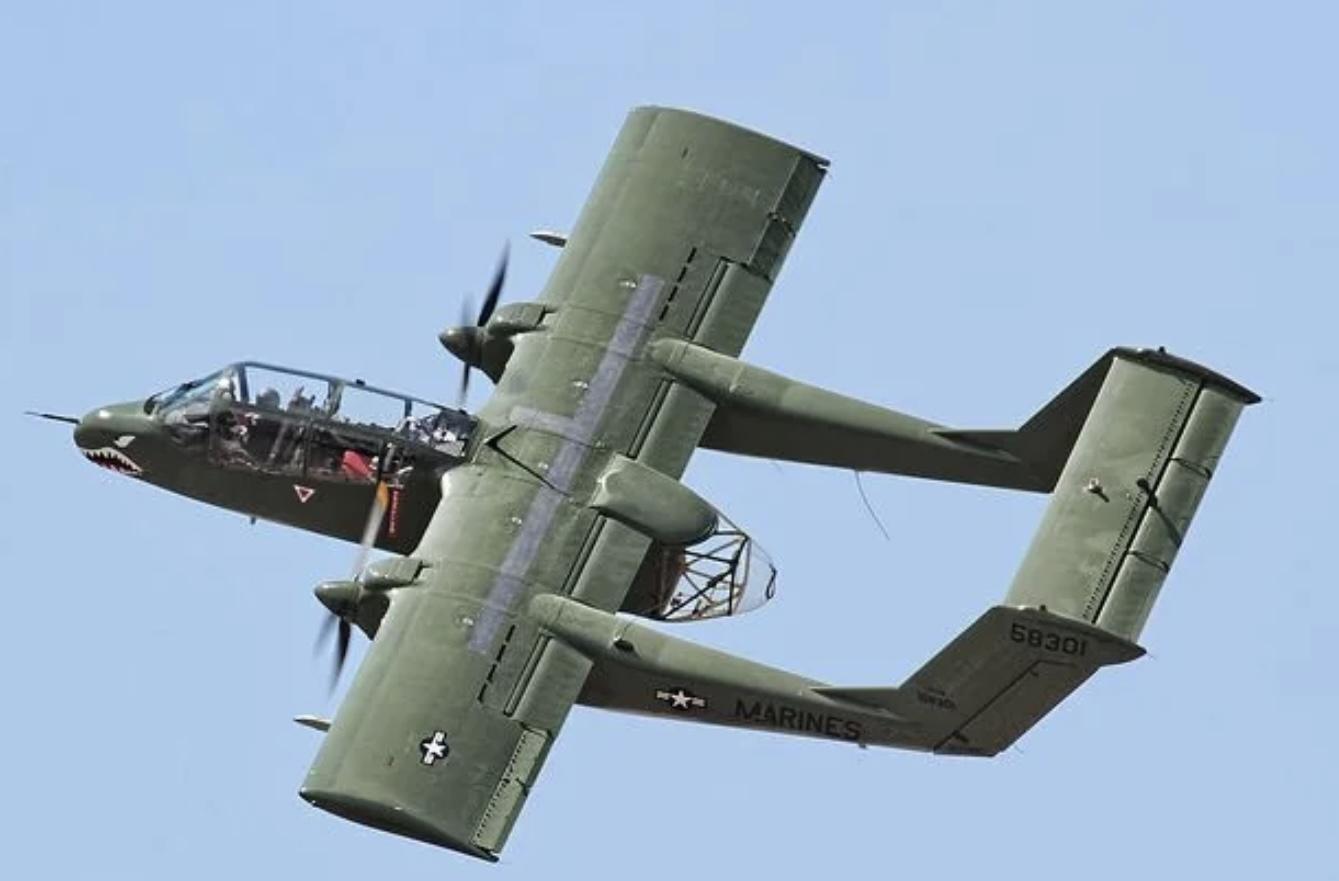
The North American Rockwell OV-10 Bronco was one of the most recognizable aircraft of the Vietnam War. With its twin tail booms, boxy fuselage and large glass canopy, it looked unlike anything else in the sky. It was built for a very specific mission: to fly low, stay over the battlefield for hours, spot enemy movement, and deliver quick, accurate fire to support troops on the ground.
The story of the Bronco began in the early 1960s with two Marine aviators, Colonel K. P. Rice and Bill Beckett, who believed the military needed a rugged, simple aircraft tailored for counter-insurgency and forward air control. Their idea was refined by North American Aviation, which developed the NA-300 design. The company later became North American Rockwell, the manufacturer that brought the OV-10 into production. The first prototype flew in 1965, and by 1969 the Bronco was in combat over Vietnam.
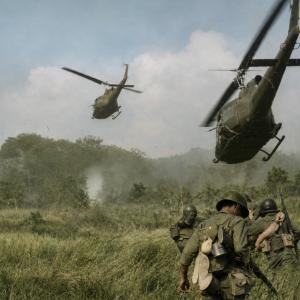
In Vietnam, the OV-10 was used by the Air Force, Marine Corps and Navy. Its main role was forward air control and armed reconnaissance. Broncos would roam low over the jungle, riverbanks and rice paddies, searching for enemy activity. When they found it, they could mark the target with smoke rockets, direct attack aircraft, guide artillery or gunships, or engage the enemy themselves. The aircraft often worked directly with infantry and special operations teams on the ground, acting as their eyes in the sky. The US Navy’s VAL-4 “Black Ponies” used the OV-10 heavily in the Mekong Delta, supporting riverine units and SEAL teams with accurate fire where fast jets were too quick or too heavy.
The Bronco was powered by two Garrett-AiResearch T76 turboprop engines, each producing just over 1,000 horsepower. These efficient engines gave it good endurance, quick throttle response and the ability to loiter at slow speeds for long periods—one of its most valuable traits. The aircraft’s layout placed the crew in tandem under a wide greenhouse canopy that offered superb visibility. Both seats had ejection systems, and behind them was a small cargo bay that could carry troops, stretchers, supplies or equipment. This versatility made the Bronco useful for much more than combat.
Short takeoff and landing capability was another hallmark of the OV-10. It needed only a short strip—often around a thousand feet or less—to get airborne. Broncos frequently operated from rough dirt runways, roads, small forward bases and even from ships without catapults. This meant they could stay close to the troops who needed them.
The aircraft’s armament reflected its flexible mission. It carried four 7.62 mm M60C machine guns in small sponsons on the fuselage and had seven hardpoints for external stores. Typical loads included 2.75-inch rocket pods, heavier 5-inch Zuni rockets, 250- and 500-pound bombs, flares, smoke rockets and, later, advanced night-observation equipment. Later versions such as the OV-10D added a turreted 20 mm cannon and infrared sensors for night operations.
A standard crew consisted of a pilot in front and an observer or forward air controller in the rear seat. The second crew member handled radios, navigation, target spotting and coordination with ground forces—a vital job during complex firefights.
A total of about 360 Broncos were produced, serving not only the United States but also countries such as Thailand, Indonesia, Venezuela, the Philippines, Germany and Colombia. In Vietnam, the aircraft earned a strong reputation among troops because it could stay overhead for three hours or more on internal fuel and up to five hours with external tanks. That endurance allowed it to remain on station long after faster jets had to depart for fuel.
Despite its strengths, the OV-10 wasn’t perfect. It could feel underpowered when heavily loaded, especially in hot or mountainous regions, and pilots had to manage energy carefully. Even so, many crews loved the aircraft for its maneuverability, ruggedness and forgiving nature.
After the Vietnam War, the Bronco continued to serve for decades in roles such as border patrol, drug interdiction and even wildfire control, where its visibility and handling made it ideal for directing firefighting aircraft.
In the end, the OV-10 Bronco became one of the most respected workhorses of low-intensity warfare—a tough, dependable aircraft that could fly from almost anywhere, stay aloft for hours, support troops with precision, and take punishment while delivering the kind of help soldiers on the ground never forgot.