British Desert Combat Boot
The British desert boot used during the First Gulf War was not a sudden invention created in response to the conflict, but the outcome of decades of experience and repeated recognition that standard British combat footwear was unsuited to extreme heat. When the United Kingdom committed forces to the Gulf in 1990 under Operation Granby, most soldiers were still equipped with black leather boots designed for temperate European conditions. These retained heat, cracked quickly in arid climates, and demanded constant polishing, all of which became serious liabilities in the Saudi and Kuwaiti deserts.
Responsibility for developing a suitable alternative lay with the Ministry of Defence’s clothing research and procurement system rather than with an individual designer. The aim was to produce a boot that would survive high temperatures, reduce heat stress, and require minimal maintenance, while still feeling familiar to soldiers accustomed to traditional British footwear. Rather than experimenting with radical new materials, the designers chose proven solutions adapted to desert conditions.
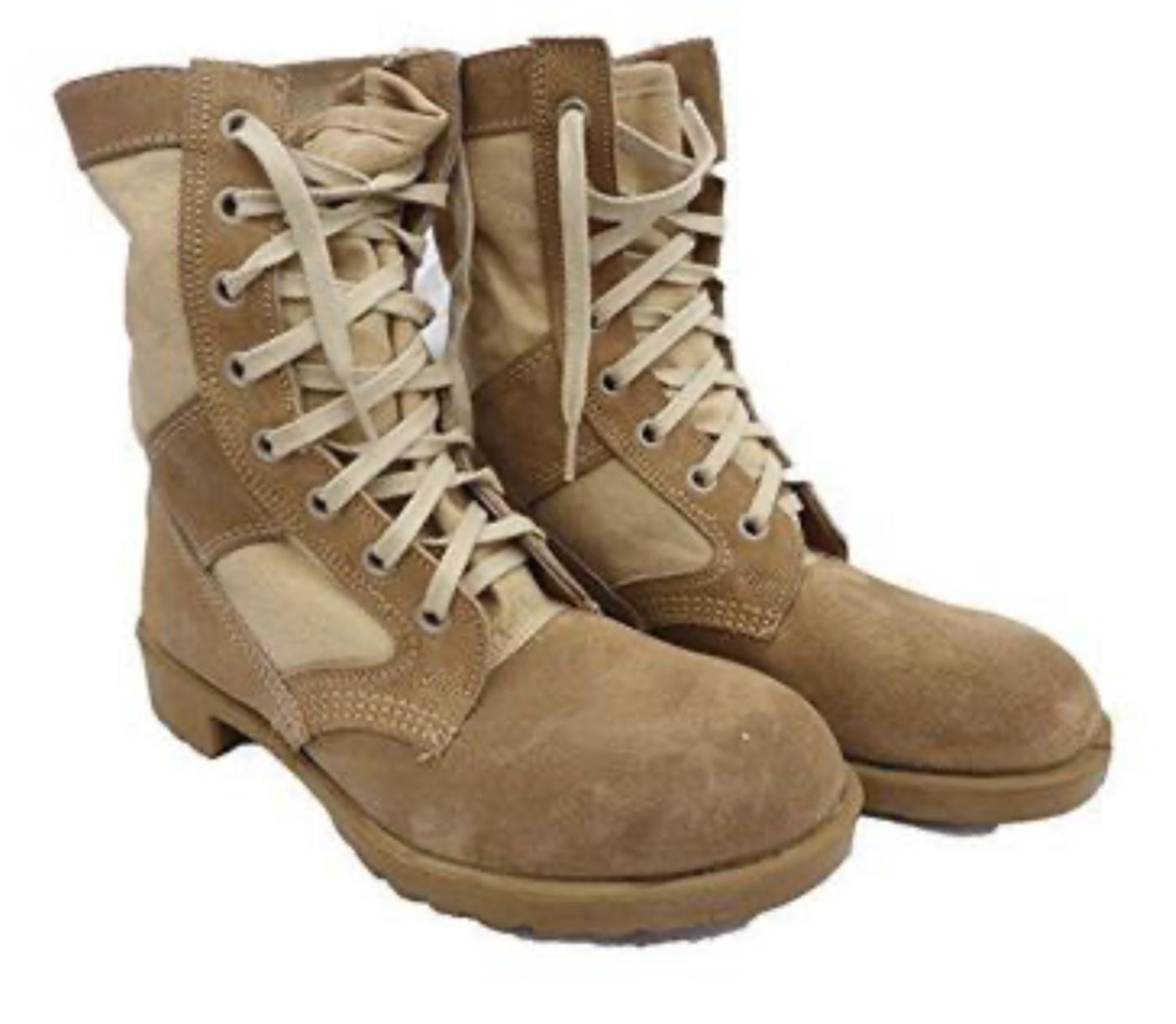
The resulting boot, officially termed the Desert Combat Boot, was made almost entirely from light tan suede leather. Suede was selected because it breathed better than smooth leather, reflected more heat, and resisted cracking when exposed to prolonged high temperatures. The boot had a softer overall construction than earlier ammunition boots, with no toe cap and less rigid structure, allowing greater comfort during long periods of standing and marching. Unlike some foreign designs, British desert boots generally avoided large nylon panels, as trials suggested that fine sand could easily penetrate fabric and cause abrasion.
The sole was a molded rubber design intended to cope with hot ground and loose sand while remaining durable on hard surfaces such as roads and airfield concrete. It was simpler than heavily lugged soles used elsewhere, reflecting British caution about soles that might trap stones or wear unevenly. The boot was also designed to be worn with lighter socks, a departure from earlier British practice that had assumed thick wool socks in cooler climates.
Manufacture was spread across several British footwear companies holding defence contracts, allowing production to be scaled up quickly. Each manufacturer worked to the same official specification, but as was common with British-issued equipment of the period, variations in fit and comfort existed between makers. Soldiers often developed strong opinions about which contractor produced the best boots, and these preferences became part of the informal culture of Gulf War veterans.
Exact numbers produced have never been officially published, but estimates suggest that well over one hundred thousand pairs were made during the Gulf War period, with production continuing into the early 1990s. Around fifty-three thousand British personnel deployed to the region, and most were issued at least one pair, sometimes alongside their traditional black boots. Unlike the United States, Britain did not fully re-equip all troops before deployment, meaning desert boots were occasionally issued late or even after arrival in theatre.
The boot was generally well received, but it was not without problems. Early batches sometimes suffered from sole degradation when exposed to extreme heat for prolonged periods, and sizing issues were common because British boot sizing had not previously been optimized for hot-weather wear. These shortcomings were carefully noted after the war and directly influenced later improvements in British military footwear.
Perhaps the most significant impact of the desert boot was cultural rather than technical. For generations, polished black boots had symbolized discipline and professionalism in the British Army. The unpolishable suede boot represented a quiet but important shift in priorities, placing comfort and operational effectiveness above appearance. Resistance from some senior ranks quickly faded as the practical benefits became clear.
Today, original British Gulf War desert boots are relatively rare, as many were worn out during service and not retained. Surviving examples with clear contractor markings and early 1990s dates are of interest to collectors and historians alike.