Brigadier Ralph Bagnold
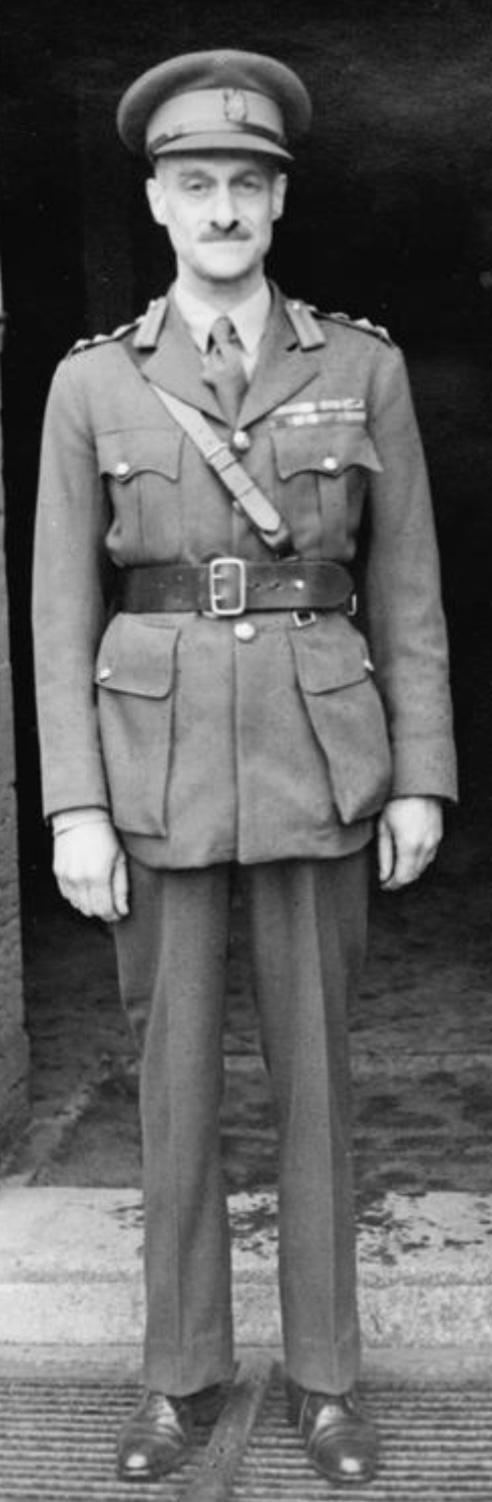
Ralph Alger Bagnold was an English soldier, explorer, and scientist whose curiosity about deserts and mechanical systems shaped both his early life and his wartime achievements. Born in 1896 into a military family, he grew up with a strong sense of discipline and an early fascination with physics, engineering, and how machines behaved in extreme environments. He was educated at the Royal Military Academy, Woolwich, where he trained as an officer in the Royal Engineers. Service in the First World War exposed him to the new realities of mechanised conflict, but it was after the war that the direction of his life changed profoundly.
Posted to Egypt in the 1920s, Bagnold began exploring the vast deserts of North Africa, undertaking ambitious expeditions across the Libyan Desert. Using ingenuity and careful observation, he pioneered methods for long-distance motor travel over difficult dune systems. He developed techniques such as controlled tyre pressure reduction and sand self-recovery methods, which later became standard for desert operations. These pre-war journeys gave him an unmatched understanding of desert navigation, meteorology, and vehicle behaviour in sand, and they directly influenced the military work he would undertake a decade later.
At the outbreak of the Second World War, Bagnold—by then a senior Royal Engineers officer—was recalled to duty. Recognising that the North African theatre required unconventional approaches, he proposed forming a highly mobile, self-sufficient reconnaissance and raiding force capable of operating deep behind enemy lines. With military approval he founded the Long Range Desert Group in 1940. Drawing on his desert expertise, he selected resourceful men skilled in navigation, mechanics, and survival. He personally devised their navigation systems, vehicle modifications, and logistical strategies, enabling the group to travel through terrain the enemy considered impassable.
Although he handed field command to younger officers in 1941 due to his seniority and the demanding nature of operations, Bagnold’s influence shaped the LRDG’s effectiveness throughout the war. After leaving the field he continued contributing through technical and scientific work, advising on desert equipment and operational planning. His wartime service earned him recognition and he ultimately retired with the rank of brigadier.
After the war Bagnold returned to scientific research with renewed focus. He later moved to the United States, working with academic and research institutions on problems involving sand movement, sediment transport, and fluid mechanics. His groundbreaking book on the physics of blown sand became a foundational text, influencing not only geologists and engineers but also planetary scientists. Decades later, NASA applied his theories to understand dune formations on Mars, demonstrating the enduring value of his early desert observations.
Ralph Bagnold lived a long, intellectually active life. He died in 1990 at the age of 94, remembered as a pioneering soldier who reshaped special operations in the desert and as a scientist whose insights continue to guide modern research.