Bolo Knife
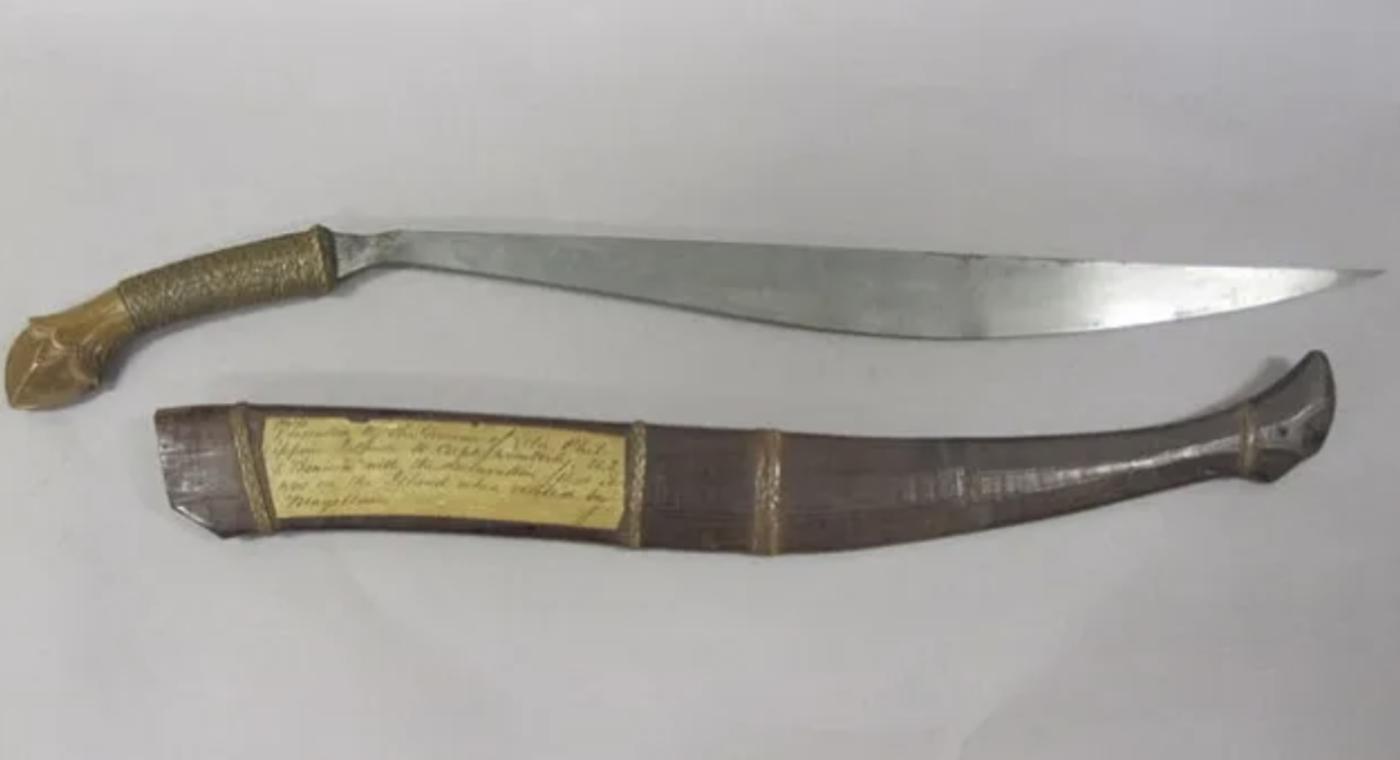
The Filipino bolo knife is one of the most recognisable and culturally significant bladed tools in Southeast Asia, with a history that blends daily rural life, resistance, craftsmanship, and warfare. Long before it became associated with conflict, the bolo was an indispensable agricultural implement used across the Philippine archipelago for centuries. Its origins predate Spanish colonisation, evolving from indigenous blades influenced by Malay, Indonesian, and wider Austronesian weapon traditions. The term “bolo” itself likely comes from Tagalog or related languages, broadly referring to a large knife or chopping blade rather than a single standardized design.
Originally, the bolo was primarily a working tool. Farmers used it for clearing brush, cutting sugarcane, harvesting rice, splitting coconuts, and shaping wood. Its design reflects this purpose: a single-edged blade that widens toward the tip, concentrating weight forward to deliver powerful chopping force with relatively little effort. This made it ideal for dense vegetation common in tropical environments. Unlike straight-edged knives, the bolo’s belly allowed efficient cutting even when the user was tired, which mattered greatly in long days of manual labour. Because it was carried daily, it also became a general-purpose survival tool, used for food preparation, shelter construction, and personal protection.
Over time, the bolo naturally transitioned from tool to weapon when circumstances demanded it. During Spanish rule, Filipinos were often prohibited from owning swords or firearms, but bolos were allowed because they were agricultural tools. This loophole made the bolo a weapon of resistance by default. Filipino revolutionaries during uprisings against Spain in the late 19th century, including the Philippine Revolution of 1896, famously wielded bolos against better-armed colonial troops. The blade became a symbol of defiance and self-reliance, closely associated with guerrilla warfare and popular resistance.
Traditional bolo making was, and in some rural areas still is, a skilled craft passed down through generations. Early bolos were forged from locally available materials, sometimes repurposing scrap iron, wagon springs, or later, discarded industrial steel. A village blacksmith would heat the metal in a charcoal forge, hammering it into shape by hand. The blade was differentially hardened in many cases, with the edge quenched for hardness while the spine remained softer to absorb shock. This balance made the bolo durable and less prone to snapping during heavy chopping. Handles were typically made from hardwood such as narra or kamagong, shaped to fit the hand securely and sometimes flared at the end to prevent slipping. Simple wooden scabbards, often bound with rattan, completed the tool.
The effectiveness of the bolo as a weapon lies not in refinement but in brutal practicality. Its forward-heavy blade delivers devastating cuts at close range. In skilled hands, it can incapacitate quickly, particularly in dense terrain where long rifles and bayonets are unwieldy. This characteristic became especially significant during the Second World War, when the Philippines was occupied by Japanese forces following the invasion of 1941–1942. After the fall of organised resistance, Filipino guerrilla units emerged across the islands, many operating with minimal firearms and ammunition. The bolo, readily available and familiar, became a common weapon once again.
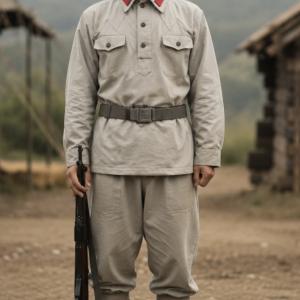
Against Japanese troops, the bolo was used primarily in ambushes, night raids, and jungle fighting. Guerrillas relied on stealth and intimate knowledge of terrain, attacking supply lines, isolated patrols, and outposts. In such encounters, the bolo was terrifyingly effective. Silent, lethal, and requiring no ammunition, it suited hit-and-run tactics perfectly. Japanese soldiers, trained to fear close-quarters attacks and already wary of guerrillas, developed a particular dread of bolo-wielding fighters. Accounts from the war describe sudden attacks where bolos were used to disable sentries before alarms could be raised. While firearms ultimately determined the larger course of the war, the bolo played a real and psychologically significant role in local resistance.
The bolo also appeared in a more formal context during the war. Some Philippine Commonwealth Army units and guerrilla formations officially issued bolos as supplementary weapons, particularly when supplies were scarce. American forces working with Filipino guerrillas noted the bolo’s utility and the skill with which locals employed it. Although it was never a substitute for modern arms, it was an effective force multiplier under the right conditions.
Beyond combat, the bolo retained its cultural importance throughout the war years. It symbolised continuity with pre-colonial traditions and reinforced the idea of fighting with what one had, rather than what one wished for. After the war, the bolo continued its everyday role in farming and rural life, even as industrial tools became more common. Today, it is both a practical implement and a cultural icon, featured in museums, martial arts traditions such as arnis and eskrima, and national symbolism.
An interesting fact about the bolo is that it is not a single knife but a family of blades, with regional variations like the iták, pinuti, and ginunting, each adapted to local needs and fighting styles. Another is that the United States Army once studied bolo attacks during the Philippine-American War and World War II to better understand close-quarters combat psychology. Despite its simplicity, the bolo’s design has proven remarkably resilient, remaining largely unchanged for generations because it works.