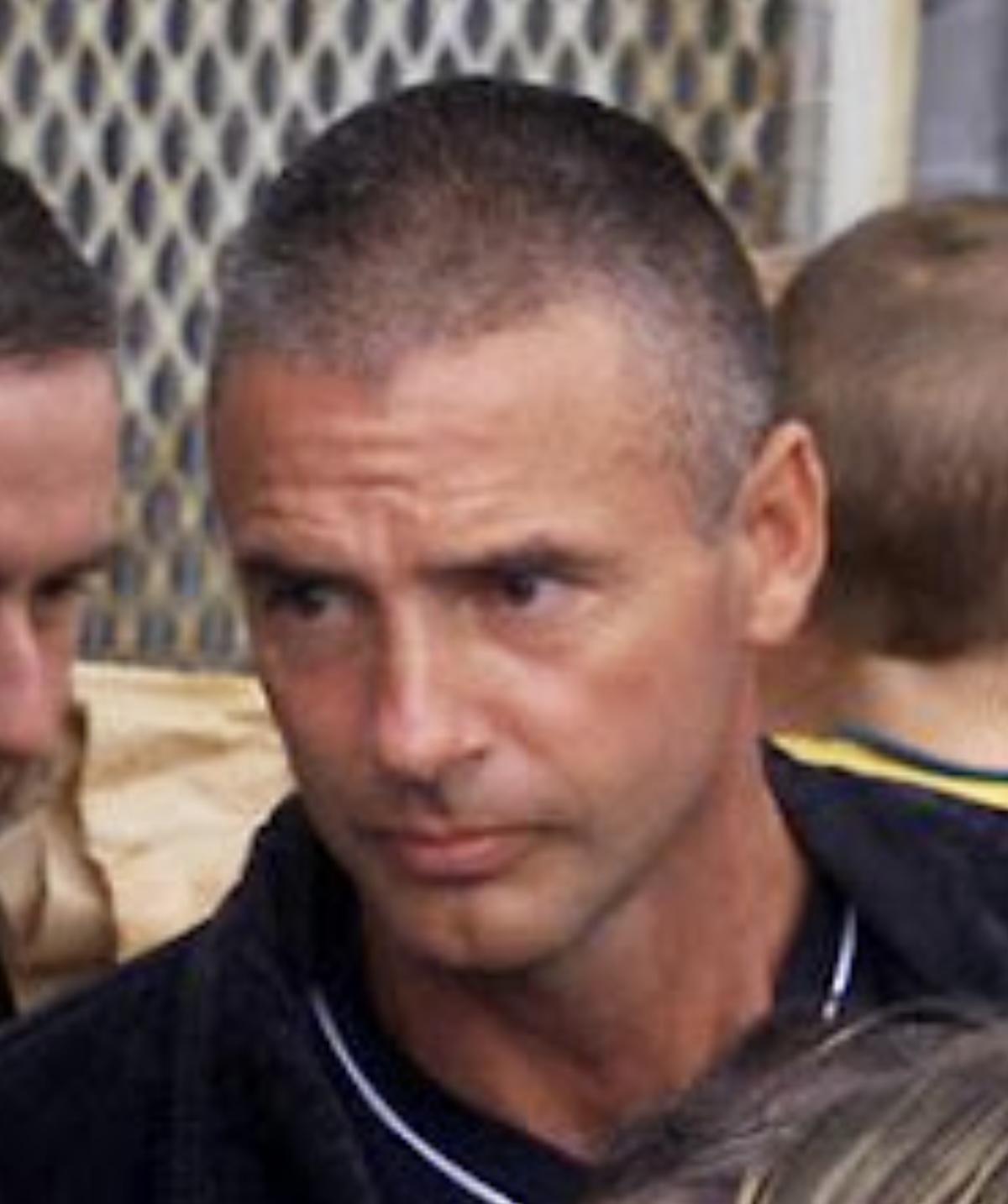
Bernard Henry McGinn
Bernard Henry McGinn’s trajectory within the Provisional IRA reflected the movement’s structural evolution from the 1970s into the 1990s. His early recruitment as a teenager in Castleblayney placed him in a borderland environment where the IRA operated with relative mobility, taking advantage of the rural terrain and the Republic–Northern Ireland divide. By the late 1970s and early 1980s he had become associated with active service units that supported cross-border operations. His first notable role was as a courier and logistical assistant responsible for moving equipment, documents, and small quantities of explosives between Monaghan, Louth, and South Armagh. These early duties gave him access to senior volunteers and introduced him to the technical side of the organisation’s work.
As the conflict intensified, McGinn grew increasingly involved in the IRA’s engineering wing. The IRA relied heavily on technically skilled members who could construct devices reliably, safely, and in secrecy. Although not among the pioneering engineers of the 1970s, McGinn developed a reputation as a dependable bomb-maker who could follow complex instructions and assemble devices in difficult conditions. He was involved in producing homemade explosive mixtures, including ANFO-style materials, and packing them into containers ranging from small improvised devices to large barrels used for vehicle bombs. His knowledge extended to trigger mechanisms, timing units, and methods for disguising devices during transport. By his own later account, assembling an explosive charge became a routine “day’s work,” illustrating how normalized such activity had become during the height of the conflict.
One of McGinn’s major roles was supporting the IRA’s strategic bombing campaign in England. He admitted involvement in preparing explosives for the 1992 Baltic Exchange bombing in London as well as the 1993 Bishopsgate bomb, attacks that demonstrated the IRA’s ability to cause enormous economic disruption. His function in these operations did not typically involve planting devices at the target locations but rather producing and preparing the bulk explosives that were transported across the Irish Sea. The long logistical chain that enabled mainland attacks depended on individuals like McGinn who worked behind the scenes, mixing explosives, assembling components, and ensuring reliability. His capacity to manufacture large charges meant he became trusted with some of the IRA’s most consequential operations even if he was not physically present at the bombing sites.
After his release from prison in 1987, McGinn’s role expanded considerably. He became closely associated with the South Armagh Brigade, which at that time was consolidating control over a highly effective operational zone. This area became the IRA’s most secure stronghold due to tight community support networks, deep knowledge of the terrain, tunnel systems, fortified firing positions, and rapid cross-border movement. In this environment McGinn served primarily as a technical specialist but also as a facilitator in wider operations. He was not considered a front-line gunman in the classic sense but instead operated in support teams that produced the conditions necessary for attacks to succeed. This included preparing vehicles for operations, maintaining underground bunkers, and testing components.
By the early 1990s McGinn became involved with the South Armagh sniper campaign, one of the IRA’s most effective late-stage strategies. These teams used .50-calibre Barrett rifles capable of hitting targets at long range, often from makeshift firing platforms concealed inside modified vehicles. McGinn’s role was not always as the shooter; rather, he assisted in transporting equipment, preparing the rifle for use, modifying vehicles to include firing ports, and participating in reconnaissance and escape planning. His involvement placed him within a tight-knit unit that carried out several high-profile attacks on British soldiers in Keady, Crossmaglen, Forkhill, and the Bessbrook area. These attacks, executed with precision and patience, caused considerable alarm within the British Army because they circumvented normal defensive measures and demonstrated a level of technical proficiency unusual for insurgent groups.
Beyond direct attacks, McGinn played an important role in the IRA’s logistical and infrastructural maintenance in the border region. Bomb-making required not only technical skill but also secure storage sites, disguised workshops, and dependable supply lines. McGinn was involved in sourcing agricultural fertiliser, commercial chemicals, timers, and other materials that could be adapted into weapons. He helped maintain and rotate safe houses, oversaw the packing of weapons for transport, and in some cases acted as a trainer for younger IRA members in the proper handling of explosives and devices.
McGinn also became a key intermediary between different operational cells. The IRA functioned in compartmentalized units to reduce the risk of infiltration, but certain trusted individuals were permitted to move between teams when technical support was needed. McGinn occupied such a role, which meant he gained insight into a wide range of operations. His movements took him from rural workshops to urban safe houses used to prepare materials for attacks outside Northern Ireland. The breadth of knowledge he accumulated later became significant when he was interrogated, because it meant he could describe both technical processes and organisational relationships.
When McGinn was arrested in April 1997, his role within the South Armagh network was considered substantial enough that the operation to apprehend him was conducted with the highest level of secrecy. After his arrest, his extensive confessions surprised both security forces and members of the IRA. His detailed statements were possible because he had participated across multiple operational spheres: bomb-making for major attacks, involvement in sniper teams, cross-border logistics, and support for numerous other missions. His knowledge encompassed warehouse locations, personnel identities, construction methods, and the IRA’s internal work culture. This rare combination of technical expertise and cross-cell familiarity gave investigators insight into the operational infrastructure of the South Armagh Brigade.
Following his release under the Good Friday Agreement, McGinn withdrew from public paramilitary activity. Observers noted that men with his level of expertise and operational exposure often faced internal suspicion or pressure after providing extensive statements while in custody. For this reason, he lived relatively quietly in Monaghan, staying out of political involvement and maintaining a low profile until his death in 2013. His case continued to provoke debate over the years because it touched on central tensions of the peace process: the early release of prisoners convicted of severe offences, the reliability of confessions obtained under intense interrogation, and the degree to which individuals who once held key operational roles could reintegrate into civilian life.
McGinn’s roles within the IRA make him one of the more complex and revealing figures from the organisation’s final decades of armed activity. He combined technical proficiency with operational flexibility, serving as an engineer, armourer, logistician, assistant in sniper operations, and facilitator for major bombing campaigns. His career illustrates the level of organisation, discipline, and division of labour that the IRA had developed by the 1990s, as well as the shifting nature of insurgent warfare in a landscape where political negotiations and military operations existed side by side. His life remains a stark reminder of how individuals could occupy positions of both strategic importance and extreme danger within a clandestine movement operating at the limits of legality and political legitimacy.