Assassination
In March 1945, the German occupation of the Netherlands was approaching its final stage. Allied armies had liberated the southern provinces, but the front had stopped along the great rivers. Most of the western and northern Netherlands remained occupied. Food and fuel were scarce, transport had largely broken down and German authorities continued to arrest members of the resistance. Although defeat was clearly approaching, the occupation regime had not become less violent.
One of the most powerful German officials in the Netherlands was Hanns Albin Rauter. He had been appointed Generalkommissar für das Sicherheitswesen and Higher SS and Police Leader shortly after the occupation began in 1940. In these positions he controlled the German police and SS organisations in the Netherlands, while much of the Dutch police apparatus also fell under his authority. He formally served under Reich Commissioner Arthur Seyss-Inquart, but his position within the SS gave him direct access to Heinrich Himmler and considerable independence. Rauter was closely involved in the persecution and deportation of the Jewish population, the suppression of strikes and the campaign against the Dutch resistance.
By the final year of the occupation, German reprisals had become a regular response to resistance attacks. Prisoners who had already been arrested were placed on lists as so-called Todeskandidaten, or candidates for death. They could be executed after attacks on German officials or Dutch collaborators, even when they had no connection to the incident. The purpose was not to investigate a crime or punish those responsible. It was to frighten the population and demonstrate that every attack could lead to deaths elsewhere.
The events at Woeste Hoeve began with a plan to obtain food. On 6 March 1945, members of the resistance in Apeldoorn received information that the Wehrmacht intended to collect about 3,000 kilograms of meat from a slaughterhouse in Epe the following morning. The meat could feed resistance members, people in hiding and evacuees who were suffering from the severe shortages of the Hunger Winter. The resistance decided to take the shipment before it reached the German army.
The plan required a German military truck. Such a vehicle would allow the resistance fighters to approach the slaughterhouse without immediately causing suspicion. Geert Gosens, the leader of the group, therefore decided to capture a Wehrmacht truck on the road between Arnhem and Apeldoorn. He was accompanied by Henk de Weert, Karel Pruis and Wim Kok, as well as Sepp Köttinger and Herman Kempfer, two deserters from the German armed forces. Several members wore German uniforms, while Kok wore the uniform of the Dutch military police. They carried Sten submachine guns and travelled by bicycle.
The six men selected a position near the inn at Woeste Hoeve, an isolated location surrounded by woodland on the eastern Veluwe. They hid their bicycles and waited beside the road. Around midnight, they heard the low sound of a heavy engine approaching from the direction of Arnhem. The men believed that the expected military truck was coming towards them. Instead, the vehicle was an open BMW carrying Rauter, his driver and an officer named Exner. Rauter was travelling from his headquarters at Didam towards Apeldoorn.
The precise sequence of the confrontation is not completely certain. According to the usual account, the resistance fighters attempted to stop the vehicle before realising that it was a staff car rather than a truck. The Germans reached for their weapons and the resistance group opened fire with its Sten guns. The driver and Exner were killed. Rauter was struck several times and fell beside the car, but he survived by remaining still and pretending to be dead. The resistance fighters inspected the scene only briefly. They did not recognise Rauter and left believing that all three occupants were dead or dying.
Rauter remained seriously wounded beside the road for several hours. He had heard enough of the conversation among the attackers to believe that they had been waiting specifically for him. In reality, according to the established post-war account, the resistance group had not known that he would pass Woeste Hoeve and had no plan to assassinate him. Some later researchers have questioned whether every detail of this account is reliable, but no conclusive evidence has replaced the interpretation that Rauter encountered the group by chance. He was found about five hours after the shooting and taken to a hospital in Apeldoorn.
Because Rauter was unable to perform his duties, command passed temporarily to SS-Brigadeführer Karl Eberhard Schöngarth, head of the Security Police and Security Service in the Netherlands. Schöngarth met the wounded Rauter and discussed the response with Seyss-Inquart. They treated the shooting as a planned assassination attempt on the highest SS and police commander in the country. The decision was made to carry out the largest series of executions ordered as a single reprisal during the German occupation of the Netherlands.
German officials gathered prisoners from jails and detention centres across the country. Many were members of resistance organisations, but others had been arrested for hiding people, possessing illegal papers or committing offences unrelated to the events at Woeste Hoeve. Some had been held for months, while others had been arrested only shortly before the shooting. None was tried for involvement in the attack on Rauter. They were selected because they were already in German hands and could be killed immediately.
On the morning of 8 March, 117 prisoners were transported to Woeste Hoeve. They came from prisons in places including Apeldoorn, Assen, Almelo, Deventer, Doetinchem and Zwolle. Only after arriving beside the road did many understand that they were going to be executed. They were taken from the buses in groups, usually twenty men at a time, and placed before German firing squads. The bodies remained beside the road, and passing civilians were forced to dismount from their bicycles and walk past them.
The executions were not limited to Woeste Hoeve. Prisoners were also shot at the Rozenoord execution site in Amsterdam, Fort De Bilt near Utrecht, Kamp Amersfoort and the Waalsdorpervlakte near The Hague. Fifty-three people were executed at Rozenoord, six at Fort De Bilt, thirty-eight at the Waalsdorpervlakte and forty-nine at Kamp Amersfoort. In total, 263 prisoners were killed across the occupied Netherlands as retaliation for the shooting of Rauter.
The resistance group responsible for the shooting was not immediately identified. Gosens and the surviving members later accepted responsibility, although they had neither intended to attack Rauter nor expected that their attempt to obtain food would produce such consequences. Two members did not survive the final months of the occupation. A week after the shooting, Karel Pruis and Herman Kempfer encountered a German patrol while moving weapons and ammunition. Pruis was killed in the ensuing exchange of fire. Kempfer is also believed to have been killed, although his body was never found.
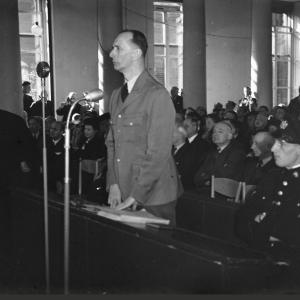
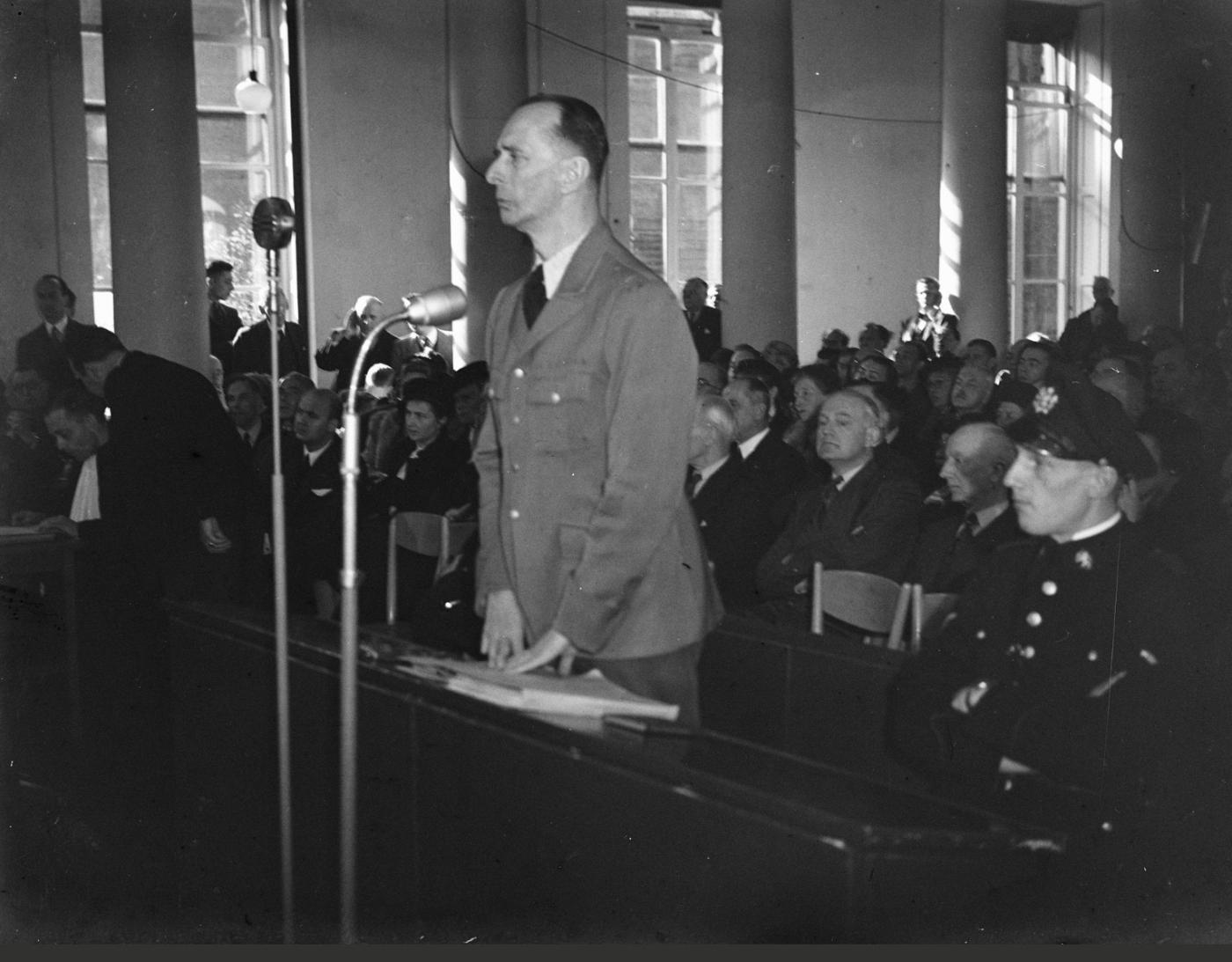
Rauter recovered from his wounds in Germany. After the German surrender, he was arrested and returned to the Netherlands. His trial before the Special Court in The Hague began in April 1948. The charges concerned his wider role in German occupation policy, including persecution, deportations, executions and reprisals. He was sentenced to death on 4 May 1948. After his appeal failed, Rauter was executed by firing squad on 25 March 1949 in the dunes near the Waalsdorpervlakte, one of the places where prisoners had been killed after the shooting at Woeste Hoeve. When the firing squad stood ready, Rauter reportedly came to attention, shouted “Deutschland” and, contrary to procedure, gave the command to fire himself.
A monument was placed at Woeste Hoeve soon after the liberation. The present memorial records the names of those who could be identified and stands close to the site of the executions. The shooting of Rauter began as a local attempt to capture a vehicle and obtain food, but German policy transformed it into a national act of punishment. The 117 men killed beside the road, together with the prisoners executed elsewhere, had been chosen in advance as possible victims. Their deaths show how the occupation authorities used prisoners not only as captives, but also as hostages whose lives could be taken whenever terror appeared useful.
Credit Tom Dankers Historian.