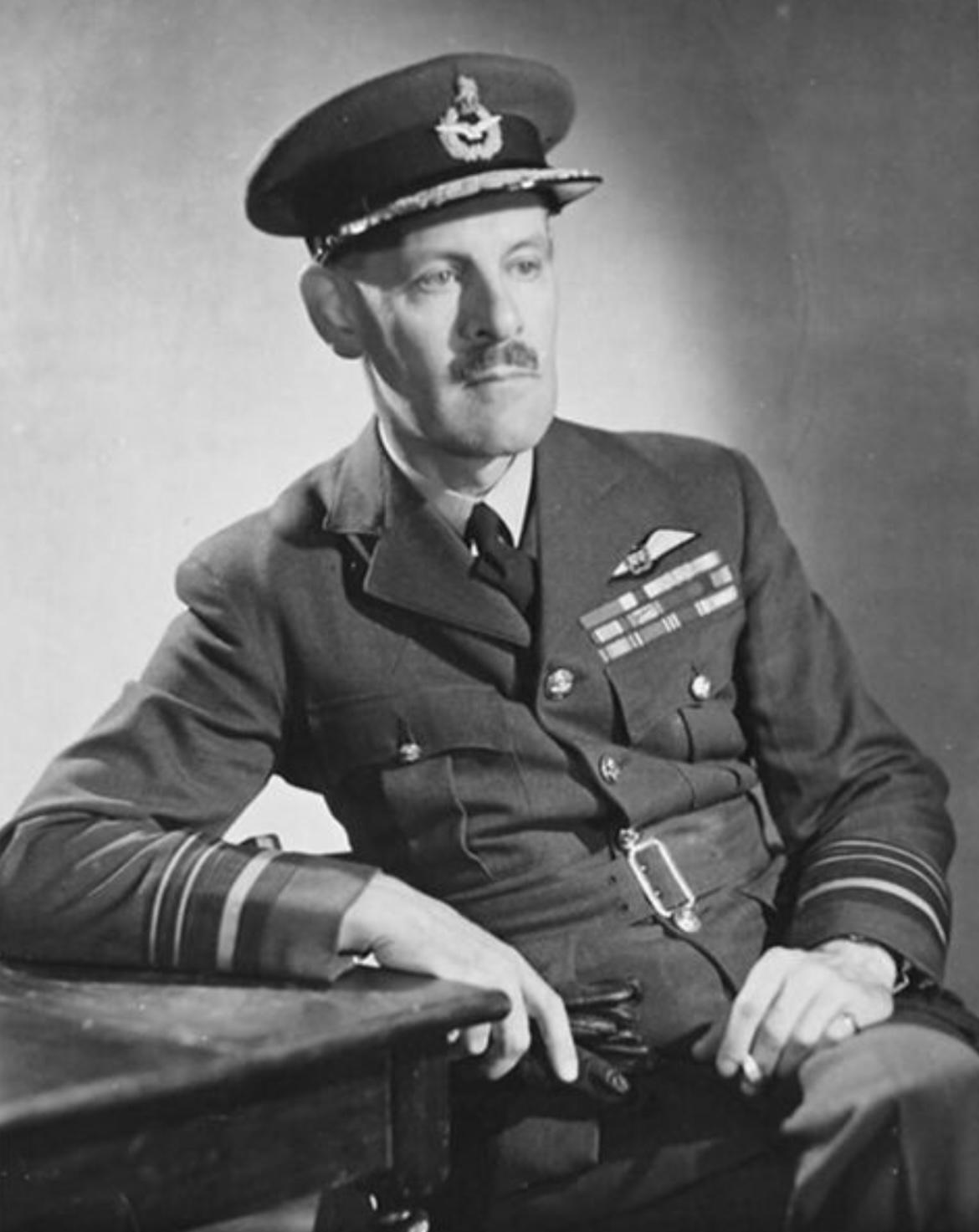
Air Marshal Sir Roderick Hill
Sir Roderic Maxwell Hill was one of the Royal Air Force’s most respected leaders during the Second World War, known for his intellect, organisational skill, and dedication to technological progress. His path to high command grew from an early interest in aviation, steady advancement through the RAF, and an exceptional ability to guide large commands during a period when air power was central to Britain’s survival.
He was born in London on 1 March 1894 to a family with a strong tradition of public service. As a young man he displayed notable artistic and scientific talent, studying at the Slade School of Art before the First World War and developing an eye for detail that later influenced his work in design, training, and camouflage theory.
With the beginning of the First World War, he joined the army, later transferring to the Royal Flying Corps. By 1916 he was flying reconnaissance and artillery-spotting missions in France. His skill, combined with a natural technical curiosity, led to instructing and research roles where he learned to translate scientific concepts into practical flying guidance. These early experiences shaped his balanced approach to both the operational and technological sides of aviation.
During the inter-war years he remained in the RAF and became deeply engaged in research and experimental flying. At the Royal Aircraft Establishment at Farnborough he worked on aerodynamics, flight safety, and instrument flying, contributing significantly to the RAF’s expanding technical knowledge. He authored influential flying manuals, and his combination of scientific understanding and clear communication made him an increasingly important figure within the service.
His career accelerated with the outbreak of the Second World War. In 1941 he was sent to Iraq to restore stability after the pro-Axis coup, securing vital routes and resources. Later he took charge of No. 12 Group, responsible for defending the industrial Midlands and refining radar-guided interception. His work strengthened Britain’s fighter defence structure during crucial years of the air war.
In 1943 he became Air Officer Commanding-in-Chief of Fighter Command at a pivotal moment. Under his leadership the command transitioned from a primarily defensive force to one undertaking sustained offensive operations in preparation for D-Day. He oversaw the introduction of more advanced aircraft, such as the Tempest and Meteor, and pushed for improvements in radar integration and pilot readiness.
He also played a major role in planning and coordinating the air attacks against V-1 and V-2 rocket production sites. These weapons posed a severe threat to Britain, and neutralising their launch facilities and supply chain became a priority. His experience in both strategy and technical matters made him key to organising the intelligence, targeting, and fighter support required for these raids. The combined effort significantly weakened Germany’s ability to deploy the new weapons at scale, buying valuable time and reducing civilian casualties.
After the war he became an air chief marshal and later headed Technical Training Command, guiding the RAF through its transition to a peacetime professional force. In 1948 he retired from the service and became Vice-Chancellor of the University of London, where he oversaw expansion, academic development, and modernisation.
Beyond his military and academic careers, he remained an accomplished artist whose landscapes and aviation-themed paintings were widely admired. He also wrote thoughtfully on air power and the theory of flight. He died on 6 October 1954 at the age of sixty. His legacy is that of a leader who successfully blended scientific insight, creativity, and calm judgement during one of the most demanding periods in British aviation history, contributing significantly to the RAF’s wartime effectiveness and its post-war evolution.