Admiral John de Roebuck
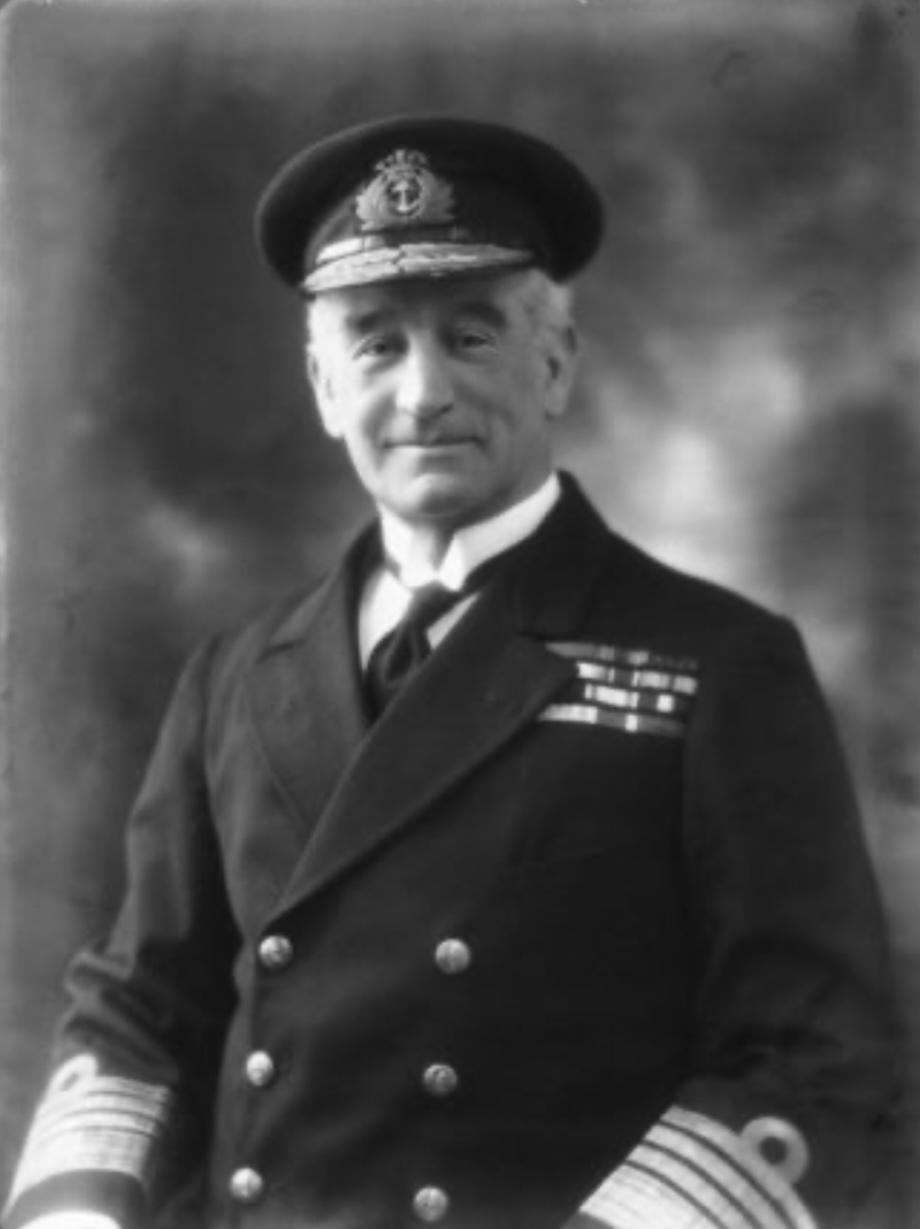
Admiral of the Fleet Sir John Michael de Robeck was an Irish-born Royal Navy officer whose career spanned one of the most transformative periods in naval history. Born on 10 June 1862 at Gowran Grange near Naas, County Kildare, he came from a family of Swedish-Irish aristocratic origin and grew up in a household that valued service, discipline, and education. Although privileged, he entered the Navy at a time when technical skill mattered more than lineage, and from the beginning he proved himself a capable and thoughtful officer.
He joined the training ship HMS Britannia as a cadet in 1875 and progressed to midshipman three years later. Early service in the frigate HMS Shannon with the Channel Squadron introduced him to modern gunnery and steam-powered operations during the era when wood-and-iron fleets were giving way to steel warships. He showed a particular aptitude for mathematics and navigation, strengths that helped his steady advancement. By the time he became a lieutenant in 1885, he had already served in the China Station and gained a firm understanding of global naval responsibilities.
De Robeck’s early commands came after his promotion to commander in 1897. He was given a series of new torpedo-boat destroyers to lead from Chatham, among them HMS Desperate and HMS Racoon. These small, cutting-edge ships demanded rapid decision-making, technical awareness, and a new approach to tactics, all of which he handled with confidence. After destroyer service, he joined HMS Diadem in the Mediterranean Fleet as executive officer, further sharpening his skills in fleet operations. His promotion to captain came in 1902, placing him in the senior cadre of officers ready for major responsibilities.
In the years before the First World War, he commanded a variety of ships, including HMS Warrior and the armoured cruiser HMS Suffolk. Later he took charge of the battleship HMS Hibernia, an assignment that immersed him in the emerging world of Dreadnought-era naval power. His administrative strengths led to his appointment as inspecting officer of boys’ training establishments, where his commitment to discipline, fairness, and professional standards helped shape the Navy’s next generation. When he was promoted to rear admiral in 1911 and made Admiral of Patrols the following year, he took responsibility for multiple destroyer flotillas guarding Britain’s coastal approaches.
At the outbreak of the First World War he commanded the 9th Cruiser Squadron in the North Atlantic and quickly demonstrated his capability by intercepting and capturing several German merchant ships. His reputation for calm, balanced decision-making brought him to one of the most difficult commands of the war: the naval assault on the Dardanelles in 1915. Initially second-in-command, he assumed overall leadership after Admiral Sackville Carden fell ill. De Robeck launched the major naval attack on 18 March 1915, a bombardment that severely strained Ottoman defences but ended in disaster when hidden minefields sank three Allied battleships. Assessing the heavy losses and operational uncertainties, he decided not to attempt a second purely naval breakthrough.
The decision remains controversial. Some argued he should have pressed on; others believed he prevented a catastrophic defeat. What is certain is that he continued to lead with determination during the Gallipoli land campaign. He oversaw the amphibious landings, coordinated naval gunfire support, and later planned the highly successful Allied evacuation. The withdrawal in late 1915 and early 1916, executed with almost no casualties, is often hailed as the most professionally managed phase of the entire campaign.
After Gallipoli, de Robeck assumed major battle squadron commands within the Grand Fleet, leading first the 3rd Battle Squadron and later the 2nd Battle Squadron, flying his flag in HMS King George V. He was promoted to vice admiral in 1917 and remained a key figure in Britain’s North Sea strategy. Although he did not take part in the Battle of Jutland, his commands formed an essential part of the deterrent force that kept the German High Seas Fleet confined to port.
Following the Armistice, he played an important diplomatic and strategic role as Commander-in-Chief in the Mediterranean. His tenure coincided with the turbulent aftermath of the First World War, including the occupation of Constantinople, the early stages of the Greco-Turkish conflict, and the gradual reshaping of the Middle East. De Robeck’s steady, restrained leadership helped maintain order and avoid several potential crises during a period when the region was volatile and international tensions ran high. His final promotion to Admiral of the Fleet recognised a lifetime of dedicated service at the highest level.
In his later years, de Robeck retired from active naval service but continued to take an interest in maritime affairs, occasionally offering quiet advice to serving officers and remaining involved in ceremonial naval functions. He divided his time between England and Ireland, maintaining the family estate and enjoying a peaceful retirement after decades of demanding service. Though naturally reserved, he was remembered by those who knew him as courteous, thoughtful, and deeply committed to the traditions of the Royal Navy. Sir John de Robeck died on 20 January 1928 at the age of sixty-five. His passing marked the end of a career that had shaped British naval history during a period of extraordinary change, and he remains regarded as one of the service’s steady and reliable leaders in both war and peace.