
91st Bomber Group
The United States Eighth Air Force arrived in Britain in the summer of 1942 as an untested force with an ambitious mission: to carry the daylight strategic bombing campaign directly to the heart of Nazi Germany. Operating from a rapidly expanding network of airfields across eastern England, the Eighth would go on to become the most powerful air armada ever assembled and the first American air force to conduct sustained, long-range heavy bomber operations from the United Kingdom.
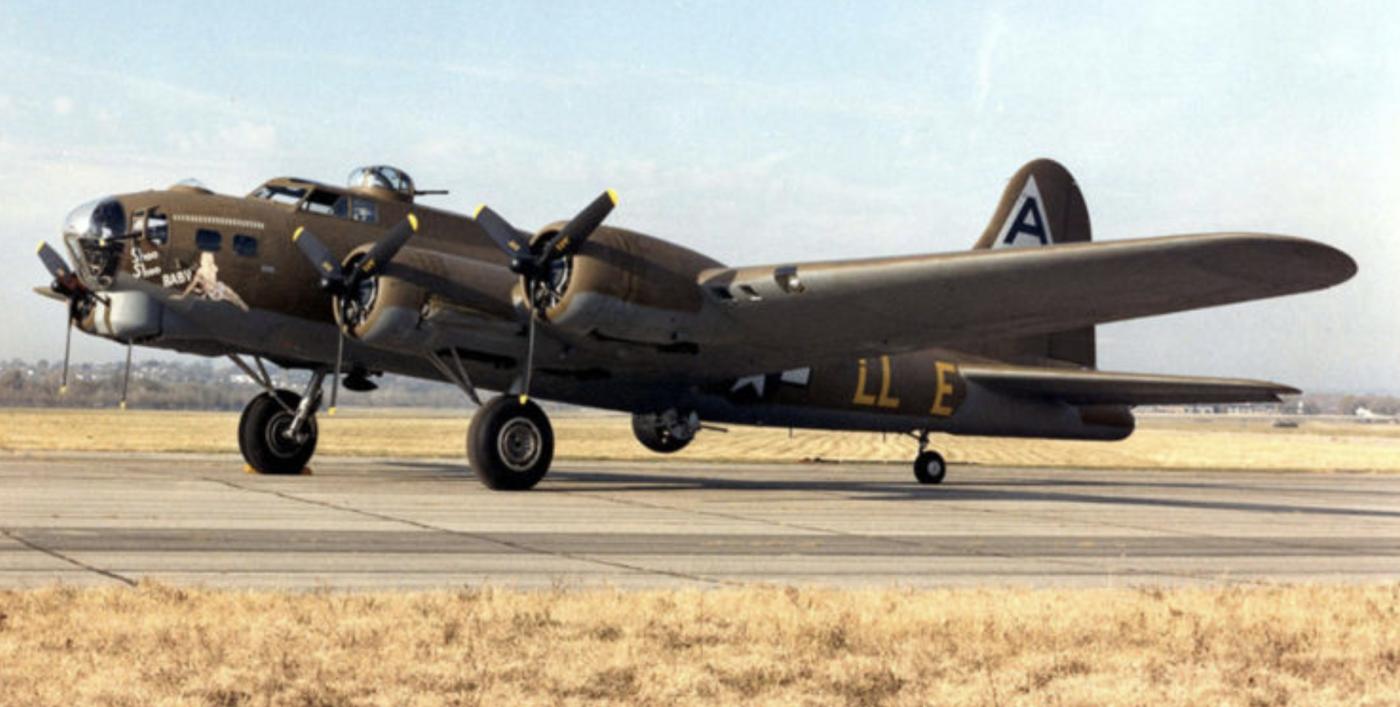
The honour of becoming the first U.S. bomber unit to complete one hundred combat missions belonged to the 91st Bomb Group (Heavy). Based at RAF Bassingbourn in Cambridgeshire, the group began operations in November 1942 flying the Boeing B-17 Flying Fortress. At that time, the idea that a bomber group could survive one hundred missions seemed almost unimaginable. Early losses were severe, fighter escort was limited, and German air defences were formidable. Crews often joked that surviving twenty-five missions was a miracle, yet by 25 May 1944 the 91st had flown its 100th mission, a milestone that became a powerful symbol of endurance for the entire Eighth Air Force.
The 91st Bomb Group operated at various times under commanders such as Colonel Stanley T. Wray and later Colonel John A. Bennett, both of whom helped shape the group’s aggressive but disciplined operational style. Flying primarily B-17F and later B-17G aircraft, the group took part in nearly every major campaign undertaken by the Eighth Air Force, including the early raids against occupied Europe, the air battle over Germany in 1943, the “Big Week” assaults on the German aircraft industry, and the preparatory bombing for the Normandy landings. From its base at Bassingbourn, the group launched deep-penetration missions to targets such as Schweinfurt, Regensburg, Berlin, and Merseburg, often facing intense flak and massed German fighter attacks.
At its wartime peak, the Eighth Air Force fielded more than 2,000 heavy bombers and tens of thousands of aircrew and ground personnel spread across dozens of airfields in eastern England. Over the course of the war, it dropped approximately 700,000 tons of bombs on Axis targets, playing a decisive role in crippling Germany’s industrial capacity, transportation networks, and fuel production. The cost of this achievement was immense. The Eighth Air Force lost more than 8,000 aircraft in combat and suffered roughly 26,000 aircrew killed, making it one of the most costly campaigns in American military history.
What made the story of the Eighth Air Force especially remarkable was not only its scale, but the speed with which it evolved. Early in the war, bomber formations operated without adequate long-range fighter escort and paid a heavy price. By 1944, with the arrival of long-range P-51 Mustangs and improved tactics, the balance shifted decisively in favor of the Allies. The Eighth Air Force became not just a bombing force but a dominant instrument of air superiority, breaking the back of the Luftwaffe and ensuring Allied control of the skies before the invasion of Normandy.
The achievement of the 91st Bomb Group in completing 100 missions symbolised the maturation of the entire Eighth Air Force. It represented endurance in the face of staggering losses, technical innovation under fire, and the transformation of a fledgling air arm into a decisive strategic weapon. By the time the war in Europe ended in May 1945, the Eighth Air Force had earned a reputation as one of the most formidable fighting forces ever assembled, its legacy inseparable from the fields of eastern England and the long, dangerous skies over occupied Europe.