On this day in military history
On 20 March 2003 the ground phase of the Iraq War began after nearly two days of intense air strikes that targeted Iraqi command structures, air defenses, and military infrastructure. The invasion formed the opening stage of what the coalition called Operation Iraqi Freedom. The United States led the operation with major support from the United Kingdom, alongside smaller contributions from Australia and Poland. In total, roughly 300,000 coalition troops had been assembled around Iraq’s borders before the attack began, the majority positioned in Kuwait.
The initial ground invasion started in the early hours of 20 March, only hours after the first precision strike intended to kill Iraqi leader Saddam Hussein. When it became clear that the strike had not eliminated the Iraqi leadership, coalition commanders gave the order to begin the full ground assault. Coalition forces crossed from Kuwait into southern Iraq just after midnight local time.
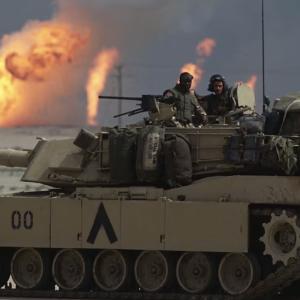
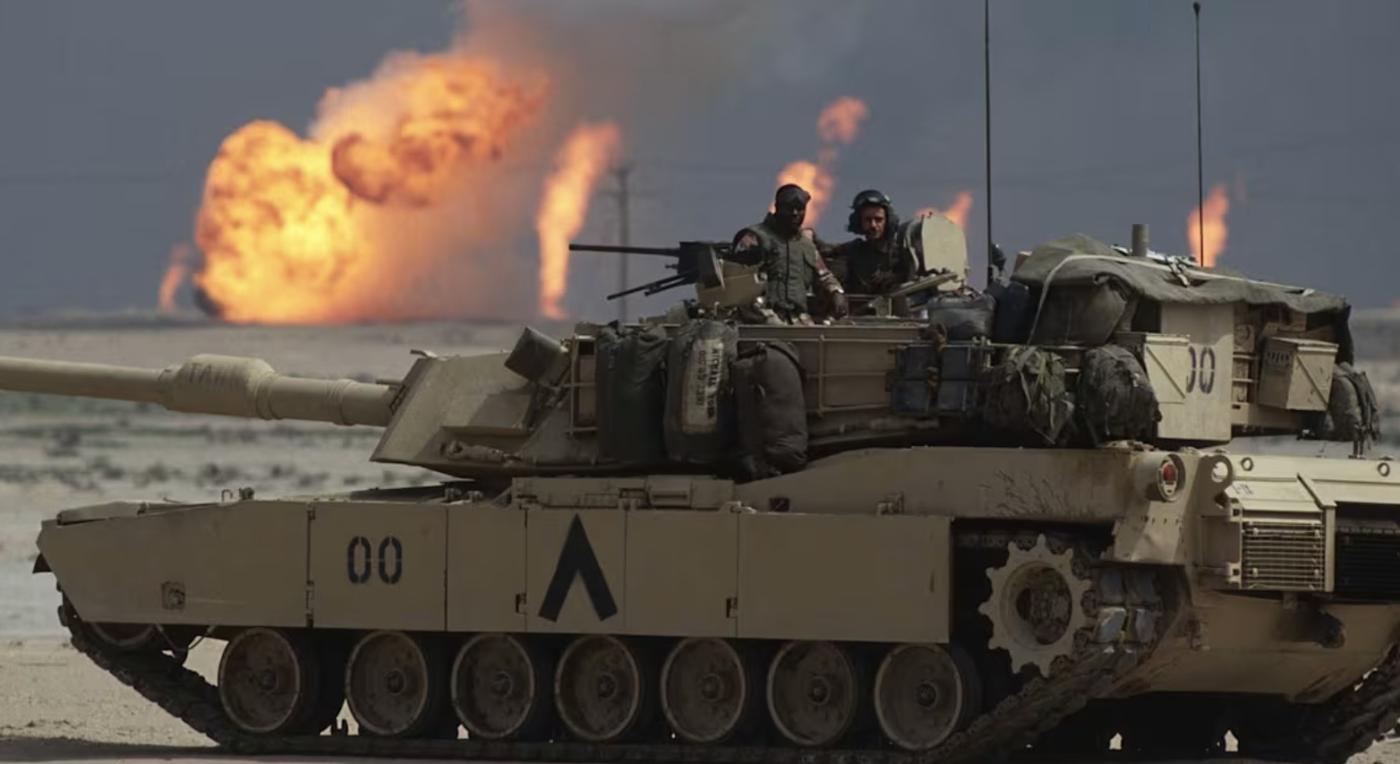
The main attacking force consisted of the United States Army’s V Corps and the United States Marine Corps’ I Marine Expeditionary Force. V Corps was commanded by Lieutenant General William S. Wallace and included the 3rd Infantry Division, the 101st Airborne Division (Air Assault), the 82nd Airborne Division, and the 11th Aviation Regiment. The 3rd Infantry Division, equipped with M1A1 Abrams tanks and Bradley fighting vehicles, formed the spearhead of the advance toward Baghdad. The division’s mission was to push quickly north through southern Iraq along Highway 8 toward the Euphrates River valley.
Alongside them the I Marine Expeditionary Force, commanded by Lieutenant General James Conway, advanced slightly to the east. The Marines included the 1st Marine Division, the 2nd Marine Expeditionary Brigade, and the British 15th Marine Expeditionary Unit. Their objective was to move toward Nasiriyah and then push north along the Tigris River toward Baghdad.
The United Kingdom led a separate but coordinated campaign in the far south of Iraq. British forces were primarily assigned the mission of capturing the port city of Basra and securing Iraq’s vital oil infrastructure in the southern region. The British contingent consisted mainly of the 1st Armoured Division under Major General Robin Brims. Units included the 7th Armoured Brigade, often known as the “Desert Rats,” the 16 Air Assault Brigade, and Royal Marine commandos from 3 Commando Brigade. British Challenger 2 tanks and Warrior infantry fighting vehicles supported the advance.
Australian forces also played a role in the opening of the ground war. Australia contributed Special Air Service Regiment units, Royal Australian Air Force aircraft, and naval vessels operating in the Persian Gulf. Australian special forces moved into western Iraq to secure potential Scud missile launch sites and prevent attacks on Israel, which had been a concern during the earlier Gulf War in 1991.
Poland provided a smaller but symbolic contribution that included special forces from the GROM unit. These troops worked alongside U.S. Navy SEALs and other coalition special operations forces in securing key infrastructure, including oil terminals along the Persian Gulf.
As the ground assault began, coalition armored columns pushed rapidly across the Iraqi border. The 3rd Infantry Division encountered relatively light resistance at first. Iraqi border defenses consisted mainly of elements from the Iraqi Army’s 51st Mechanized Division and local militia forces known as the Fedayeen Saddam. Many Iraqi soldiers surrendered or abandoned their positions early in the invasion, although irregular fighters later mounted more determined resistance.
One of the earliest major engagements occurred near the southern Iraqi city of Umm Qasr, Iraq’s only deep-water port. British Royal Marines and Polish special forces moved quickly to capture the port facilities while U.S. Marines secured surrounding areas. Control of Umm Qasr was essential because it would allow humanitarian aid to enter Iraq once combat operations progressed.
Further inland, the Marines approached the city of Nasiriyah, a key crossing point over the Euphrates River. Iraqi forces including Fedayeen fighters and elements of the Iraqi Army launched ambushes in urban areas and along highways. Nasiriyah became one of the first major battles of the ground invasion, with intense fighting around bridges and road junctions.
Meanwhile, the U.S. Army’s 3rd Infantry Division advanced rapidly north in what commanders described as a “thunder run” style approach, bypassing many towns and leaving pockets of resistance behind to maintain momentum toward Baghdad. The goal of the strategy was speed. Coalition planners believed that a rapid advance would collapse Iraqi command and control before the Iraqi military could organize a coherent defense.
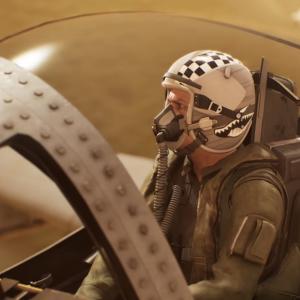
At the same time, coalition aircraft continued heavy bombing under the campaign known as “shock and awe.” Hundreds of cruise missiles and guided bombs struck Iraqi government buildings, communications centers, and Republican Guard positions. The intention was to overwhelm Iraqi leadership psychologically and physically while the ground forces advanced.
The Iraqi military defending the country was large on paper but weakened by years of sanctions and poor equipment maintenance. Saddam Hussein’s most loyal and better-equipped units were the Republican Guard divisions stationed closer to Baghdad, including formations such as the Medina Division, the Baghdad Division, and the Hammurabi Division. These units were expected to defend the capital against the advancing coalition forces.
An interesting aspect of the invasion was the massive logistical system supporting the advance. Coalition forces relied on long supply lines stretching back to Kuwait. Convoys carried fuel, ammunition, water, and food across hundreds of kilometers of desert. Maintaining this supply network became a constant challenge as Iraqi irregular fighters targeted supply trucks and rear units.
Another notable feature was the extensive use of satellite-guided weapons and real-time battlefield communications. Coalition commanders could track units using digital systems and coordinate air support quickly. This technological advantage allowed coalition forces to strike Iraqi positions rapidly whenever resistance appeared.
The speed of the invasion surprised many observers. Within the first day coalition troops had already penetrated deep into southern Iraq. Although resistance would increase around cities and along river crossings, the initial ground assault on 20 March demonstrated the coalition’s strategy of rapid maneuver warfare combined with overwhelming air power.
The invasion that began that night marked the start of a campaign that would reach Baghdad within three weeks. While the early advance appeared swift and decisive, it also set the stage for the longer and more complicated conflict that followed after the fall of Saddam Hussein’s government.