XM7 Spider Land Mine
The United States XM7 anti-personnel land mine system is more widely known as the M7 Spider networked munition system. It is a modern battlefield weapon designed to replace older anti-personnel land mines while still providing the same ability to deny terrain to enemy troops. Traditional land mines explode automatically when someone steps on or disturbs them, but the XM7 system works differently. It is controlled remotely by soldiers and requires a human operator to decide whether to fire the weapon. This design was created to maintain human control over lethal force while still allowing troops to defend an area against enemy infantry.
The system was developed for the U.S. Army during efforts to replace persistent anti-personnel mines with weapons that could be controlled and later removed. Development began in the late 1990s and early 2000s as part of a broader modernization program. The main companies involved in the development and production included Alliant Techsystems (later part of Northrop Grumman), Textron Systems, and other defense subcontractors. These companies designed the electronics, communications systems, and munitions used by the weapon.
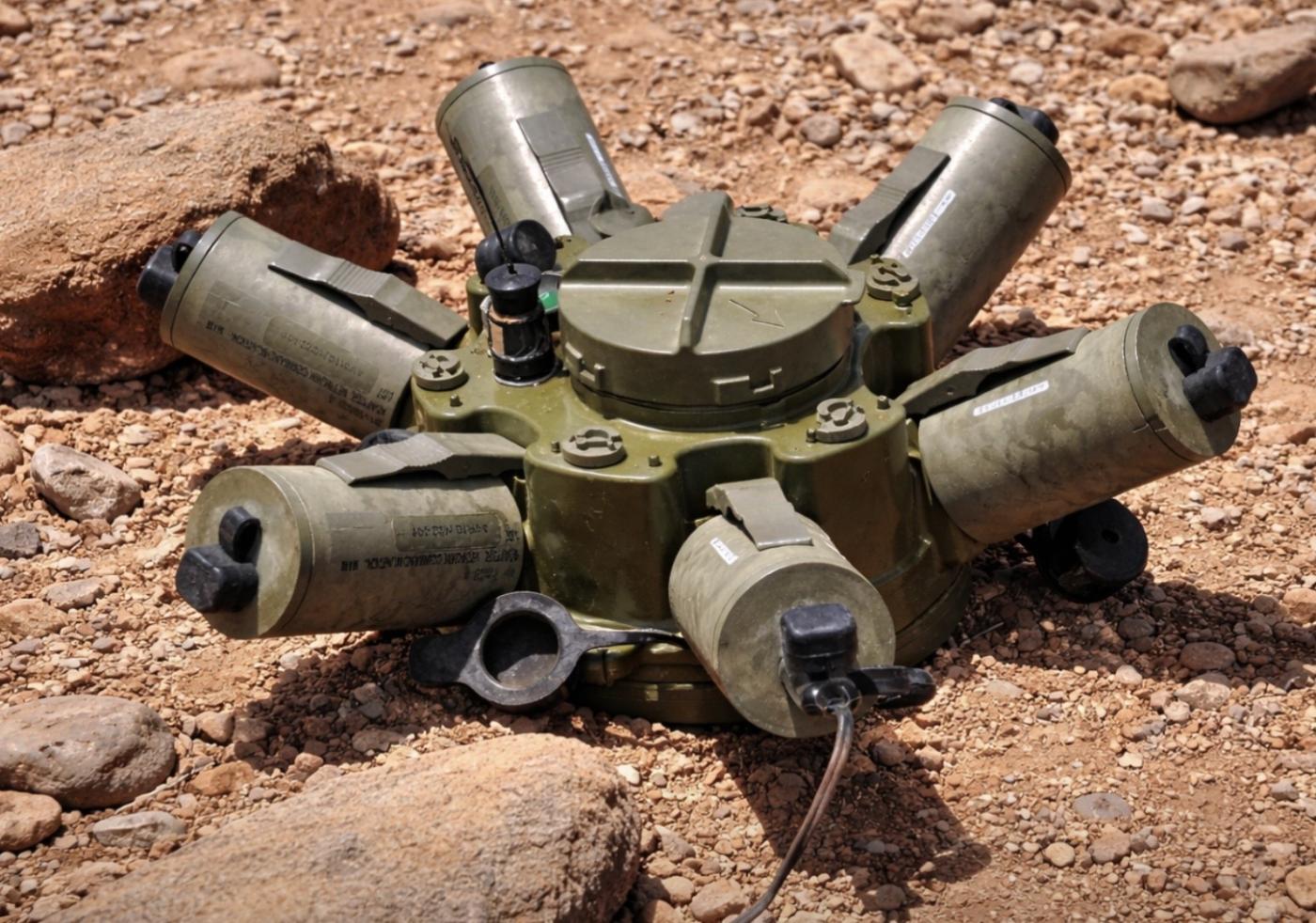
Instead of a single buried mine, the XM7 Spider system is made up of a network of small devices called Munition Control Units. These units are placed on the ground by soldiers to create a controlled defensive minefield. Each Munition Control Unit can connect to multiple small grenade launchers or directional fragmentation munitions. A full network can contain dozens of these units spread across the terrain, all connected to a single remote control station used by soldiers monitoring the system.
Each Munition Control Unit normally contains six grenade-type munitions arranged around the device. The launch tubes are positioned to cover different directions, usually about sixty degrees each. When deployed properly, several units overlap their coverage areas to create a defensive barrier that can block or disrupt enemy movement through a specific area. The system communicates with the control station using secure wireless signals, allowing the operator to monitor the network from a distance of roughly one to one and a half kilometers away.
The system normally uses tripwires or small sensors placed around each control unit. When someone walks into the protected area and disturbs one of the wires, the unit sends a signal to the remote operator. The operator then receives an alert indicating which device has detected movement. Because the system is not automatic, the soldier monitoring the equipment must decide whether the detected target is an enemy soldier, friendly personnel, or a civilian. Only after that decision does the operator choose to fire the weapon.
When activated, the system launches a small fragmentation grenade from the Munition Control Unit. The grenade is propelled a short distance away from the device and may also be thrown upward slightly before exploding. This design spreads the fragments over a wider area rather than concentrating them near the launcher. The explosion sends hundreds or sometimes more than a thousand metal fragments outward at very high speed.
The lethal radius of a single grenade is roughly around ten meters, though fragments can travel farther and still cause injury. Inside the lethal zone the fragments can penetrate clothing, flesh, and light equipment. Because each Munition Control Unit holds six grenades, it can fire multiple bursts in sequence or engage several targets. When multiple units are deployed together, the overlapping blast areas create a highly dangerous defensive zone for infantry attempting to cross it.
A complete Spider network may include up to sixty-three Munition Control Units linked to a single operator station. If each of those units contains six grenades, the system could potentially fire hundreds of explosive rounds. In some configurations a full system can launch more than three hundred grenades. Each grenade producing large numbers of high-velocity fragments means the total amount of metal fragments released across the battlefield could reach hundreds of thousands.
The weapon is primarily designed for defensive use. Combat engineers or infantry units deploy it around bases, patrol positions, or temporary defensive lines. It can also be used along likely enemy approach routes such as roads, trails, or narrow terrain corridors. When enemy troops attempt to infiltrate the area the system provides early warning through the tripwire alerts. Soldiers then have the option to fire the grenades to stop or scatter the attackers.
Another feature of the XM7 Spider system is that it can be configured with both lethal and non-lethal munitions. Some launchers can fire fragmentation grenades intended to kill or seriously wound enemy personnel. Others can use non-lethal rounds such as flash or rubber-ball munitions designed to warn or disperse people without causing fatal injuries. This allows the system to be adapted to different operational rules or environments.
Unlike older land mines that remain dangerous for years after a conflict, the Spider system can be turned off, recovered, or destroyed by its operators. If troops leave an area they can deactivate the devices remotely and collect them. The system can also be commanded to erase data or disable itself to prevent enemy forces from capturing and reusing the equipment. If the grenades have not been fired, the units can be packed up and used again later.
Production numbers for the system were relatively limited compared with the millions of mines produced during the Cold War. Early procurement plans called for several hundred Spider systems along with large numbers of munition reload kits. The program cost hundreds of millions of dollars during its development and early production phases. The first operational systems began entering U.S. Army service around 2011, especially with combat engineer units responsible for building battlefield obstacles and defensive positions.
The XM7 Spider system represents a modern evolution of land mine warfare. Rather than an uncontrolled explosive hidden in the ground, it functions more like a remotely managed defensive weapon network. Soldiers monitor the system, decide when to use lethal force, and can later remove the equipment. Its destructive capability comes from hundreds of grenade-based munitions capable of covering a large area with high-speed metal fragments, making it an effective tool for stopping or delaying enemy infantry while maintaining human control over when the weapon is used.