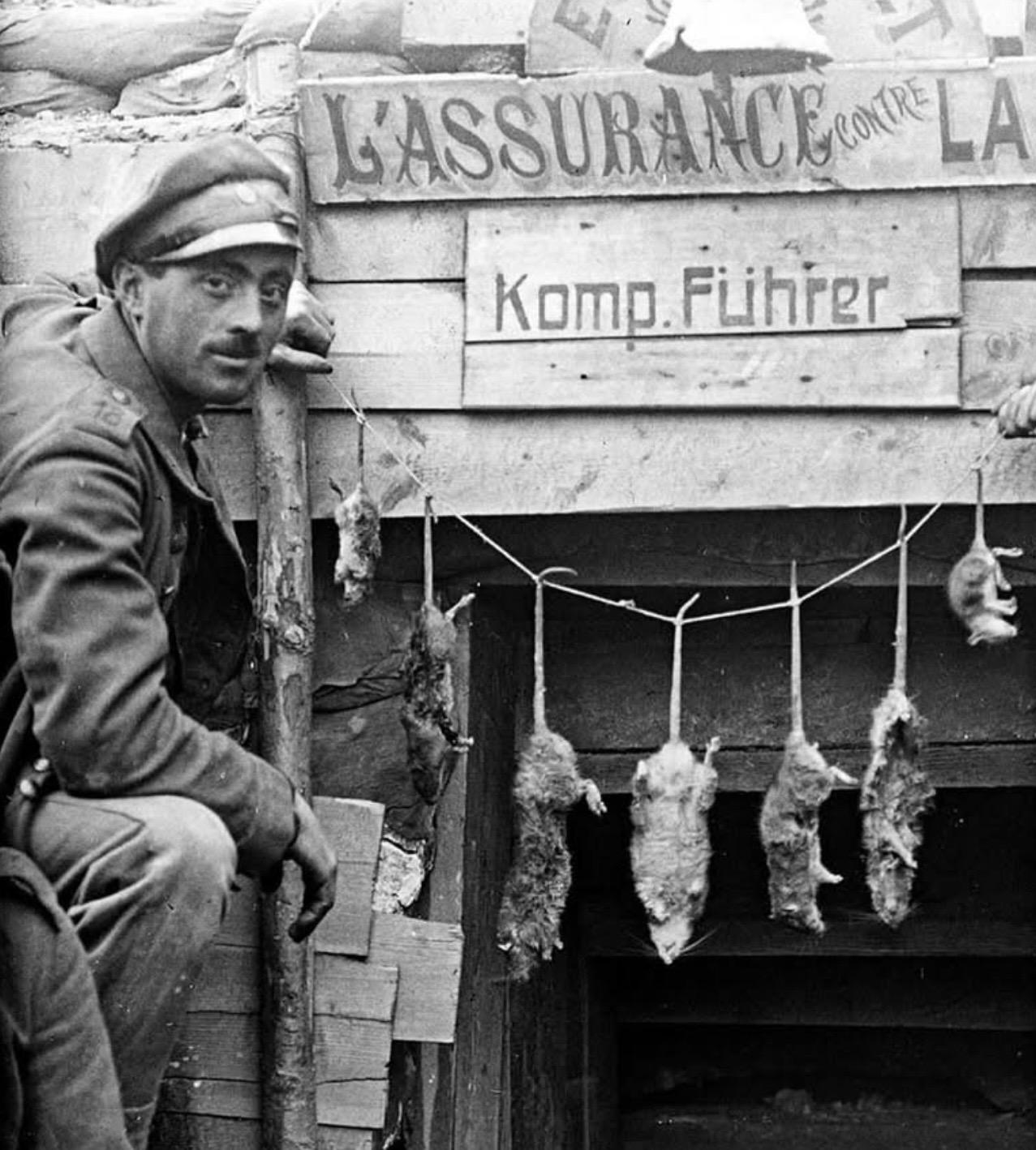
WW1 Trench Rats
Rats became one of the most infamous and disturbing features of trench life during the First World War. Alongside mud, lice, disease and constant artillery fire, the enormous rodent populations living in the trenches formed a daily source of fear, disgust and psychological strain for soldiers on both sides of the conflict. Their presence was not accidental. The conditions created by trench warfare provided an almost perfect environment for these animals to multiply rapidly in number, size and boldness.
The trench systems that stretched across the Western Front from the North Sea to Switzerland were essentially long open scars in the earth. These trenches were rarely dry, often filled with mud, rotting supplies and the bodies of men and animals killed in battle. Thousands of soldiers lived in these cramped positions for long periods, generating huge quantities of food scraps, waste and refuse. Dead soldiers frequently lay in no-man’s-land or became buried in the trench walls themselves when explosions collapsed the earth. In many cases the dead could not be properly buried because the constant threat of sniper fire or artillery made recovery impossible.
These conditions provided a steady supply of food for rodents. Corpses were one of their main food sources, and they quickly learned to feed on the bodies of fallen soldiers. Troops often reported the horrifying sight of vermin crawling over corpses at night or watching them gnawing on exposed flesh. The trenches were also littered with discarded rations such as bread, cheese, meat and biscuit crumbs. Supply depots behind the lines also attracted infestations, which then spread throughout the trench systems.
Two main species were present in the trenches: the brown rat, also known as the Norway rat, and the black rat. The brown variety was the most common and became the dominant species because it was larger, more aggressive and more adaptable. Brown rats are capable swimmers and burrowers, allowing them to survive easily in the muddy trench environment.
Because of the abundant food supply, trench rodents grew unusually large. Soldiers frequently described them as being the size of cats. Some exaggerated accounts even claimed they were as large as small dogs. While such descriptions were often influenced by shock and fear, it is true that these animals in the trenches were unusually well-fed and therefore much bigger than typical urban specimens. Many soldiers reported seeing thick-bodied creatures with long tails scurrying along trench walls at night, their eyes shining in the light of lanterns.
The vermin became extremely bold because they had little reason to fear humans. With so much food available and so many places to hide in trench walls and dugouts, their populations multiplied rapidly. Soldiers frequently woke to find rodents running across their bodies or faces while they slept. Many accounts describe men trying to sleep while hearing constant scratching and squealing noises nearby.
The health risks posed by these animals were serious. They are carriers of numerous diseases, many of which can spread to humans either directly or through parasites such as fleas. One of the most feared diseases associated with them was bubonic plague, historically known as the Black Death. Although large outbreaks of plague did not occur in the trenches during the war, the presence of flea-borne infections remained a constant concern.
More commonly, the infestations contributed to the spread of diseases such as leptospirosis, sometimes known as Weil’s disease. This disease is transmitted through water contaminated with rodent urine. Since trenches were frequently flooded or filled with standing water, soldiers were constantly exposed to contaminated conditions. Weil’s disease could cause severe symptoms including jaundice, fever, kidney damage and internal bleeding.
These animals also contributed indirectly to the spread of other trench-related illnesses by contaminating food and supplies. They gnawed through ration bags and storage containers, leaving droppings and urine behind. This contamination increased the risk of gastrointestinal infections among troops already weakened by poor nutrition and harsh living conditions.
Another health problem associated with infestations was rat-bite fever, a bacterial infection transmitted through bites or scratches. Although not extremely common, bites did occur when soldiers accidentally disturbed vermin while sleeping or handling supplies.
The psychological effects on soldiers were significant. Living under constant threat from artillery and enemy attacks was already extremely stressful, but the presence of these creatures added another layer of misery and horror. Soldiers often described feelings of revulsion, anxiety and helplessness when dealing with them. Many reported that vermin crawling over them at night made sleep nearly impossible.
The sight of rodents feeding on the bodies of fallen comrades had a particularly disturbing impact. It reinforced the brutal reality of death and decay that surrounded the trenches. Some soldiers wrote in letters and diaries that seeing vermin eating human remains haunted them long after they left the front lines.
The armies attempted various methods to control the infestations, but none were very successful. Trench soldiers often tried to kill them whenever they saw one. Bayonets, rifle butts and trench clubs were commonly used weapons. Some soldiers even made a kind of sport out of killing the pests, competing to see who could destroy the most.
One popular method involved shooting them at night when they were most active. Soldiers would shine a lantern along the trench walls and fire at the glowing eyes of vermin moving through the darkness. However, ammunition was usually too valuable to waste on pest control, so this method was not widely encouraged by officers.
Traps were also used. Simple mechanical traps were set in dugouts and supply areas, baited with scraps of food. Poison was occasionally distributed, but it often proved ineffective because the animals quickly learned to avoid suspicious food. In addition, poison could accidentally contaminate supplies or harm other animals.
Some soldiers kept terriers and other small dogs specifically to hunt the trench vermin. These dogs proved very effective at catching and killing them. A skilled rat-catching dog could kill dozens in a single session. Rat-hunting with dogs became a kind of morale-boosting activity for some units, giving soldiers a temporary distraction from the horrors of war.
Despite these efforts, the infestations remained overwhelming. The constant supply of food and shelter meant that even when large numbers were killed, new animals quickly replaced them. In some areas the ground itself became riddled with burrows.
There were also reports of soldiers attempting to flood nests by pouring water into burrows or collapsing trench walls to destroy hiding places. However, such efforts were limited by the fragile structure of the trenches themselves.
Although rodents were never deliberately used as weapons during the First World War, there were occasional rumours and ideas related to weaponising them. One concept, sometimes discussed in later wars, involved infecting them with disease and releasing them in enemy areas to spread illness. However, there is no credible evidence that this was attempted during the First World War. The creatures that plagued the trenches were simply a byproduct of the battlefield environment rather than a planned tactic.
One interesting aspect of trench infestations was how quickly the animals adapted to the rhythms of war. Soldiers noticed that they seemed to become active immediately after bombardments. Explosions often uncovered buried corpses, providing new food sources. They also appeared to learn when soldiers were resting or when food supplies were delivered.
In some areas these animals even built nests inside sandbags, dugouts and trench walls. Their burrowing sometimes weakened trench structures, causing small collapses or creating hidden tunnels through which they could move quickly.
The presence of rodents also interacted with other trench pests such as lice. Lice were responsible for spreading trench fever, another widespread illness among soldiers. While lice lived primarily on human bodies, the filthy conditions of the trenches allowed multiple pest populations to thrive simultaneously, creating a constant health hazard.
For many soldiers, the vermin became a symbol of the decay and brutality of trench warfare. Letters and memoirs written after the war frequently mention them as one of the most unforgettable aspects of life at the front. The constant scratching in the dark, the sight of swollen bodies feeding on corpses, and the feeling of them running across sleeping soldiers left lasting impressions.
The problem in the trenches was never truly solved during the war. Even the largest extermination efforts barely dented their numbers.