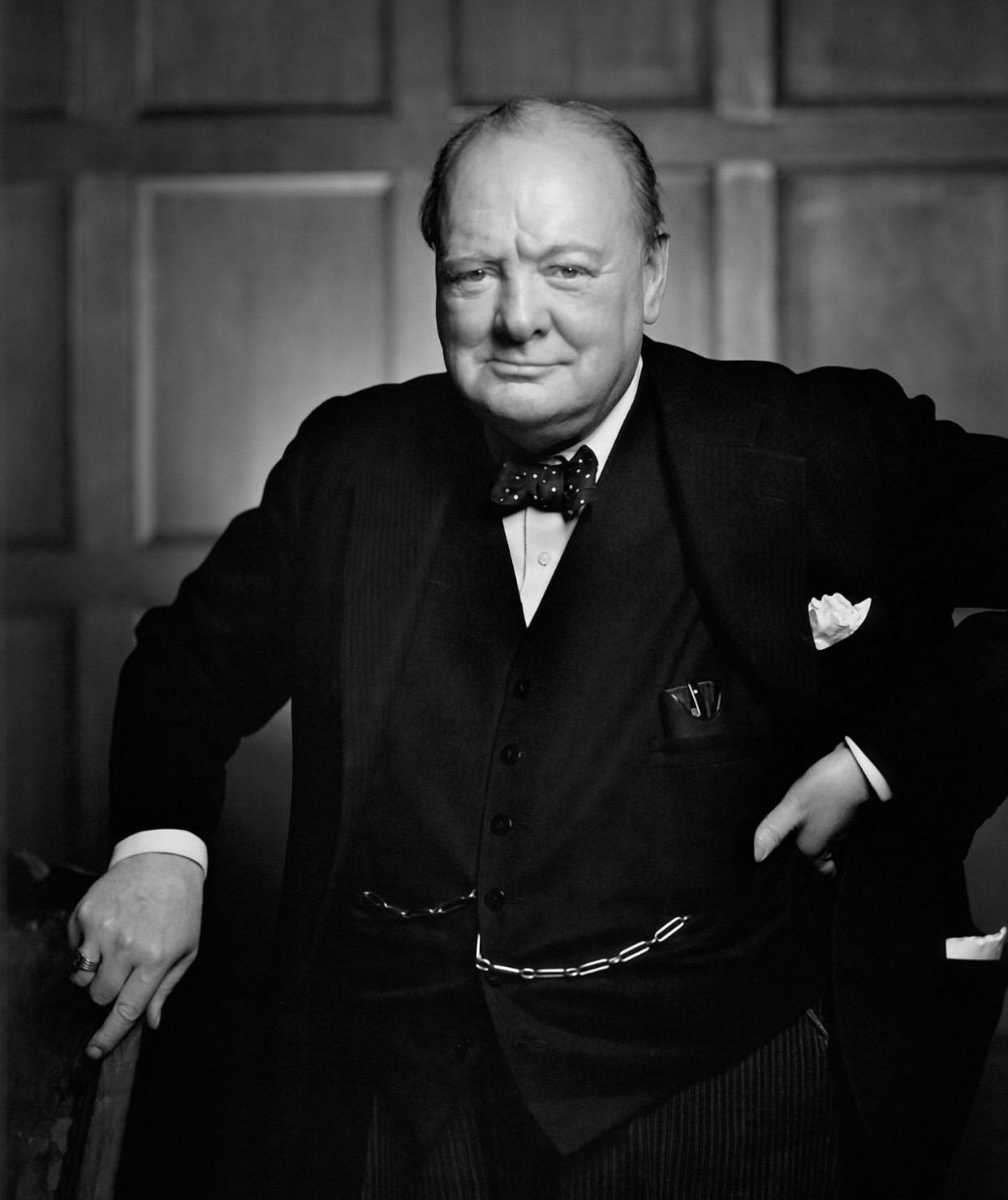
Winston Churchill
Winston Churchill was one of the most important and recognisable figures of the 20th century, remembered mainly for leading Britain through the Second World War. His life, however, was far more complex, filled with personal struggles, bold decisions, failures, and remarkable comebacks.
He was born on 30 November 1874 at Blenheim Palace, one of the grandest homes in Britain. This palace had been built for his ancestor, John Churchill, 1st Duke of Marlborough, a famous military commander. His father, Lord Randolph Churchill, was a rising Conservative politician, and his mother, Jennie Jerome, was well known in high society. Despite this privileged background, his early life was quite lonely. His parents were often busy and distant, and he formed a much stronger emotional bond with his nanny, Elizabeth Everest, who he loved deeply.
As a child, he was not seen as particularly gifted. He struggled in school, especially with subjects like Latin and mathematics, and was often described as stubborn and difficult. He went to Harrow School, where he began to show an interest in English, history, and public speaking. Even then, he enjoyed words and storytelling, something that would later make him famous. After failing the entrance exam twice, he finally gained admission to the Royal Military Academy Sandhurst. This was a turning point. At Sandhurst, he worked hard and performed well, graduating near the top of his class.
He joined the army as a cavalry officer and quickly began travelling across the British Empire. In India, he spent long periods reading books on history, politics, and philosophy, teaching himself the education he had missed earlier. He later took part in fighting in Sudan, including the famous Battle of Omdurman in 1898, where British forces defeated a much larger army. These experiences gave him confidence and a sense of adventure.
He also began writing as a war correspondent, combining his military career with journalism. During the Second Boer War in South Africa, he was captured by enemy forces after an armoured train was attacked. His escape from a prison camp, travelling hundreds of miles to safety, made him a national hero almost overnight. Newspapers reported his story widely, and this fame helped him enter politics soon after.
He became a Member of Parliament in 1900. Early in his political career, he switched from the Conservative Party to the Liberal Party, which was unusual and showed his independence. Over the next years, he held several important positions. As First Lord of the Admiralty, he worked to modernise the navy, preparing Britain for possible conflict. However, during World War I, he supported the Gallipoli Campaign, an attempt to attack the Ottoman Empire. The plan failed badly, costing many lives, and he was blamed. He resigned and, in a rare move for a politician, went to fight on the Western Front himself as an army officer.
After the war, he slowly rebuilt his political career. During the 1920s and 1930s, he held various roles but also spent time out of government. This period is often called his “wilderness years.” During this time, he warned strongly about the rise of Adolf Hitler and the danger of Nazi Germany, while many other leaders hoped to avoid another war. At the time, his warnings were often ignored, but later events proved him right.
In 1940, as German forces swept across Europe and Britain faced possible invasion, he became Prime Minister of the United Kingdom. This was the moment that defined his life. Refusing to consider surrender, he gave powerful speeches that lifted the nation’s spirits. His words during the Battle of Britain helped people remain determined during constant bombing. He promised that Britain would never give up, even in its darkest hours.
He worked closely with Franklin D. Roosevelt and Joseph Stalin to form a strong alliance against the Axis powers. He travelled widely during the war, meeting leaders and planning strategy. Although the war brought great hardship, his leadership helped guide Britain to victory in 1945.
Surprisingly, after the war ended, he lost the general election. Many people wanted change and new social reforms. Even so, his reputation remained strong, and he returned as Prime Minister again in 1951, serving until 1955. Alongside politics, he was a talented writer and historian, producing many books about history and his own experiences. In 1953, he was awarded the Nobel Prize in Literature for his writing and speeches.
In his later years, his health declined, and he retired from public life. He died on 24 January 1965 at the age of 90. He was given a state funeral, attended by leaders from across the world, showing the respect he had earned. He was buried at St Martin's Church, a quiet church near where he was born.
Today, he is remembered as a determined and powerful leader, a skilled speaker, and someone who refused to give up even in the most difficult circumstances. His life story shows how failure, persistence, and courage can shape history.