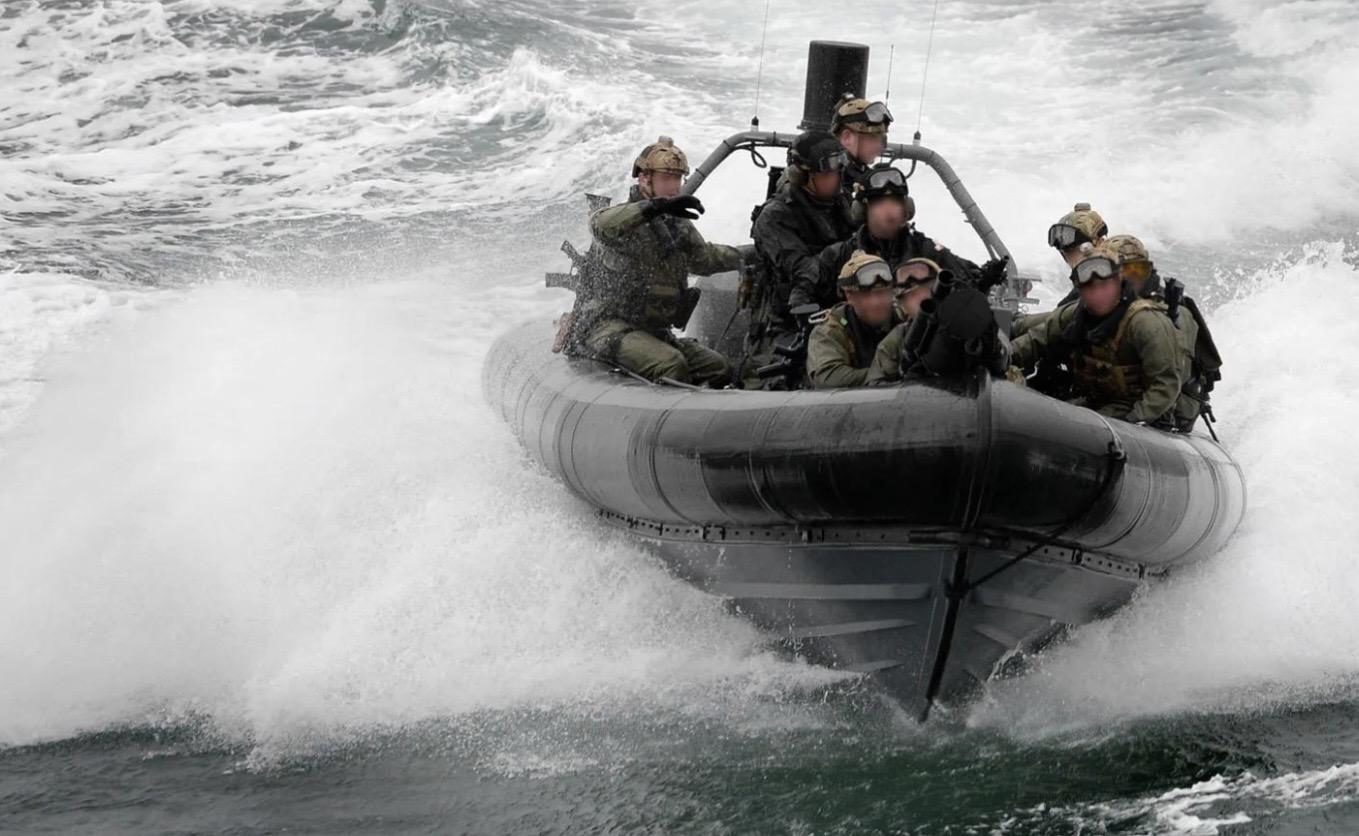
Special Boat Service
The Special Boat Service is one of the United Kingdom’s most secretive and elite military units. It forms part of UK Special Forces alongside the Special Air Service, but unlike the army-based SAS, it belongs to the Royal Navy and is primarily drawn from the Royal Marines, specialising in maritime and amphibious operations.
It was officially formed in 1942 during the Second World War, evolving from earlier commando units such as the Special Boat Section. These early forces carried out dangerous raids along enemy coastlines using folding canoes and small boats to infiltrate harbours and sabotage ships. Their success in stealth operations shaped its modern role as experts in covert insertion from the sea.
The unit is based at RM Poole on the south coast of England. This base provides direct access to open water and training areas. Although headquartered there, personnel train in a wide range of environments, including mountains, jungles, deserts, and cold-weather regions to prepare for global operations. The force is small, with around 200 operators organised into squadrons for flexibility and rapid deployment.
Training is widely regarded as one of the hardest in the world. It begins with an aptitude phase focused on water skills, including long-distance swims, underwater tasks, and endurance exercises. Those who pass move on to the joint UK Special Forces selection course with SAS candidates, lasting about six months. This includes endurance marches over difficult terrain, navigation exercises, jungle training, and resistance to interrogation.
After selection, candidates complete a specialist maritime phase where they learn combat diving, underwater navigation, small boat handling, and amphibious assault techniques. They are also trained to deploy from submarines or ships and approach targets undetected. Even after qualification, operators continue constant training to maintain their skills.
The pass rate is extremely low, with fewer than 10 percent succeeding. Most candidates fail and return to their original units. Applicants must already serve in the UK Armed Forces, usually with at least two years’ experience. While many come from the Royal Marines, all branches can apply.
The main difference from the SAS is operational focus. The SAS concentrates on land-based missions such as desert warfare and long-range patrols, while this unit specialises in maritime tasks. These include ship boarding, anti-piracy operations, underwater demolition, and covert coastal reconnaissance.
Personnel must be highly skilled swimmers and divers, capable of operating in cold, dark, and dangerous sea conditions for extended periods. They often work in small teams, relying on stealth, precision, and independence.
The motto is “By strength and guile,” reflecting both physical ability and intelligence. The cap badge is linked to Royal Marines heritage, and members usually wear the green beret, helping maintain secrecy.
It is known for being even more discreet than the SAS, with many missions never publicly confirmed. Its operators combine elite combat ability with advanced maritime skills, making it one of the most specialised and capable forces in the world.