Westland Whirlwind
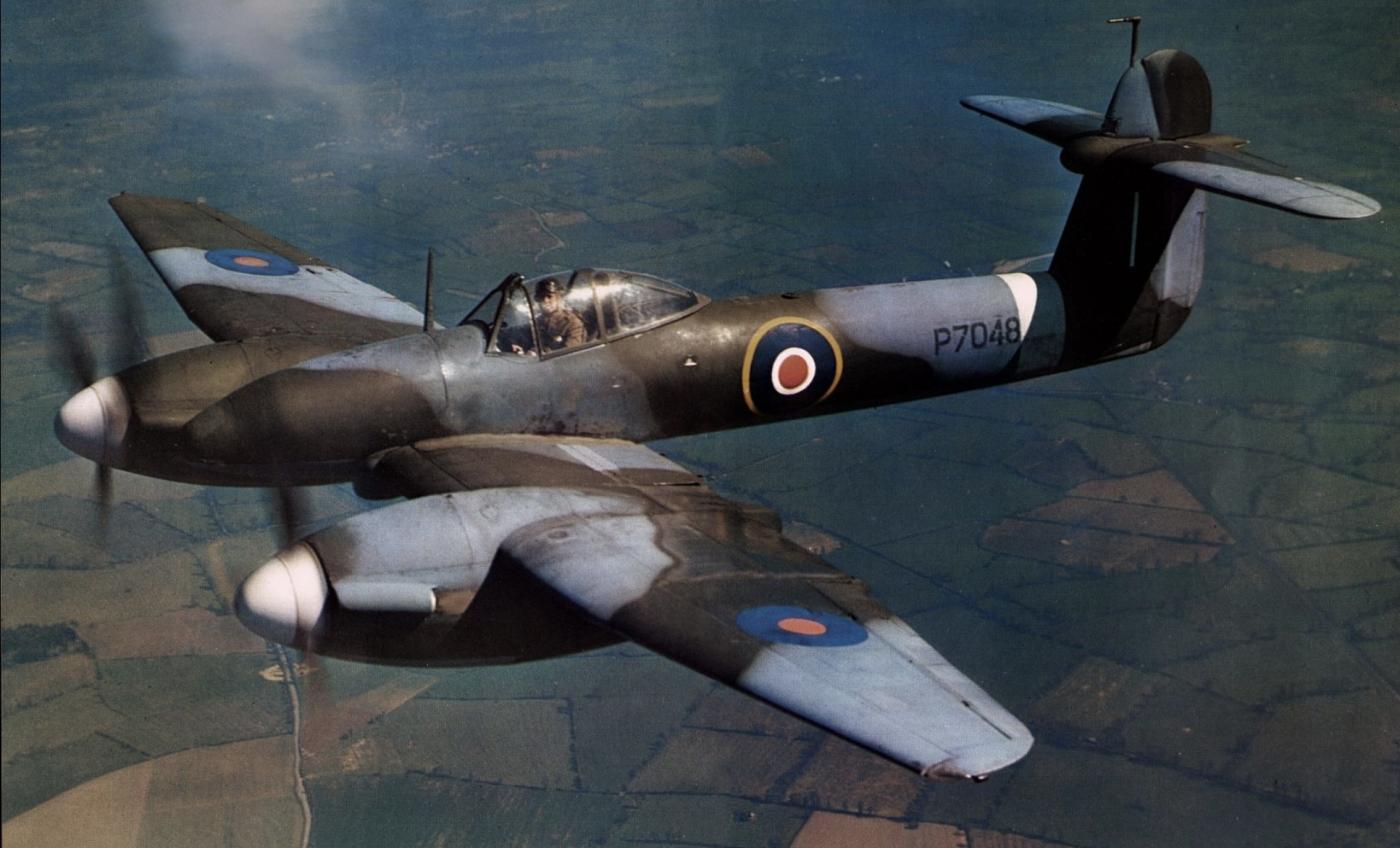
The Westland Whirlwind was one of the most unusual and forward-thinking British fighter aircraft to serve during the Second World War. It was designed in the late 1930s when the Royal Air Force wanted a fast, heavily armed twin-engine fighter capable of destroying enemy bombers with a short burst of fire. The original design work was led by R. J. Mitchell, the famous designer of the Spitfire, during the final years of his life, with further development carried out by his team after his death. The aircraft was built by Westland Aircraft at Yeovil in Somerset, England.
The Whirlwind made its first flight in October 1938 and was very advanced for its time. It was compact, cleanly designed, and powered by two Rolls-Royce Peregrine liquid-cooled engines, which were smaller relatives of the Merlin. These engines gave the aircraft an excellent rate of climb and a top speed of about 360 miles per hour, making it one of the fastest RAF fighters when it entered service in 1940. Its range was around 800 miles, which suited operations over the English Channel and occupied Europe, though it was more limited than many single-engine fighters.
The most striking feature of the Whirlwind was its firepower. It carried four 20 mm Hispano cannon mounted tightly together in the nose, giving it tremendous hitting power. At a time when many fighters still relied mainly on machine guns, this heavy cannon armament was devastating. A short burst could destroy an enemy aircraft or cause serious damage to ships and ground targets, making the Whirlwind especially effective in low-level attack and anti-shipping missions.
The aircraft served with the Royal Air Force from 1940, mainly with No. 263 Squadron and later No. 137 Squadron. It was used as a day fighter, bomber destroyer, and increasingly as a fighter-bomber. Whirlwinds often flew very low-level attacks against German airfields, railways, and coastal shipping, skimming over the sea at high speed. Pilots valued its stability as a gun platform and its powerful armament, although it could be demanding to fly, particularly if one engine failed.
Only a small number of Whirlwinds were built, just over 110 aircraft in total. This was largely due to problems with the Peregrine engines, which were not developed further and were produced in limited numbers. Rolls-Royce focused its efforts on the Merlin engine instead, leaving the Whirlwind without a suitable replacement powerplant. As a result, the aircraft was withdrawn from frontline service by 1943.
Although its career was short, the Westland Whirlwind is remembered as an aircraft ahead of its time. Its speed, heavy armament, and effectiveness in low-level attack roles pointed toward later fighter designs, and it remains a fascinating example of British innovation during the war.