Welsh Guards
The Welsh Guards were formally created on 26 February 1915, during the most demanding phase of the First World War, when the British Army was expanding at an unprecedented rate to meet the realities of industrialised warfare. Their formation completed the group of five Foot Guards regiments, coming after the Grenadier Guards, Coldstream Guards, Scots Guards and Irish Guards. Unlike the earlier regiments, whose origins stretched back centuries, the Welsh Guards were born directly out of wartime necessity, making them the youngest of the Foot Guards and the last to be added to this elite group.
The decision to raise a Welsh regiment of Foot Guards was both military and political. Wales had contributed heavily to the British war effort, yet lacked representation within the prestigious Guards establishment. Prime Minister David Lloyd George, himself Welsh, strongly supported the creation of the regiment, seeing it as recognition of Welsh loyalty and sacrifice. King George V approved the formation, granting the new regiment its title and badge, which prominently features the leek, long associated with Welsh identity. From the outset, the Welsh Guards were placed within the Household Division, sharing ceremonial duties and elite status with the older Guards regiments.
Initial recruitment drew heavily from Welshmen already serving across the army, many of whom transferred from line infantry regiments. Training took place under intense time pressure, as the war allowed little margin for prolonged preparation. By the summer of 1915, the 1st Battalion Welsh Guards was ready for active service and was sent to France as part of the Guards Division. Their baptism of fire came at the Battle of Loos later that year, where they suffered heavy casualties, a pattern that would mark much of their early history. The regiment quickly gained a reputation for discipline and determination, forged in the harsh conditions of trench warfare.
Throughout the remainder of the First World War, the Welsh Guards served continuously on the Western Front, taking part in major engagements such as the Somme, Ypres and the final Allied offensives of 1918. Losses were severe, particularly for a regiment so newly formed, but their performance earned respect within the wider British Army. By the end of the war, the Welsh Guards had firmly established themselves as a fighting regiment rather than merely a ceremonial addition.
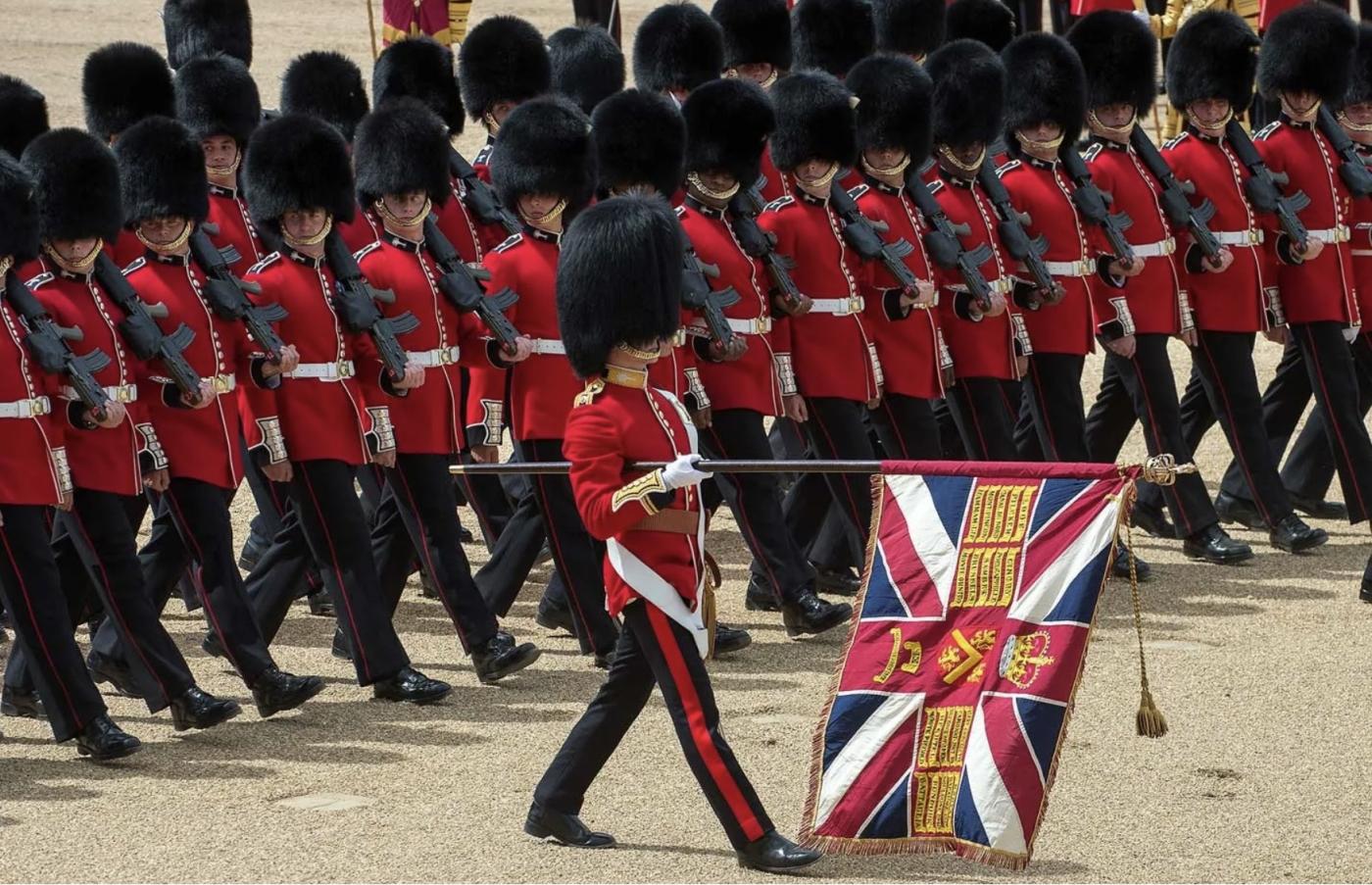
In the inter-war years, the regiment settled into the dual role that defines the Foot Guards. On one hand, they carried out public duties, including guarding royal palaces and taking part in state ceremonies, wearing their distinctive scarlet tunics and bearskins. On the other, they continued rigorous military training, preparing for the possibility of future conflict. This balance between pageantry and combat readiness became a defining feature of the regiment’s identity.
The outbreak of the Second World War once again placed the Welsh Guards in active service. They fought in France in 1940, suffering heavy losses during the retreat to Dunkirk, where much of the regiment was captured or killed. Rebuilt afterwards, the Welsh Guards went on to serve in North Africa, Italy and north-west Europe, including participation in Operation Market Garden in 1944. Their role during this period demonstrated their adaptability, operating not only as traditional infantry but also, at times, in armoured formations, reflecting the changing nature of warfare.
After 1945, the Welsh Guards continued to see active service across the globe. They took part in post-war operations in Palestine, Malaya, Cyprus and Northern Ireland, often in complex counter-insurgency roles far removed from the mass battles of the world wars. These deployments demanded restraint, cultural awareness and professionalism, qualities that became increasingly important as Britain’s military role evolved.
In more recent decades, the regiment has served in conflicts such as the Gulf War, Bosnia, Iraq and Afghanistan. In these theatres, the Welsh Guards operated as modern light infantry, conducting patrols, security operations and combat missions alongside other British and allied units. Despite advances in technology and changes in tactics, the regiment has maintained a strong sense of continuity with its past, emphasising discipline, regimental loyalty and pride in Welsh heritage.
Alongside operational duties, the Welsh Guards have remained central to state ceremonial life in the United Kingdom. They regularly mount the King’s Guard, take part in Trooping the Colour, and perform duties at royal residences. This highly visible role has made them one of the most recognisable regiments in the army, symbolising both military professionalism and national tradition.
From their formation on 26 February 1915 as the last of the five Foot Guards regiments, the Welsh Guards have moved rapidly from new wartime creation to an established and respected part of Britain’s military fabric. Their history is marked by heavy sacrifice, adaptability in changing forms of warfare, and a unique blend of Welsh identity within the elite structures of the British Army. Despite being the youngest of the Foot Guards, their service record places them firmly alongside their older counterparts, both on the battlefield and on parade.