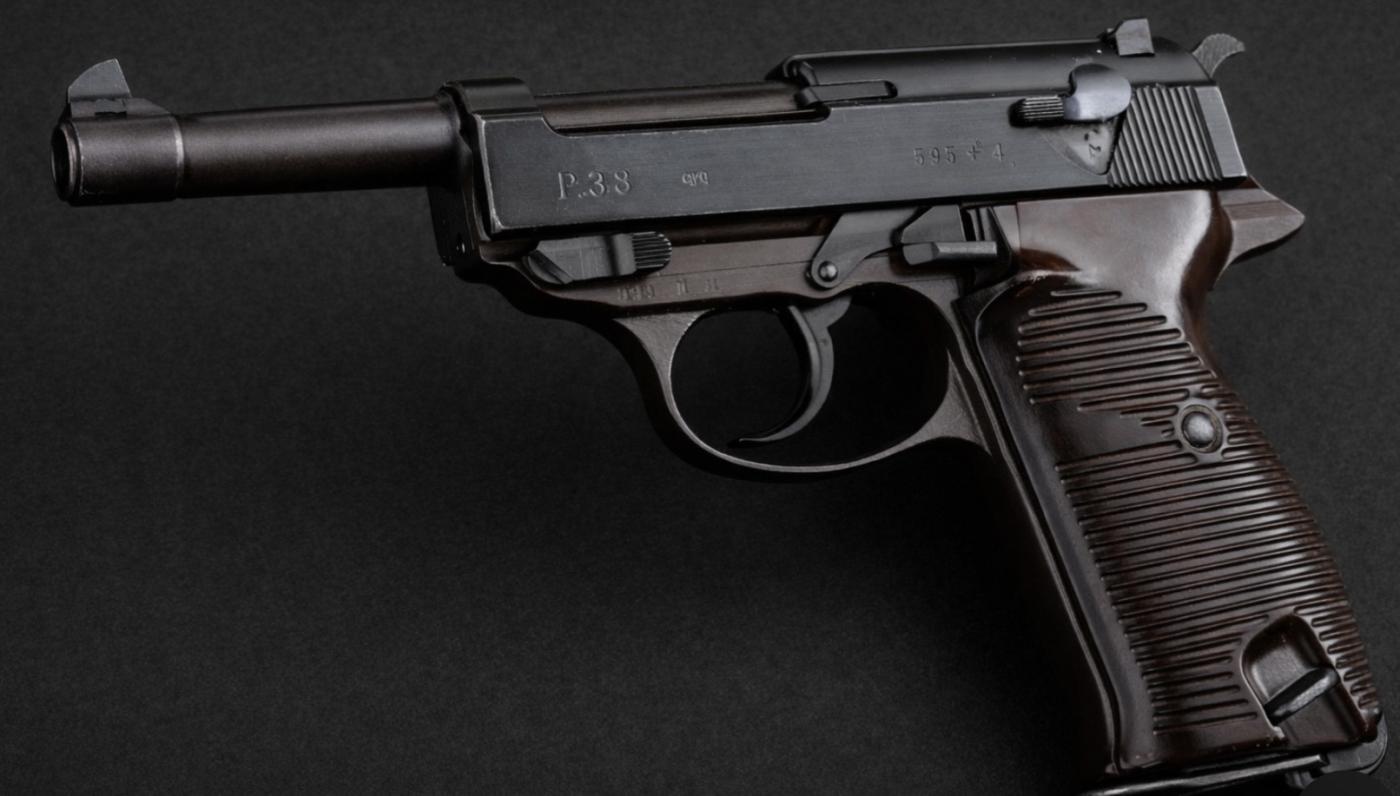
Walther .38 pistol
The Walther P.38 pistol was an important handgun used during the Second World War. It was developed in Germany during the late 1930s to replace the older Luger P08 pistol. Although the Luger was well known for its accuracy, it was expensive and difficult to manufacture in large numbers. The German army wanted a pistol that was simpler, cheaper to produce and reliable in combat. The result was the Walther P.38.
The pistol was designed by engineers working for the German firearms company Carl Walther GmbH. The main designers involved were Fritz Walther, Fritz Barthlemens and Erich Walther. Development began around 1937 and the German military officially adopted the pistol in 1938, which is where the name Pistole 38 comes from.
One of the most important features of the P.38 was its firing system. It used a double-action trigger, which meant the first shot could be fired simply by pulling the trigger without manually cocking the hammer. After the first shot the pistol fired in single-action mode with a lighter trigger pull. The pistol also had a decocking safety lever that allowed the hammer to be safely lowered while a round remained in the chamber.
During the war the pistol was produced by three main factories. The original manufacturer was Walther in Zella-Mehlis in Germany. Production was later expanded to Mauser Werke in Oberndorf and to Spreewerk in Grottau. German weapons often carried secret factory codes instead of company names. Walther pistols were marked with the code ac, Mauser used byf and Spreewerk used cyq.
Between 1939 and 1945 around 1.27 million P.38 pistols were produced. As the war progressed the finish of many pistols became rougher due to shortages of materials and the pressure to produce weapons quickly.
The P.38 fired the 9×19 millimetre Parabellum cartridge, the same ammunition used in the Luger pistol and the MP40 submachine gun. The pistol used an eight-round detachable magazine. Its practical combat range was about 25 to 50 metres, which was typical for a military sidearm.
The locking system used a short recoil design with a locking block under the barrel. When the pistol fired, the slide and barrel moved back together briefly before the locking block dropped and allowed the slide to continue rearward, ejecting the spent case and loading a new round.
The Walther P.38 became the standard sidearm for many German forces during the war, including army officers, tank crews, pilots and police units.
After the war many captured pistols were used by other countries. France assembled some from captured parts, and West Germany later produced an improved version called the Walther P1 which remained in service for many years.
The design of the P.38 influenced many later handguns, especially because of its double-action trigger and decocking safety. Today it is remembered as one of the most significant military pistols of the twentieth century and remains a well known firearm among collectors and historians.