USS Langley Sunk
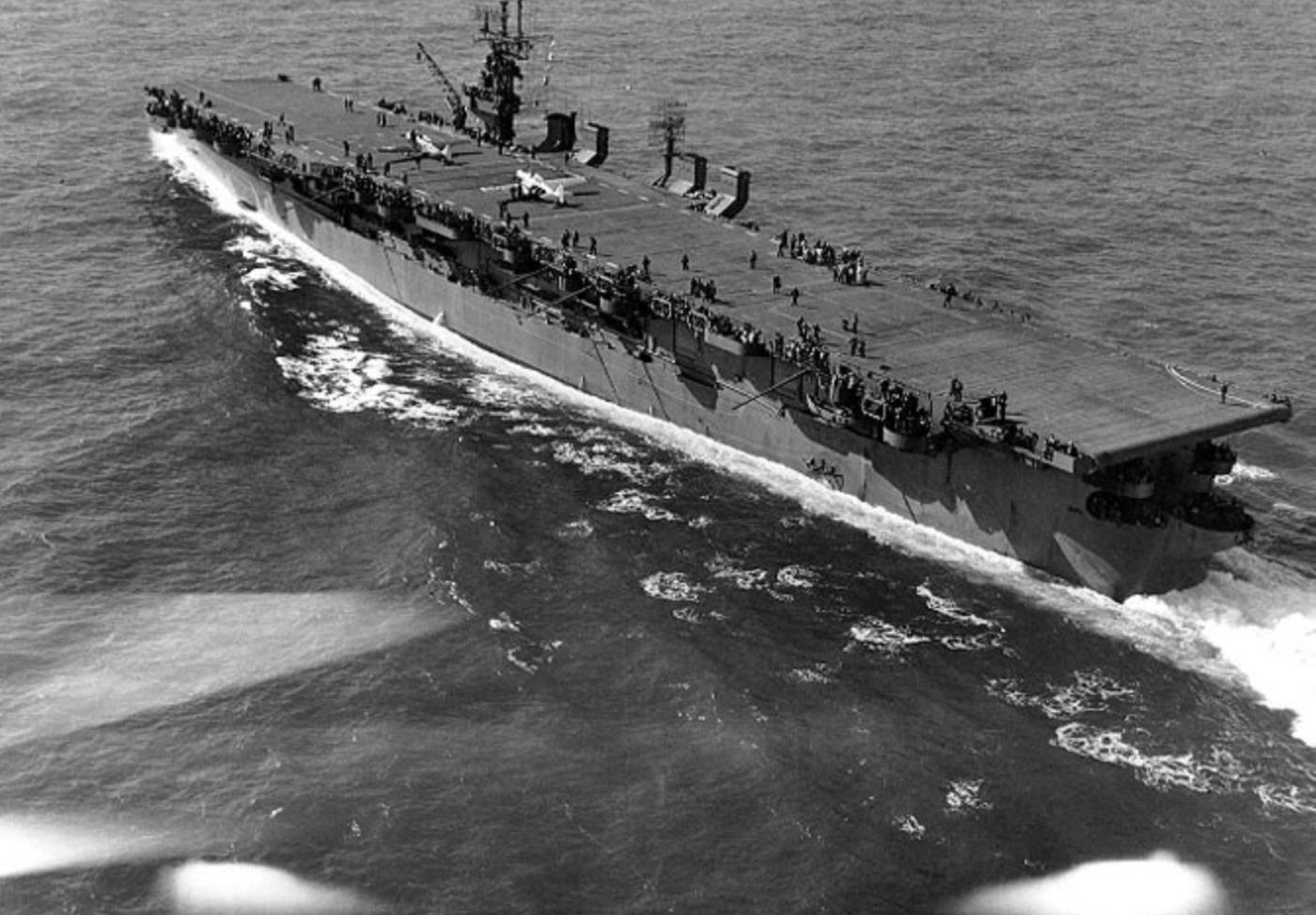
The USS Langley (CV-1) began her career as the collier USS Jupiter, launched in 1912, before being converted in the early 1920s into America’s first aircraft carrier. She became the cradle of U.S. naval aviation, hosting the Navy’s earliest carrier takeoffs and landings and proving that aircraft carriers would become central to modern naval warfare. By the time the United States entered World War II, however, Langley was no longer a front-line carrier. She had been converted into a seaplane tender, retaining a shortened flight deck and serving mainly as an aircraft transport and support vessel.
In February 1942, as Japanese forces swept through Southeast Asia, Langley was assigned a desperate mission. The Allies were fighting to hold the Dutch East Indies, particularly the island of Java, against overwhelming Japanese air and naval power. Langley departed Fremantle, Australia, carrying 32 U.S. Army Air Forces Curtiss P-40 Warhawk fighters. These aircraft were intended to reinforce Allied air defenses on Java, where losses had been heavy and reinforcements were urgently needed.
At the time of her final mission, Langley was under the command of Commander Robert P. McConnell. She was operating as part of the U.S. Asiatic Fleet, which was commanded overall by Admiral Thomas C. Hart. Although Hart was not physically aboard Langley, he was the senior American naval officer responsible for operations in the region. Langley was escorted by the destroyers USS Whipple and USS Edsall as she made her way toward the southern coast of Java, aiming to reach the port of Tjilatjap.
On the morning of 27 February 1942, about 75 miles south of Tjilatjap in the Indian Ocean approaches to Java, Japanese reconnaissance aircraft located the small American force. Soon afterward, Japanese twin-engine Mitsubishi G4M “Betty” bombers from the Imperial Japanese Navy attacked. These land-based naval bombers approached at medium altitude and conducted a series of bombing runs against Langley.
The first waves of bombs narrowly missed, but the Japanese pilots adjusted their aim with deadly precision. During subsequent passes, multiple bombs struck Langley. Explosions tore into her flight deck area where the crated and partially assembled P-40 fighters were stored. Fires erupted almost immediately, fed by aviation fuel and ammunition. The blasts disabled her engine room and wrecked her steering gear, leaving the ship dead in the water and listing heavily to port.
With her power gone and flames spreading uncontrollably, it became clear that Langley could not be saved. Commander McConnell gave the order to abandon ship in the early afternoon. The destroyers Whipple and Edsall came alongside in dangerous conditions to rescue the crew and the Army personnel who had been assigned to the aircraft cargo.
Sixteen members of Langley’s crew were killed in the bombing and subsequent fires. The majority of the ship’s complement survived the initial attack and were taken off by the escorting destroyers. All 32 P-40 fighters on board were destroyed, eliminating the desperately needed reinforcements for Java’s defense.
After the survivors had been removed, the damaged Langley was still afloat but helpless. To prevent her from being captured by advancing Japanese forces, her escorts were ordered to scuttle her. The destroyers fired shells into her hull and launched torpedoes to ensure she would sink. The old pioneer of American naval aviation finally slipped beneath the waves south of Java on 27 February 1942.
The loss of USS Langley symbolized the dire situation facing Allied forces in the early months of the Pacific War. Though many of her crew survived the sinking itself, the broader campaign in the Dutch East Indies ended in defeat. Langley’s destruction, along with the loss of her aircraft, underscored how completely Japanese air power dominated the region at that stage of the war. America’s first aircraft carrier, once the experimental platform that proved the value of naval aviation, met her end not in a fleet carrier duel but as a vulnerable transport overwhelmed from the sky.