U-Boat Crews
The training of a German U-boat crew was one of the most demanding processes in the Kriegsmarine, because a submarine was not simply a warship but a sealed steel machine in which every man depended on the skill and discipline of the others. A mistake with a valve, a hatch, a depth gauge, a battery compartment or a torpedo could endanger the entire crew, so the men who went to sea in the U-boat arm had to be trained to work quickly, silently and almost instinctively.
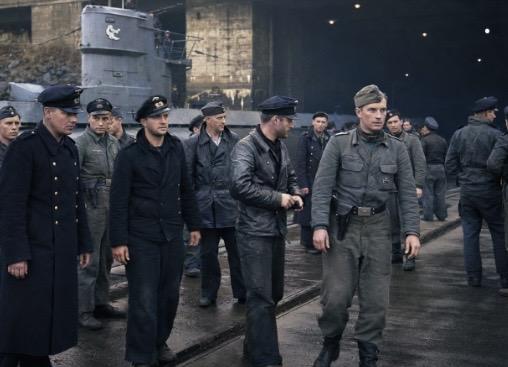
The men who entered the U-boat service were usually young, fit and often highly motivated. Many had volunteered for submarine duty, drawn by the reputation of the U-boat arm as an elite force and by the appeal of serving in a small, close-knit crew rather than on a large surface ship. Early in the war there was no shortage of volunteers, especially while U-boat commanders were being celebrated in Germany as daring heroes of the Atlantic. As losses increased, however, the service became far less glamorous, and more men were posted into the U-boat arm through normal naval selection rather than pure enthusiasm.
The average age of a U-boat crew was strikingly young. Many ordinary ratings were in their late teens or early twenties, and a large number of crewmen were around 19 to 23 years old. Petty officers and technical specialists were usually a little older because they needed more experience, while commanders were often still only in their late twenties or early thirties. A captain of 30 could already be considered an experienced U-boat commander. This gave the U-boat arm a youthful character: energetic, ambitious and brave, but often facing a level of danger far beyond anything most men of that age could imagine.
Selection was not just a matter of willingness. Men had to be physically fit, mentally steady and suitable for life in extreme confinement. A U-boat was cramped, noisy, damp and foul-smelling. There was little privacy, little fresh air and long periods of strain. The crew lived among diesel fumes, battery gases, sweat, oil, damp clothing and stored food. Anyone prone to panic, claustrophobia, poor discipline or weak nerves was unsuitable. The ideal U-boat man had to be technically capable, obedient under pressure and able to live closely with others for weeks at a time.
Most U-boat training was carried out around the Baltic Sea, especially at places such as Danzig, Gotenhafen, Pillau, Memel, Kiel, Flensburg-Mürwik and Neustadt. The Baltic was ideal because it offered sheltered waters, established naval bases and a safer training ground than the Atlantic. It allowed new crews to practise diving, surfacing, torpedo attacks, emergency drills and tactical exercises before they were exposed to the full danger of Allied aircraft, destroyers and convoy escorts.
The process usually began with ordinary naval training. Recruits first had to learn discipline, seamanship, watchkeeping, signalling, weapons handling and the routine of life in the German Navy. Those selected for U-boat service then moved into more specialised instruction. Engineers studied diesel engines, electric motors, batteries, air compressors, pumps, ballast tanks and the complex systems that allowed a submarine to dive, surface and survive underwater. Radio operators learned wireless procedure, codes, signal discipline and the use of listening equipment. Torpedo ratings were taught how to maintain, load and fire torpedoes, while officers learned navigation, attack methods, periscope use, target calculation and the handling of a submarine in combat.
A U-boat crew then became attached to its own boat while it was being completed, fitted out or prepared for service. This stage was vital, because the men had to learn the submarine as if it were part of themselves. They were expected to know where every valve, pipe, switch, gauge, hatch and emergency control was located. In the cramped interior of a U-boat there was little room for hesitation. The engineer had to know how to correct the trim, the torpedo men had to move heavy weapons in confined spaces, the radio and hydrophone operators had to detect danger before it arrived, and every man had to understand what to do if the order came to dive in an emergency.
After the boat was commissioned, the crew moved into work-up training. This was where individual sailors were turned into a fighting team. They practised crash dives again and again until every movement became automatic. On the order to dive, men had to clear the bridge, close the hatches, flood the tanks, adjust the hydroplanes and bring the boat under the surface as quickly as possible. Seconds mattered, especially later in the war when Allied aircraft could appear with little warning. A slow dive could mean destruction.
Crews also trained for silent running, when every unnecessary sound had to stop. Boots, tools, shouted orders and machinery noise could all betray the boat to enemy listening equipment. Men were taught to move carefully, speak quietly and understand orders with the least possible noise. They practised depth-charge drills, damage control, fire fighting, leak repairs, battery problems and the danger of chlorine gas if seawater entered the battery compartments. Life inside the submarine was uncomfortable even in training: damp clothes, stale air, diesel fumes, cramped bunks, little privacy and constant tension were part of the world they had to accept.
Torpedo training was one of the most important parts of the process. Firing a torpedo was not simply a matter of pointing and shooting. The commander and his crew had to estimate a target’s speed, course, range and angle, then calculate the correct firing solution. This might have to be done at night, in bad weather, through a periscope, or while the submarine itself was moving. Torpedo crews had to be able to load and maintain the weapons under pressure, while officers had to learn when to fire and when to wait. German training flotillas in the Baltic gave crews repeated practice before they were sent into the Atlantic battle.
Danzig was one of the most important early U-boat training centres. Its position on the Baltic, close to shipyards and naval facilities, made it a natural base for preparing new crews. Training flotillas were established there early in the war, and many men passed through the area before joining front-line boats. Nearby Gotenhafen, now Gdynia, also became a major centre, especially for tactical training. It was there that crews and commanders practised convoy approaches, attack formations and the kind of decisions they would later face against Allied shipping.
Pillau, now Baltiysk, was another important U-boat training location. Several training flotillas used the area, and it became closely connected with sea training and torpedo exercises. Its position in the eastern Baltic gave the Kriegsmarine room to train crews away from the worst of the early Allied air threat, although by 1944 and 1945 even the Baltic was no longer safe as the Soviet advance pushed westwards.
Memel, now Klaipėda, was particularly associated with commander training. Future U-boat commanders needed more than technical knowledge. They had to be able to judge risk, approach a convoy, decide when to attack, when to dive, when to break off and how to keep a crew alive under pressure. Commander courses gave officers a final period of preparation before they took boats into operational service. In the U-boat war, the quality of the commander could make the difference between success and disaster.
Other naval centres also played important roles. Flensburg-Mürwik was a major German naval training area, particularly for officers and specialists. Kiel was linked with naval schooling, shipbuilding, commissioning and early U-boat organisation. Neustadt in Holstein was used for U-boat personnel and training units. As the war went on and the front lines shifted, other ports such as Stettin, Hela, Libau, Königsberg, Hamburg, Travemünde and Warnemünde were also drawn into the training and relocation system.
The final stage before combat was usually tactical work-up in the Baltic. A new crew might carry out simulated patrols, convoy attacks, crash dives, night exercises, torpedo firings and emergency drills until the boat was judged ready. The aim was to make the crew react as one body. The commander gave the orders, but every man had to understand his place in the chain. In the control room, engine room, torpedo room, radio room and bridge, hesitation could be fatal.
Once training was complete, the U-boat joined an operational flotilla. Depending on the stage of the war, this could mean service from bases in France such as Lorient, Brest, St Nazaire or La Pallice, from Norway, from Germany, or in the Mediterranean. The men who arrived at these front-line bases had already spent months learning their trade, but nothing in training could fully prepare them for the reality of the Atlantic: long patrols, bad weather, aircraft attacks, depth charges, escort groups, mechanical failures and the knowledge that escape from a sinking submarine was often impossible.
The length of time spent at sea varied greatly depending on the type of U-boat, the mission, the year of the war and the area of operations. Early coastal patrols could be fairly short, sometimes only a few weeks, while long Atlantic patrols often lasted six to eight weeks. A typical Type VII U-boat operating from French Atlantic bases might spend around 40 to 60 days away from port, though some patrols were shorter and others much longer. Larger Type IX boats, with greater range and fuel capacity, could remain out for two or three months, especially when operating in the South Atlantic, off West Africa, in the Indian Ocean or near the American coast. By the later war years, some patrols became even more exhausting because boats had to spend longer periods submerged or moving cautiously through heavily patrolled waters.
These weeks at sea placed enormous strain on the crew. Food was fresh only at the beginning, with bread, fruit and vegetables quickly spoiling in the damp atmosphere. As the patrol went on, the men lived increasingly on tinned food, preserved meat, black bread and whatever could be stored in every spare corner of the boat. Torpedoes, supplies and equipment occupied much of the available space, and on outward journeys even the crew’s living areas could be packed with provisions. The air became heavy with sweat, fuel, cooking smells, stale clothing and machinery fumes. Sleep was broken by watches, alarms and sudden dives. Even when no enemy was nearby, the men lived with the constant knowledge that aircraft or escorts could appear at any moment.
Leave after a patrol was important, but it was not always generous or simple. When a U-boat returned to base, the boat itself usually needed refuelling, rearming, repair, engine maintenance, torpedo loading, battery checks, cleaning and sometimes major dockyard work. Some of the crew had to remain involved in this process, while others were allowed leave in stages so that the boat was never left entirely unattended. In better circumstances, a crewman might receive two or three weeks of leave after a long patrol, particularly if the boat required a longer refit. Sometimes the rest period ashore could be close to a month, especially after a hard voyage, but at other times it was shorter because of operational pressure, damage, transfers or the need to prepare for the next patrol.
For many men, leave meant travelling home if possible, visiting family, recovering from exhaustion, eating properly and escaping the smell and confinement of the boat. For others, especially those based in occupied France or Norway, leave might mean rest in barracks, local recreation, medical checks, training lectures or helping to prepare the submarine for sea again. Officers might be debriefed about convoy contacts, attacks, equipment problems and tactical lessons. Commanders and specialists could also be sent for further instruction, while replacements were brought in for men who had been wounded, transferred or judged unfit for further patrols.
The contrast between patrol and leave could be extreme. One week a young sailor might be trapped inside a steel tube under depth-charge attack in the Atlantic, and a short time later he could be sitting in a railway carriage travelling back through Germany or walking through a French port while dockyard crews worked on his boat. Yet the relief was always temporary. Unless a man was posted away, promoted, wounded or lucky enough to survive until the end of the war, the routine would begin again: refit, stores, new orders, final checks, departure from harbour and another long patrol into dangerous waters.
The German U-boat training system was therefore built around repetition, discipline and technical skill. It began with basic naval instruction, moved through specialist schools, continued aboard the crew’s own submarine and ended with sea training in the Baltic. Danzig, Gotenhafen, Pillau, Memel, Kiel, Flensburg-Mürwik and Neustadt were among the most important places in that system. Together they formed the training ground of the U-boat arm, where young volunteers and selected naval ratings were turned into crews capable of taking a small, cramped and dangerous vessel into one of the most brutal naval campaigns of the Second World War. Once trained, those same men could expect to spend anything from a few weeks to several months at sea, followed by a short period of leave, refit and preparation before the cycle began again.