Type 53 Machine Gun
The Chinese-produced Type 53 medium machine gun used by communist forces in the Vietnam War was a locally manufactured copy of a Soviet design introduced during the later years of the Second World War. It represented a shift away from very heavy, water-cooled machine guns toward a lighter, more mobile weapon capable of sustained fire without being permanently tied to a fixed defensive position. Chinese factories began producing their version during the early Cold War period, and these weapons were later supplied in large numbers to North Vietnam as part of wider military assistance from China and the Soviet bloc.
This medium machine gun fired the 7.62×54mmR cartridge, a full-power rifle round that had been in service with Russian and Soviet forces since the late 19th century. The ammunition was powerful, long-ranged, and widely available across communist-aligned nations, making it ideal for a crew-served weapon intended for sustained fire roles. Its rimmed design required a more complex feeding system than rimless ammunition, but once properly set up it proved dependable and effective. The cartridge’s range and penetration gave the weapon the ability to strike targets well beyond the reach of lighter automatic weapons.
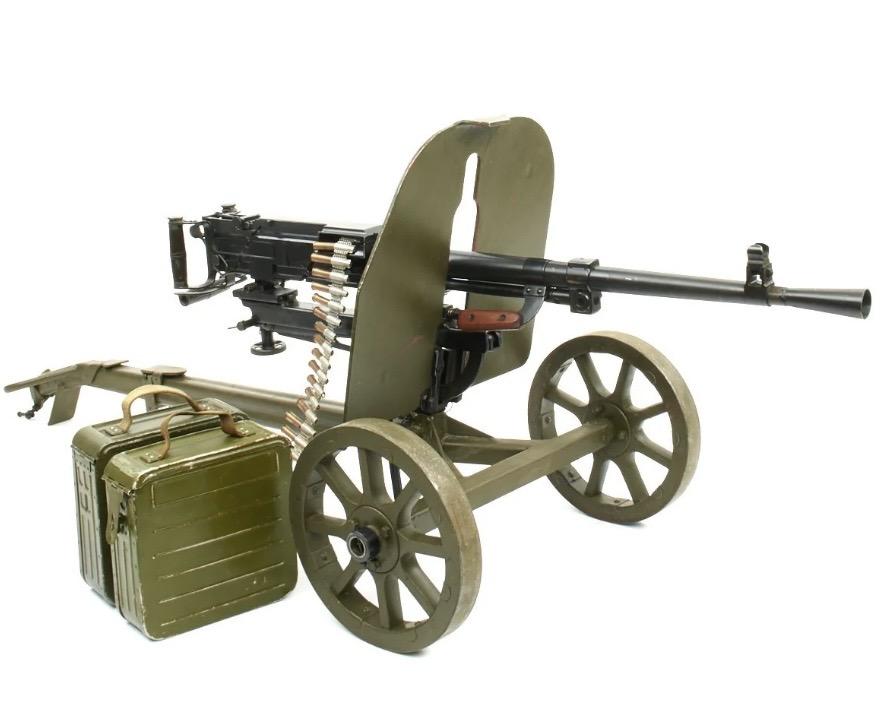
Operation was gas-powered and belt-fed, using non-disintegrating belts usually holding between 200 and 250 rounds. Cyclic rate generally fell between 500 and 700 rounds per minute, although in combat it was fired in controlled bursts to conserve ammunition and prevent overheating. Crews were trained to maintain steady, disciplined fire rather than continuous streams. Barrels were air-cooled and could be changed when necessary, though careful fire control was usually enough to keep the weapon functioning effectively for long periods.
The weapon’s effective range was roughly one kilometre for aimed fire against area targets, with a maximum effective range of about 1.5 kilometres depending on conditions. While thick vegetation and broken terrain in Vietnam often limited visibility, the weapon’s long reach made it particularly useful in certain situations. It could dominate open ground, riverbanks, rice paddies, road approaches, or defensive perimeters. When placed correctly, it provided a powerful base of fire capable of stopping or pinning down enemy movement at considerable distance.
One of its most recognisable features was the two-wheel carriage on which it was often mounted. This wheeled mount transformed it from a purely static support weapon into something resembling a small field gun in mobility and handling. The carriage included traverse and elevation controls that allowed the gunner to sweep pre-planned sectors with precision. In some versions a protective shield was fitted to provide limited cover for the crew. The mount made it possible to reposition the weapon relatively quickly along defensive lines or withdraw it when needed, something far more difficult with older heavy machine guns.
Although lighter than earlier water-cooled designs, the complete assembly was still heavy. The gun itself weighed around 13 to 14 kilograms, while the wheeled mounting brought the total to over 40 kilograms. This meant it required a trained crew to operate effectively. A typical team consisted of a gunner, an assistant, and ammunition carriers. The weight of ammunition was a constant concern, as belts of full-power cartridges were heavy and bulky. Because of this, the weapon was most effective when deployed in prepared positions or where supply lines could support sustained firing.
Chinese-manufactured examples reached Southeast Asia through organised military aid channels. North Vietnam received large shipments of weapons and ammunition from China, and from there equipment was distributed to both regular army units and Viet Cong formations operating in the south. Medium machine guns formed an important part of the heavier infantry firepower available to communist forces, supplementing lighter automatic weapons and providing greater range and sustained fire capability.
In combat across Vietnam, this type of machine gun was frequently used in defensive roles, ambush support, and protection of key routes or installations. When positioned to cover likely landing zones or river crossings, it posed a serious threat to advancing troops. Its sustained fire capability allowed it to support attacks as well, providing covering fire while infantry manoeuvred. Though not specifically designed as an anti-aircraft weapon, it could be elevated to fire at low-flying aircraft or helicopters in emergency situations.
Exact numbers in Viet Cong service are difficult to determine, but captured examples and battlefield reports confirm their presence. They were never as numerous as assault rifles or lighter machine guns because of their size and logistical demands. However, wherever conditions allowed their deployment and supply, they provided a significant increase in firepower and range. Properly sited and supported, they were capable of controlling large areas of terrain and delivering sustained, accurate fire over long distances.
The Chinese Type 53 medium machine gun represented a practical balance between firepower and mobility for mid-20th-century warfare. Mounted on its wheeled carriage and supplied with ample ammunition, it served as a dependable support weapon that could be moved, emplaced, and brought into action with effectiveness across a wide variety of battlefield conditions in Vietnam.