Tube station Tragedy
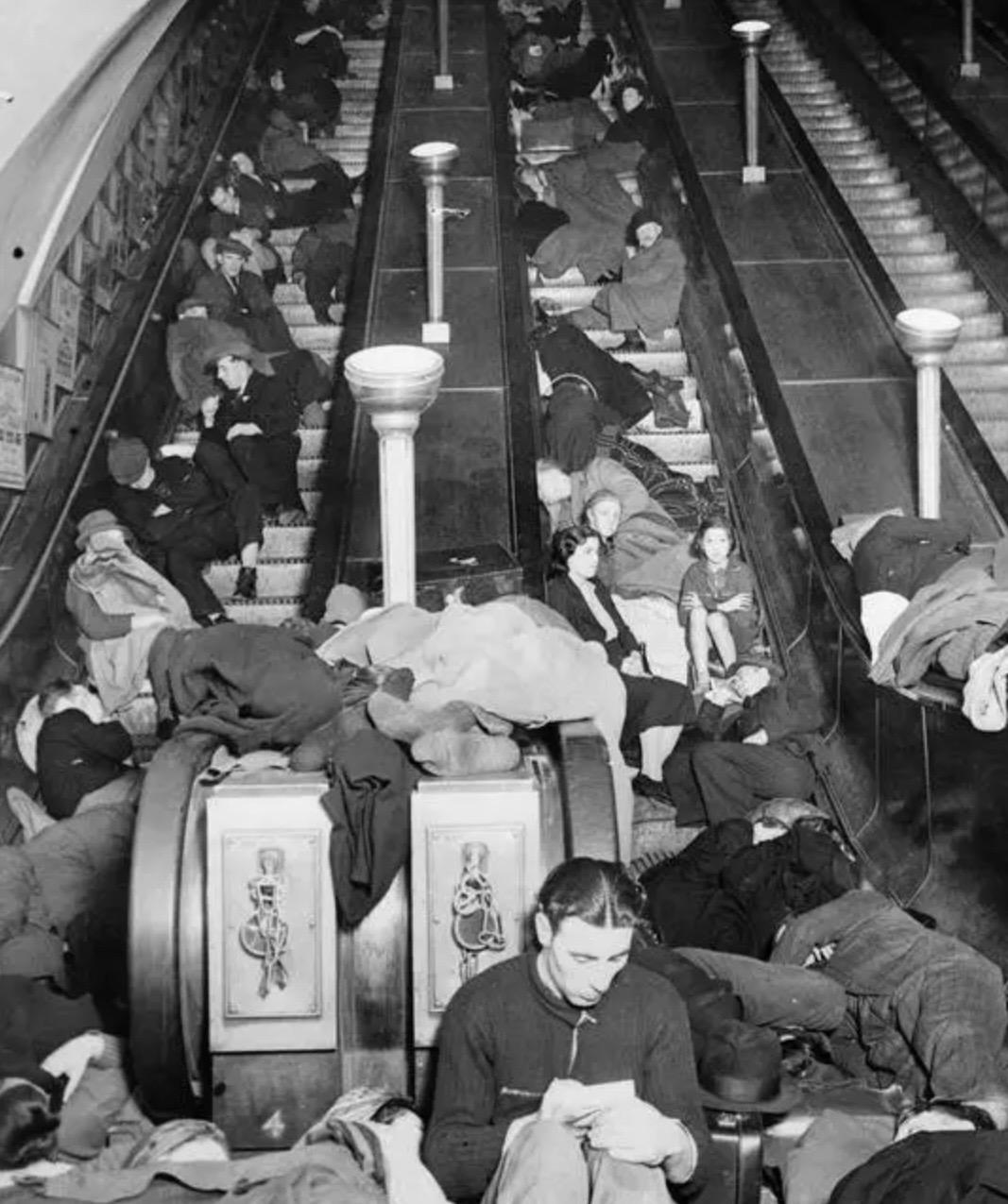
On the evening of March 3, 1943, hundreds of Londoners hurried toward Bethnal Green tube station in east London, seeking shelter from the air raids that had been a constant threat during the Second World War. The station itself wasn’t open to the public yet; it had been taken over as an air-raid shelter because its deep tunnels offered relative safety. People from the surrounding streets streamed toward the entrance, many carrying children, some coming straight from buses or the cinema, all anxious to escape the dangers above ground.
The entrance led down a narrow, nineteen-step stairwell into the station. It was dark, wet, and slippery, barely lit by a single bulb. As the crowd descended, a sudden, loud noise erupted outside. British anti-aircraft guns in nearby Victoria Park had fired a new type of weapon, and the unfamiliar blasts and whistles sounded terrifyingly like bombs falling. The noise set off panic among the crowd, and in that instant, everything went wrong.
Near the bottom of the first flight of stairs, a woman carrying a baby tripped. Others fell behind her, and in seconds dozens of people were tumbling and piling up. Those still coming down the stairs pressed forward, unaware of the blockage, and in less than a minute around 300 people were caught in a deadly crush. Many were crushed under the weight of others or suffocated. Rescue teams worked tirelessly for hours, but by the time the stairwell was cleared, 173 people had died, including 62 children. Scores more were injured, some seriously.
The tragedy was made worse by the secrecy that followed. Wartime censorship meant that newspapers were not allowed to report on the disaster immediately. Officials feared that news of such a catastrophic loss of civilian life could damage morale or be exploited for enemy propaganda. A detailed report identifying the causes — crowd panic triggered by the anti-aircraft fire and the narrow, poorly lit stairway — was classified and kept secret until after the war. Survivors and locals would later describe it as a cover-up, a tragedy hidden for years.
It wasn’t until decades later that the disaster received public recognition. A simple plaque was placed at the site in the early 1990s, and in 2017 a striking memorial called the Stairway to Heaven was unveiled, listing the names of all 173 victims and evoking the steps where so many lives were lost.
The Bethnal Green tragedy is remembered not as a bombing, but as a disaster born from fear, panic, and the chaos of wartime life.