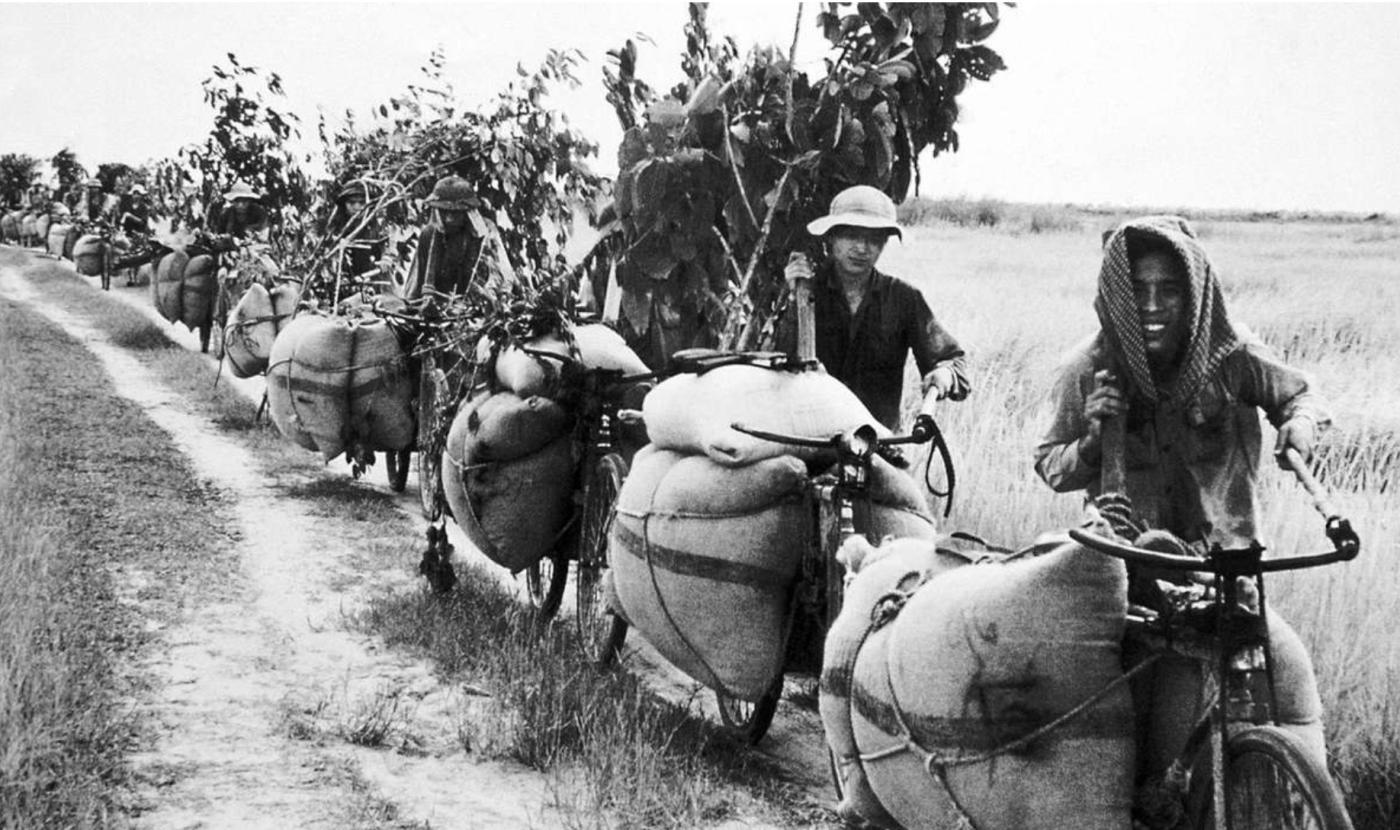
Transport Bikes
During the long conflict known as the Vietnam War, one of the most quietly effective logistical innovations was not a weapon, vehicle, or aircraft, but a heavily modified bicycle. Used extensively by the Viet Cong and North Vietnamese forces, these reinforced bicycles became a backbone of supply movement along routes like the Ho Chi Minh Trail.
At first glance, these bicycles looked ordinary, often based on simple French colonial-era designs such as Peugeot models left behind after earlier conflicts. But their role transformed completely during the war. Rather than being ridden in the usual way, most were pushed. The terrain of dense jungle, steep hills, and muddy tracks made riding impractical, especially when the bicycles were loaded with extraordinary amounts of cargo.
To make them capable of carrying such weight, the bicycles were heavily reinforced. Frames were strengthened using bamboo poles lashed along the sides, acting as both braces and extensions to distribute the load more evenly. Bamboo was ideal because it was strong, lightweight, widely available, and easy to shape in the field. Additional wooden struts or metal scraps were sometimes added to reinforce the frame, handlebars, and rear rack. Tires were often thickened or replaced with more durable versions to handle the stress, though punctures were still a constant problem.
What made these bicycles remarkable was not just their construction, but their carrying capacity. While a normal bicycle might handle 30 to 50 kilograms comfortably, Viet Cong porters routinely loaded them with 200 kilograms, and in some cases as much as 300 kilograms of supplies. These loads included sacks of rice, ammunition, mortar shells, medical supplies, and even disassembled weapons. The cargo would be carefully balanced and tied with ropes, often stacked higher than the porter’s head.
Instead of pedaling, porters walked alongside the bicycles, guiding them using modified handlebars. Some bicycles were fitted with extended handlebars or side poles to give better leverage and control. The added bamboo supports also helped stabilize the load, preventing it from tipping over on narrow jungle paths. In essence, the bicycle became a human-guided cart, far more efficient than carrying goods by hand.
The strategic importance of these reinforced bicycles becomes clearer when considering the limitations faced by the North Vietnamese and Viet Cong forces. Heavy vehicles like trucks were vulnerable to air strikes by the United States Air Forceand could not easily traverse the narrow, hidden jungle trails. Bicycles, on the other hand, were silent, difficult to detect from the air, and required no fuel. They could be quickly hidden under foliage or dismantled if necessary.
The use of bicycles also allowed for a decentralized supply system. Thousands of porters could move goods in small quantities across many different paths, making it extremely difficult for opposing forces to disrupt the overall flow. Even if some routes were bombed or blocked, others remained operational. This resilience was a key factor in sustaining long-term operations.
Porters themselves were often civilians or militia members, including a significant number of women. Their work was physically demanding and dangerous. They would spend days or weeks moving supplies through harsh conditions, facing threats from bombing, disease, and exhaustion. Despite this, the system proved incredibly reliable.
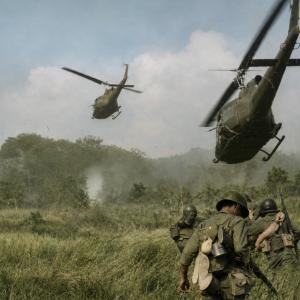
Another interesting aspect is how these bicycles blurred the line between traditional and modern logistics. While the war saw advanced technologies like helicopters and jet aircraft, the Viet Cong relied heavily on what was essentially an adapted 19th-century invention. This contrast highlights how innovation is often about adapting simple tools to fit complex conditions rather than relying solely on high technology.
Estimates suggest that these bicycle transport systems moved thousands of tons of supplies over the course of the war. In some areas, bicycles were actually more efficient than trucks because they could navigate terrain that vehicles could not. They also required far less maintenance and infrastructure.
In many ways, the reinforced bicycle became a symbol of ingenuity and persistence. It demonstrated how resourcefulness and local knowledge could overcome technological disadvantages. The image of a porter guiding a heavily loaded bicycle through dense jungle captures a lesser-known but crucial part of how the war was fought and sustained.
Even today, historians and military analysts often point to these bicycles as an example of asymmetric warfare at its most effective. By using simple, low-cost tools in highly innovative ways, the Viet Cong were able to maintain a steady flow of supplies under some of the most challenging conditions imaginable.