Tizard Mission
In 1940 Britain was fighting for its survival, standing almost alone against Nazi Germany while the Luftwaffe battered British cities and the threat of invasion still hung over the country. Yet at the same time, hidden away behind closed doors, British scientists were pushing forward some of the most important military technologies of the Second World War. Britain had the ideas, the research and many of the breakthroughs, but it did not have the industrial capacity to turn every one of them into mass-produced weapons quickly enough. Factories were already under pressure producing aircraft, tanks, ships, radar sets, guns and ammunition. The country was fighting a desperate war with limited resources, and that weakness forced one of the most remarkable scientific gambles in modern history.
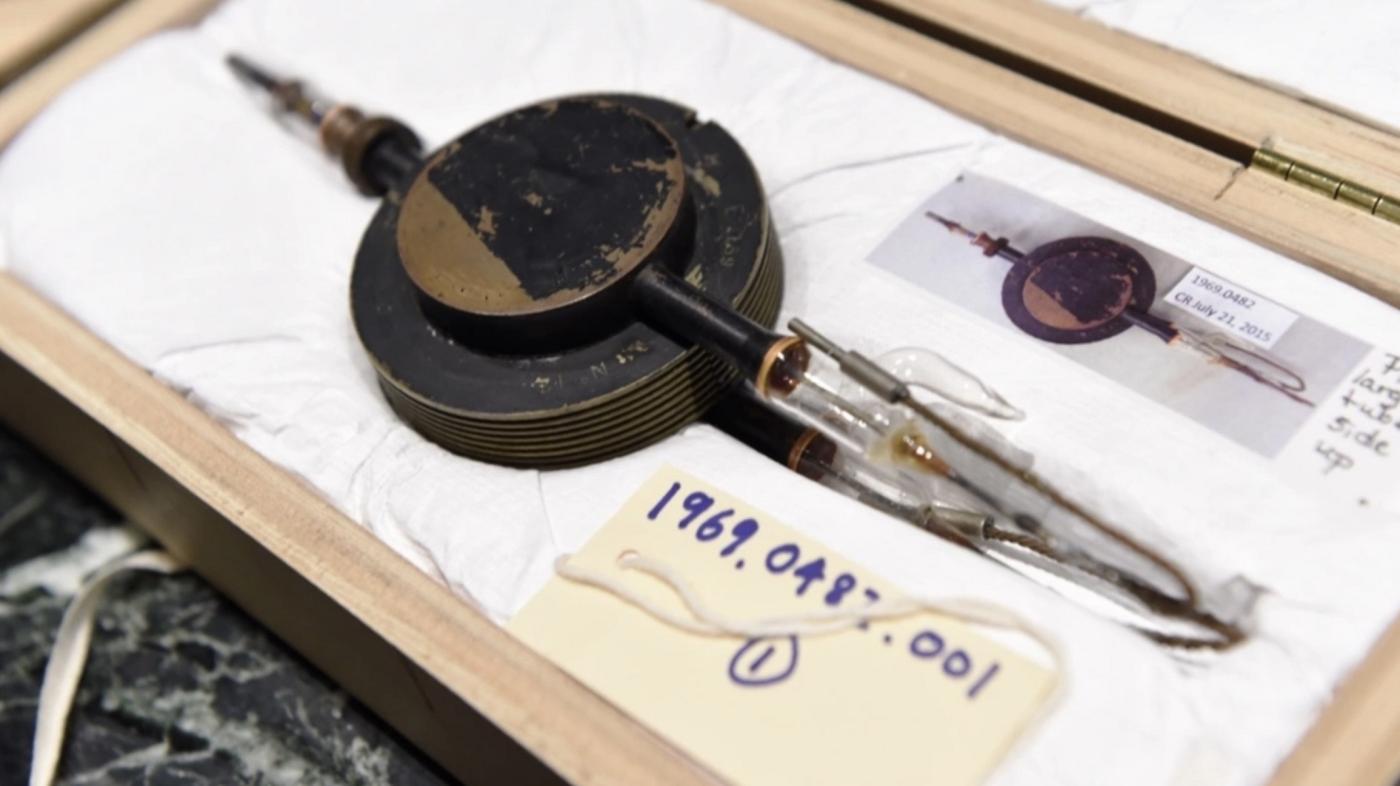
That gamble became known as the Tizard Mission. Led by Sir Henry Tizard, a respected British scientist and adviser, a small party of British experts crossed the Atlantic in 1940 carrying some of Britain’s most closely guarded secrets. They did not go to America empty-handed, nor did they go as beggars. They carried knowledge that could alter the course of the war. Among the material discussed or transferred were details connected with radar, jet propulsion, explosives, submarine detection, gun sights and atomic research. Most famous of all was the cavity magnetron, a small but revolutionary device that made powerful microwave radar possible. It allowed radar sets to become smaller, sharper and more accurate, giving aircraft, ships and anti-aircraft systems a far better chance of detecting enemy targets. It was one of those inventions that did not look dramatic to the ordinary eye, yet its effect on the war was enormous.
The British decision to hand over such technology was born from harsh necessity. Britain knew that America had immense industrial strength. The United States had vast factories, skilled engineers, raw materials and the ability to mass-produce at a scale Britain could no longer match while under bombardment and stretched across a global war. The hope was simple: Britain would provide the scientific breakthroughs, and America would help turn them into practical weapons in huge numbers. It was an extraordinary act of trust, because some of these secrets had taken years of dangerous work to develop. The cavity magnetron alone was so important that one American historian later described it as among the most valuable cargo ever brought to American shores.
Alongside radar and other weapons technology was another field that would soon eclipse everything else: the atomic bomb. Britain’s atomic work had begun before America’s programme had reached anything like the same urgency. In 1940, Rudolf Peierls and Otto Frisch, two refugee physicists working in Britain, produced a memorandum that changed the way scientists thought about nuclear weapons. They argued that a bomb using uranium-235 might not require impossible quantities of material and could, in theory, be built as a practical weapon. This was a terrifying conclusion. Until then, many believed an atomic bomb might be too large, too difficult or too distant to matter in the current war. The Frisch-Peierls work suggested otherwise.
Britain then formed the MAUD Committee to investigate the possibility of an atomic bomb. Its findings were among the most important scientific conclusions of the war. The committee concluded that a uranium bomb was not fantasy, that it could be made, and that its explosive power would be unlike anything yet seen. This was not exactly a set of complete engineering blueprints for a finished bomb, but it was something almost as important: it was the scientific road map showing that such a weapon was possible and how the problem might be attacked. British work gave the Americans a powerful push at a crucial moment, helping to convince them that atomic weapons were not just theoretical speculation but a wartime project worth enormous investment.
The British atomic programme was known as Tube Alloys, a deliberately bland name chosen to disguise its true purpose. Its scientists had made major progress, but Britain could not realistically build the huge industrial plants needed to enrich uranium and produce bomb material while fighting for its existence. The United States, by contrast, had the space, money, electricity, engineering capacity and industrial security to attempt something on a scale never seen before. This became the Manhattan Project, the vast American-led effort to build atomic bombs before Germany could do the same.
At first the relationship was uneasy. British scientists had helped open the door, but as the American programme grew larger, the United States became increasingly protective of information. Some American officials viewed atomic secrets not simply as wartime knowledge but as future power. They understood that whoever controlled the bomb would hold a weapon of enormous political weight after the war. This created friction, because Britain felt it had contributed vital early research and expected to be treated as a full partner.
Churchill and Roosevelt tried to settle the matter through direct agreement. In August 1943 they signed the Quebec Agreement, which formally joined British, American and Canadian atomic efforts. It promised cooperation and laid down rules for the shared development and use of nuclear weapons. The agreement stated that neither Britain nor America would use the bomb against another country without mutual consent, and neither would pass information to a third party without agreement. It also recognised that the heavy burden of production was falling mainly on the United States, but it still gave Britain a formal place inside the wartime atomic partnership.
After the Quebec Agreement, British scientists became deeply involved in the Manhattan Project. Men such as James Chadwick, Rudolf Peierls, Otto Frisch, Mark Oliphant, Klaus Fuchs and William Penney made important contributions in America and Canada. Chadwick, who had discovered the neutron, became one of the senior British figures in the project. Penney worked on blast effects and later became central to Britain’s own bomb. British experts worked at Los Alamos and other sites, helping solve problems in physics, engineering, explosives and bomb design. They were part of the great secret army of scientists and engineers who produced the weapons dropped on Hiroshima and Nagasaki in August 1945.
Yet the wartime friendship had a hard edge. The moment the war ended, the atmosphere changed. Roosevelt was dead, Truman was president, Germany had been defeated, Japan had surrendered, and the United States had emerged as the only nation on earth with atomic weapons. What had been a shared wartime emergency suddenly became a matter of national control. American politicians, alarmed by the destructive power of the bomb and determined to keep it under American authority, moved to lock down nuclear information.
This reached its peak in 1946 with the passing of the Atomic Energy Act, better known as the McMahon Act. To Britain, it felt like a betrayal. The act made it illegal for the United States to share restricted nuclear information with any foreign power, including Britain. It did not matter that British scientists had worked on the project. It did not matter that Churchill and Roosevelt had signed agreements promising collaboration. It did not matter that Britain had supplied early research and had helped push America toward the bomb. Under American law, atomic information was now sealed.
The effect was dramatic. British scientists who had worked beside American colleagues found doors closing. Information that had once flowed between allies was suddenly blocked. Britain was no longer treated as an equal partner but as a foreign state outside the American nuclear fence. From the American point of view, the bomb was too dangerous and too powerful to share freely. From the British point of view, the United States had taken advantage of British scientific work during the war and then, once the weapon had been built, used legal machinery to shut Britain out.
There was also a deeper political shock. Britain had won the war but had been financially exhausted by it. The empire was weakening, the country was burdened by debt, and its world position was changing fast. The atomic bomb had become the ultimate symbol of great-power status. If Britain accepted permanent exclusion from nuclear weapons, it risked becoming dependent on American goodwill and slipping further from the top table of world affairs. For many in government, that was unacceptable.
Clement Attlee’s Labour government therefore made a secret decision to build an independent British atomic bomb. This was not announced to the public in any dramatic way. It was handled quietly, because the costs were huge and post-war Britain was still struggling with rationing, reconstruction and economic hardship. The programme was given the cover name High Explosive Research, another deliberately misleading title. Behind it lay one of the most ambitious British military projects of the twentieth century.
The task was enormous. Britain had to rebuild the knowledge base it had partly shared with America, create its own nuclear industry, produce fissile material, design a workable weapon and find somewhere to test it. Facilities were developed at places such as Harwell, Windscale, Aldermaston and elsewhere. Nuclear reactors had to be built, plutonium had to be produced, chemical separation plants had to operate, and scientists had to turn theory into a deliverable device. The work required secrecy, money, skill and political determination.
William Penney became one of the key figures in this effort. He had worked on the Manhattan Project and had seen the effects of the atomic bomb at close quarters. His experience made him invaluable to Britain’s independent programme. British scientists could not simply copy American documents after the McMahon Act, but they did possess knowledge, memory and experience from wartime collaboration. That human knowledge became one of Britain’s most important assets.
The programme also unfolded against the growing darkness of the Cold War. By 1949 the Soviet Union had tested its own atomic bomb, ending America’s monopoly far sooner than many in Washington had expected. The world was now divided between rival nuclear powers. Britain, still determined to remain a major military and diplomatic force, pressed ahead. The argument was not only about defence but also about influence. A British bomb would give London a stronger voice in dealing with Washington, Moscow and the wider world. It would show that Britain was still a first-rank power, even after the strain of two world wars.
The result came in October 1952 with Operation Hurricane. Britain’s first atomic device was tested off the coast of Western Australia, in the Monte Bello Islands. The bomb was placed inside the hull of the frigate HMS Plym, partly to study what would happen if a nuclear device were smuggled into a harbour aboard a ship. When the device exploded, Britain became the third nuclear power in the world after the United States and the Soviet Union. The blast marked the end of a long and bitter road that had begun with British scientific promise, wartime sharing and post-war exclusion.
The story is one of alliance, trust, resentment and national ambition. Britain had helped open the scientific path to the atomic bomb and had given America access to some of its most valuable military technology at a moment of extreme danger. The Tizard Mission was one of the boldest transfers of secret knowledge in history, and the cavity magnetron alone helped transform the Allied war effort. The atomic research that followed proved even more significant. British work helped convince America that a bomb could be built, and British scientists later helped build it.
Yet when victory came, the rules changed. The McMahon Act legally cut Britain off from the nuclear secrets of the very project it had helped create. The United States, now holding the most powerful weapon ever made, chose control over continued open collaboration. Britain responded not by surrendering its ambitions but by building its own bomb. By 1952, with the flash of Operation Hurricane, Britain had forced its way back into the nuclear club. It was a remarkable achievement for a country still recovering from war, and it remains one of the most telling episodes in the complicated history of the so-called special relationship: two allies bound together by shared danger, divided by power, and reunited only when Britain proved it could stand on its own.