Sub Sinks
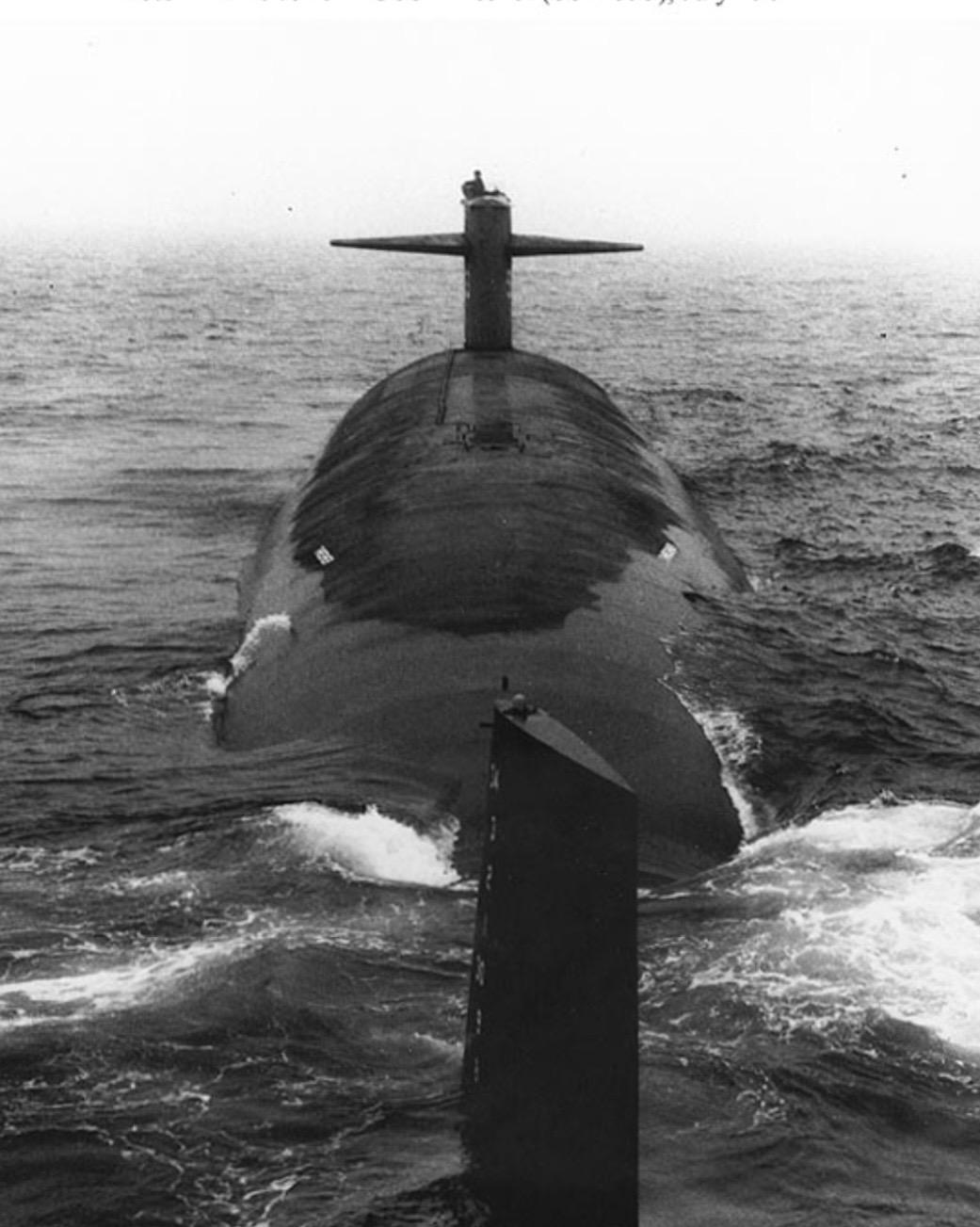
In April 1963, at the height of the Cold War, the United States Navy suffered one of the worst disasters in its history when the nuclear-powered submarine USS Thresher (SSN-593) was lost with all 129 people aboard. This tragedy shocked the nation, led to sweeping changes in submarine safety, and remains one of the most significant submarine accidents ever recorded.
The submarine itself was one of the most advanced vessels of its time. Commissioned in 1961, Thresher was the lead boat of a new class designed to hunt Soviet submarines. It was faster, quieter, and more technologically sophisticated than earlier American submarines, carrying cutting-edge sonar systems and modern weapons. The Navy had such confidence in its design that plans were already underway to build many more submarines of the same type.
On 9 April 1963, under the command of John Wesley Harvey, the submarine departed from a shipyard in Maine for post-overhaul sea trials. On board were 129 men: 16 officers, 96 enlisted sailors, and 17 civilian technicians from the shipyard. The following morning, 10 April, the submarine began a series of deep-diving tests in the Atlantic Ocean about 220 miles east of Cape Cod, Massachusetts.
Accompanying the submarine on the surface was the rescue ship USS Skylark, which maintained communication as Thresher descended deeper into the ocean. At first, everything appeared routine. Then, at around 9:13 a.m., Skylark received a garbled message indicating that the submarine was experiencing minor difficulties. Within minutes, communication was lost entirely.
What happened next was reconstructed later from sonar data and investigation findings. The most widely accepted explanation is that a failure occurred in a seawater piping system in the engine room. A joint in the piping likely ruptured under extreme pressure, causing high-pressure seawater to spray into the compartment. This flooding short-circuited vital electrical systems, leading to a loss of power.
Without power, the submarine could not effectively control its depth or propulsion. It began to sink. At the same time, the nuclear reactor automatically shut down in a safety response known as a “scram,” which further reduced the crew’s ability to recover. Attempts to blow ballast tanks and return to the surface appear to have failed, possibly due to moisture freezing in the air lines under high pressure.
As the submarine descended deeper and deeper, it passed its safe operating limits. Eventually, it exceeded its crush depth—the point at which the hull can no longer withstand the pressure of the surrounding water. At that depth, the submarine imploded violently, breaking apart and sinking to the ocean floor. The entire crew and all civilians on board were killed instantly.
The loss of USS Thresher was the deadliest submarine disaster in U.S. history and the first time a nuclear-powered submarine had been lost at sea. The wreckage was later located on the seabed in thousands of feet of water, scattered over a wide area, confirming the catastrophic nature of the implosion.
The disaster had an immediate and profound impact. John F. Kennedy ordered flags to be flown at half-staff across the United States in honor of the 129 men who died. Families of the crew were left with no survivors and little immediate explanation, as the Navy worked to understand what had gone wrong.
Perhaps the most lasting legacy of the tragedy was the creation of the SUBSAFE program later in 1963. This was a rigorous system of design review, construction standards, and inspection procedures aimed at preventing similar accidents. Every critical system related to submarine safety, especially those involving hull integrity and seawater systems, came under strict control. Since its introduction, SUBSAFE has been credited with dramatically improving the safety record of U.S. submarines.
Investigators concluded that the disaster was not caused by a single failure alone, but by a combination of design weaknesses, quality control issues, and the pressures of rapid technological advancement during the Cold War. The Navy had been pushing forward quickly to deploy new submarines, and in doing so, some fundamental engineering and inspection practices had not kept pace.
The USS Thresher remains officially listed as being on “eternal patrol,” a term used by the U.S. Navy to honor submarines lost at sea. Unlike surface ships, which may have survivors, submarine losses are often total, making them especially tragic.
Today, the story of Thresher is remembered not only as a disaster but as a turning point. It transformed submarine engineering, enforced a culture of safety, and ensured that the sacrifices of those 129 men led to lasting changes that have saved countless lives in the decades since.