SS General Jürgen Stroop
Jürgen Stroop was one of the more notorious figures within the Nazi hierarchy, remembered chiefly for his role in the destruction of the Warsaw Ghetto during the Second World War. His life illustrates both the ideological radicalisation and career opportunism that characterised many senior officers of the Nazi regime.
He was born on 26 September 1895 in Detmold in the German Empire, originally named Josef Stroop. He later changed his first name to Jürgen to reflect a more “Germanic” identity aligned with Nazi racial ideology. His father was a police officer, and this upbringing instilled discipline and respect for authority. He served in the German Army during the First World War, gaining experience that shaped his later career.
After Germany’s defeat, he struggled to find stable work, taking jobs such as a bank clerk and agricultural worker. During the unstable Weimar years, he became increasingly drawn to nationalist movements. In 1932, he joined the Nazi Party and soon after the Schutzstaffel (SS).
His rise within the SS was steady, driven by loyalty and efficiency. By the late 1930s, he had reached the rank of SS-Standartenführer and became involved in police and security roles, especially in occupied Poland after 1939. His responsibilities included enforcing Nazi racial policies and controlling Jewish populations.
He is most infamous for commanding the suppression of the Warsaw Ghetto Uprising in 1943. Appointed to replace a less effective commander, he led a brutal campaign to eliminate resistance. German forces systematically destroyed the ghetto, killing or deporting thousands. He recorded the operation in a detailed report for superiors such as Heinrich Himmler, documenting the destruction and loss of life. Following this, he was promoted to SS-Brigadeführer.
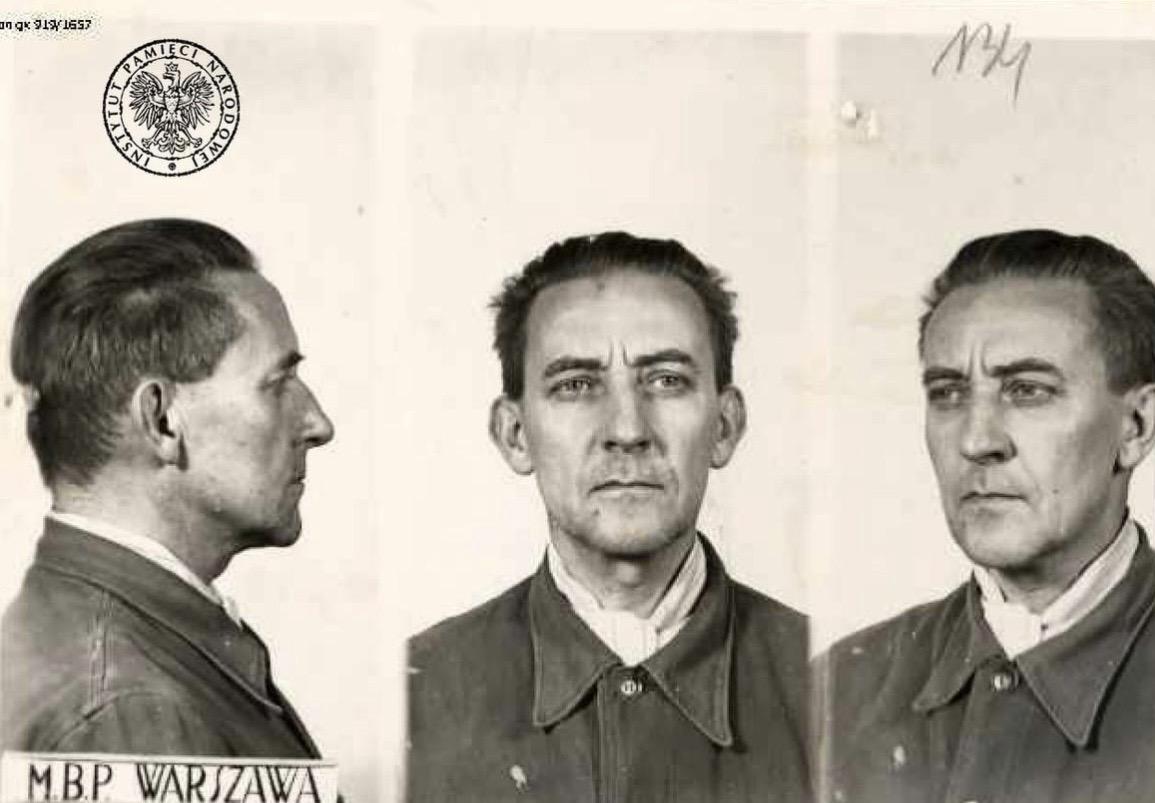
Later in the war, he served in Greece as a senior SS and police leader, overseeing anti-partisan operations. As Germany collapsed in 1945, he was captured by American forces. He was initially tried for the execution of American airmen and sentenced to death, but was transferred to Poland before the sentence was carried out.
There, he was tried again for his actions in Warsaw. Evidence included his own report, which detailed the destruction of the ghetto. He was convicted and sentenced to death, and on 6 March 1952, he was executed by hanging in Warsaw.