Spitfire Paddy
Brendan Eamonn Fergus Finucane, better known to history as Paddy Finucane or “Spitfire Paddy”, became one of the most remarkable fighter pilots of the Second World War. He was young, Irish, fearless in the air and calm beyond his years, a boy from Dublin who rose through the Royal Air Force at a speed few could believe. By the age of only 21 he had become the youngest wing commander in RAF history, and by the time of his death in July 1942 he was already one of the most famous fighter aces of the war. His story was not just one of victories in the sky, but of courage, personality, leadership and the extraordinary pressure carried by a young man who seemed born to fly.
Paddy Finucane was born on 16 October 1920 in Rathmines, Dublin, into a family shaped by the turbulence of Irish history. His father, Andy Finucane, had been involved in the Irish struggle for independence, while his mother, Florence, was English. That background gave Paddy a unique place in wartime Britain. He was Irish at a time when Ireland remained neutral during the Second World War, yet he chose to serve in the Royal Air Force and fight against Nazi Germany. It was a decision that showed both independence of mind and a strong sense of duty. He was the eldest child in the family and grew up with the confidence and liveliness that later made him popular with fellow pilots. There was nothing about his early childhood that suggested he would become one of the RAF’s great wartime names, yet from a young age he had a fascination with aircraft and speed.
In 1936 the Finucane family moved to Britain, and it was there that Paddy’s interest in flying began to take serious shape. Aviation in the 1930s still carried a sense of glamour and danger. Pilots were seen as modern knights, men who left the ground behind and trusted their lives to skill, nerve and machinery. Paddy was drawn to that world. He joined the RAF Volunteer Reserve before the war and was accepted for pilot training in 1938, still only a teenager. His early flying career was not perfect. Like many young pilots he made mistakes, and at one stage he crash-landed during training, but he had the determination to improve and the natural instinct that mattered most once a fighter pilot found himself in combat.
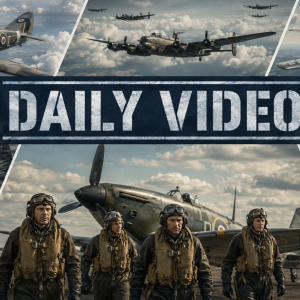
By the summer of 1940 Britain was standing almost alone against Nazi Germany, and the Battle of Britain was beginning. Finucane converted onto the Supermarine Spitfire, the elegant fighter that would become forever linked with his name. In July 1940 he was posted to No. 65 Squadron at RAF Hornchurch in Essex. He was just 19 years old. Many young men flew during the Battle of Britain, but Finucane quickly stood out. He had sharp eyesight, quick reactions and a coolness in combat that made him dangerous to the enemy and reliable to his comrades. His first confirmed victory came on 12 August 1940, during one of the most intense periods of the air battle. From that point on his reputation began to grow.
The Spitfire suited him. It was fast, responsive and deadly in the hands of a pilot who understood its strengths. Finucane flew it with aggression but not recklessness. He learned quickly that survival in fighter combat depended on discipline as much as bravery. Dogfighting over southern England and the Channel was a brutal education. German fighters and bombers came in force, and RAF pilots often had only seconds to react. A moment of hesitation could mean death. Paddy survived that world not because he was lucky alone, but because he absorbed lessons rapidly and flew with a maturity far beyond his age.
After the Battle of Britain, Finucane’s rise became extraordinary. In 1941 he joined No. 452 Squadron, an Australian unit flying Spitfires from Britain on offensive sweeps over occupied France. These missions, known as “Circus” operations, were dangerous. RAF fighters crossed the Channel to draw the Luftwaffe into combat, escort bombers, attack targets and challenge German control of the skies over northern France. It was on these operations that Paddy truly became a fighter ace of national fame. Between early 1941 and the autumn of that year his victories mounted rapidly, especially against Messerschmitt Bf 109s. He was promoted to acting flight lieutenant in April 1941 and became one of the most successful Spitfire pilots on the Channel Front.
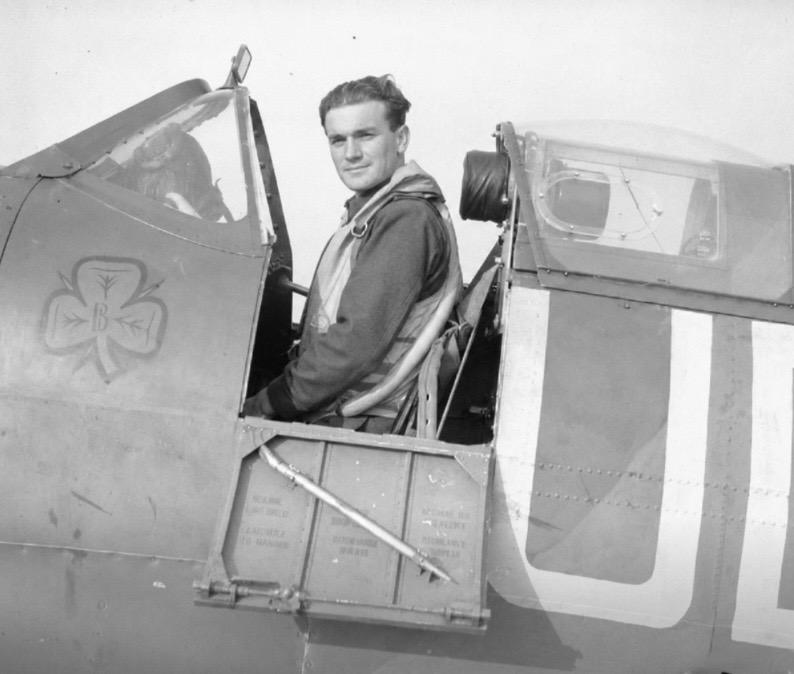
His aircraft became famous too. Finucane’s Spitfire carried a shamrock emblem on the fuselage, a proud nod to his Irish roots. The image of the young Irishman in his Shamrock Spitfire captured public imagination. He was handsome, brave and modest, and newspapers loved him. Yet those who knew him remembered that he did not behave like a showman. He was not a loud glory seeker. He had charm and humour, but he also had a serious side, especially when responsible for other pilots. As his rank increased, so did the burden on him. He was no longer just fighting for his own survival; he was leading men into battle, many of them not much older than boys themselves.
Finucane’s leadership was one of the reasons he rose so fast. Fighter squadrons could not be led by rank alone. Men followed those they trusted. Paddy had already proved himself in combat, and younger pilots knew that he understood the fear and confusion of air fighting. He led from the front, but he also cared about bringing his men home. That quality mattered deeply in the RAF, where losses could be sudden and personal. One day a pilot was laughing in the mess, the next day his chair was empty. Finucane lived with that reality and still carried on flying.
In January 1942 he was promoted to squadron leader and given command of No. 602 Squadron, another Spitfire unit. This was an astonishing achievement for someone so young. Most men of his age were still junior officers trying to find their place, but Finucane was already commanding experienced fighter pilots. His success continued, and his official tally kept rising. Different sources have given slightly different totals, but he is generally credited with 28 confirmed aerial victories, along with shared, probable and damaged enemy aircraft. His victories included many German Bf 109 fighters, along with Focke-Wulf Fw 190s and other enemy aircraft.
By June 1942 Paddy Finucane had reached the rank that made him a legend. He was promoted to wing commander and given command of the Hornchurch Wing, becoming the youngest wing commander in RAF history at just 21 years old. It was a rise almost impossible to imagine in peacetime. In only a few years he had gone from trainee pilot to one of Fighter Command’s most recognised leaders. His decorations reflected that record. He received the Distinguished Flying Cross and two Bars, as well as the Distinguished Service Order, honours awarded for gallantry and leadership in the face of the enemy.
What made Finucane special was not only the number of enemy aircraft he shot down, but the manner in which he carried his success. He was still very young, but he had become a symbol of courage for Britain, for the RAF and for the many Irishmen who served despite Ireland’s official neutrality. His Irish identity was never hidden. The shamrock on his aircraft made that clear. In many ways he represented a complicated but powerful wartime story: an Irish Catholic from Dublin, son of a family touched by rebellion and civil conflict, fighting in British uniform against Nazi Germany. That made him unusual, but it also made him memorable.
On 15 July 1942 Finucane took off on what would be his final operation. He was leading a mission over occupied France when his Spitfire was hit by ground fire near Le Touquet. The damage was serious, especially to the radiator, but he managed to nurse the aircraft back towards the Channel. He tried to reach England, but the Spitfire could not make it. Over the sea he was forced to ditch. His last reported words were calm and typical of him, showing concern and control even in his final moments. The aircraft struck the water and sank. Paddy Finucane did not escape. He was only 21 years old.
His death shocked the RAF and the public. He had become one of those wartime figures people expected to survive because he seemed almost untouchable. Yet air combat gave no such protection. The same Channel that he had crossed so many times became his grave. Thousands attended memorial services, and his name entered the story of the RAF as one of its brightest and briefest flames. His younger brother Raymond also served in the RAF and survived the war, but Paddy’s death left a lasting mark on all who had known him.