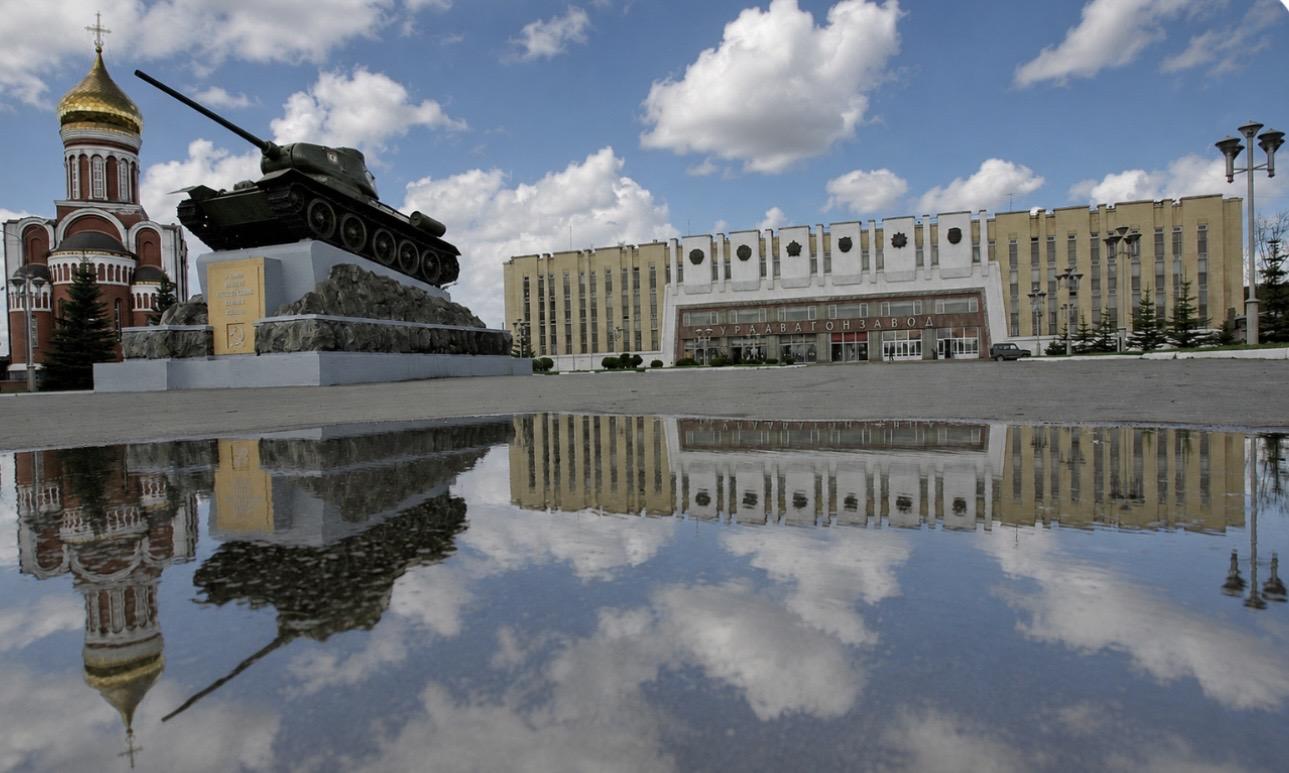
Russian Tank Factory
The largest tank factory in the world is widely regarded to be the massive Uralvagonzavod industrial complex located in the Russian city of Nizhny Tagil. Uralvagonzavod has become one of the most important symbols of Russian heavy industry and military manufacturing, producing thousands of armored vehicles over several decades. The factory has played a central role in Soviet and Russian military history, particularly through the production of the famous T-72, T-90, and modernized battle tanks used by the Russian Armed Forces.
The origins of the factory date back to the early Soviet industrialization programs of the 1930s. Originally constructed to manufacture railway wagons and heavy industrial equipment, the complex rapidly expanded during the years leading up to the Second World War. Soviet planners selected Nizhny Tagil because of its location deep inside the Ural Mountains, far from western borders and therefore less vulnerable to invasion. This strategic placement later proved crucial when Nazi Germany invaded the Soviet Union in 1941.
During the war, entire factories from western regions of the Soviet Union were dismantled and transported eastward to safer territory. Machinery, engineers, and workers from Kharkiv and other industrial cities were relocated to Nizhny Tagil. The result was the creation of an enormous wartime production center capable of manufacturing tanks on a scale never before seen. The factory became especially famous for producing the legendary T-34 medium tank, considered by many military historians to be one of the most effective tanks of the Second World War.
At the height of wartime production, Uralvagonzavod produced thousands of T-34 tanks annually. Workers operated around the clock under harsh conditions, often enduring shortages of food and materials while maintaining relentless output. The Soviet Union’s ability to mass-produce armored vehicles was one of the decisive factors in defeating German forces on the Eastern Front. Historians often point to Nizhny Tagil as one of the industrial engines behind Soviet victory.
After the war, the factory remained a central pillar of Soviet military manufacturing. As tank technology evolved during the Cold War, Uralvagonzavod became responsible for several generations of Soviet main battle tanks. The T-54 and T-55 series, among the most widely produced tanks in history, were followed by the T-62 and later the T-72. The T-72 in particular became one of the factory’s most famous products. Introduced during the 1970s, it combined relatively low production costs with strong armor, firepower, and mobility.
The T-72 achieved enormous international success. Thousands were exported to allied nations across Eastern Europe, the Middle East, Asia, and Africa. Variants of the tank served in dozens of armies worldwide and participated in numerous conflicts, including wars in the Middle East, the Iran-Iraq War, and later conflicts in the Balkans and post-Soviet regions. The sheer scale of production cemented Uralvagonzavod’s reputation as the largest tank producer on Earth.
The physical scale of the complex itself is extraordinary. The factory spans several square kilometers and includes production halls, steel processing facilities, testing grounds, engineering centers, rail connections, and worker housing infrastructure. During the Soviet era, the factory effectively functioned as an industrial city within a city. Tens of thousands of workers, engineers, and technicians were employed there at various times.
Unlike many Western tank manufacturers that operate on smaller, specialized production systems, Uralvagonzavod was designed for mass wartime output. Soviet doctrine emphasized quantity alongside battlefield durability. This philosophy influenced the factory’s design, which prioritized efficient assembly lines capable of rapidly producing armored vehicles even during national emergencies.
Following the collapse of the Soviet Union in 1991, the factory entered a difficult period. Russian defense spending sharply declined, and many military contracts disappeared. Like numerous Soviet-era industrial giants, Uralvagonzavod struggled financially. To survive, the company diversified into civilian manufacturing, including railway cars, construction machinery, and industrial equipment. Despite these efforts, economic instability during the 1990s severely reduced production levels.
The revival of Russian military spending in the 2000s brought renewed importance to the factory. Modernized versions of the T-72 and the newer T-90 tank entered production. The T-90 became Russia’s primary export tank and gained attention internationally after sales to countries such as India, Algeria, and Vietnam. India in particular became one of the largest foreign operators of T-90 tanks, many of which were assembled domestically under Russian license agreements.
The T-90 combined lessons learned from earlier Soviet designs with updated armor systems, thermal imaging equipment, and advanced fire-control systems. Although smaller and lighter than many Western tanks such as the American M1 Abrams or the German Leopard 2, Russian designers emphasized mobility, low silhouette, and simplified logistics.
In recent years, Uralvagonzavod has also been associated with the development of the T-14 Armata, Russia’s next-generation main battle tank. The T-14 attracted international attention because of its highly modern design features, including an unmanned turret, advanced armor systems, and digital battlefield integration. Russian officials described the Armata as a revolutionary leap in armored warfare technology. However, production numbers appear limited compared with earlier Soviet-era mass manufacturing, partly because of costs and industrial constraints.
The factory has also played a major role in refurbishing and upgrading older Soviet tanks. Large numbers of T-72 tanks have undergone modernization programs to extend their operational life. These upgrades typically include improved armor, new optics, enhanced communications systems, and more powerful engines. Modernization remains cheaper than building entirely new tanks and allows Russia to maintain substantial armored forces.
The importance of Uralvagonzavod increased significantly following the outbreak of major military operations involving Russian forces in the 21st century. International analysts and intelligence agencies have closely monitored the factory’s output and repair capabilities. Satellite imagery and defense reports frequently examine activity at Nizhny Tagil because the plant remains critical to Russian armored warfare capacity.
The factory has become heavily integrated into Russia’s broader defense-industrial complex. It operates under the umbrella of the state corporation Rostec, which oversees numerous military and technology enterprises. Rostec This integration allows the Russian government to coordinate military procurement, production planning, and technological development more directly.
Despite its immense size and historical prestige, the factory faces several modern challenges. International sanctions, technological restrictions, supply chain limitations, and economic pressures have affected Russian defense manufacturing. Some Western analysts argue that acquiring advanced electronics and precision components has become increasingly difficult. Others note that Russia still retains substantial domestic industrial capability, particularly in metallurgy and heavy engineering.
The workforce at Uralvagonzavod represents another major aspect of its identity. Generations of families in Nizhny Tagil have worked at the factory. The city itself grew around the industrial complex, and many residents view the plant not only as an employer but also as a source of regional pride and historical identity. Soviet propaganda frequently celebrated tank workers as patriotic heroes who defended the nation through industrial labor.
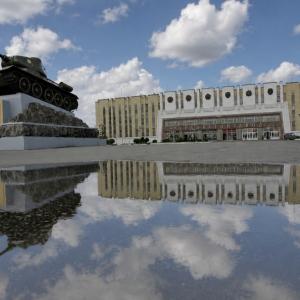
The factory’s cultural significance within Russia remains considerable. Museums and memorials connected to armored warfare history exist within Nizhny Tagil, and military parades often feature vehicles produced at the plant. The story of wartime tank production during the Second World War continues to occupy an important place in Russian national memory.
Today, Uralvagonzavod stands as one of the last surviving examples of the enormous industrial complexes built during the Soviet era specifically for large-scale mechanized warfare. Its continued operation reflects both the enduring importance of armored vehicles in Russian military doctrine and the persistence of Soviet industrial traditions in modern Russia.
Although modern warfare increasingly includes drones, cyber systems, and precision-guided weapons, tanks still play a major role on many battlefields. As long as armored warfare remains relevant, the vast assembly halls of Nizhny Tagil are likely to continue producing and upgrading tanks that influence military balances across the world.