On this day in military history…
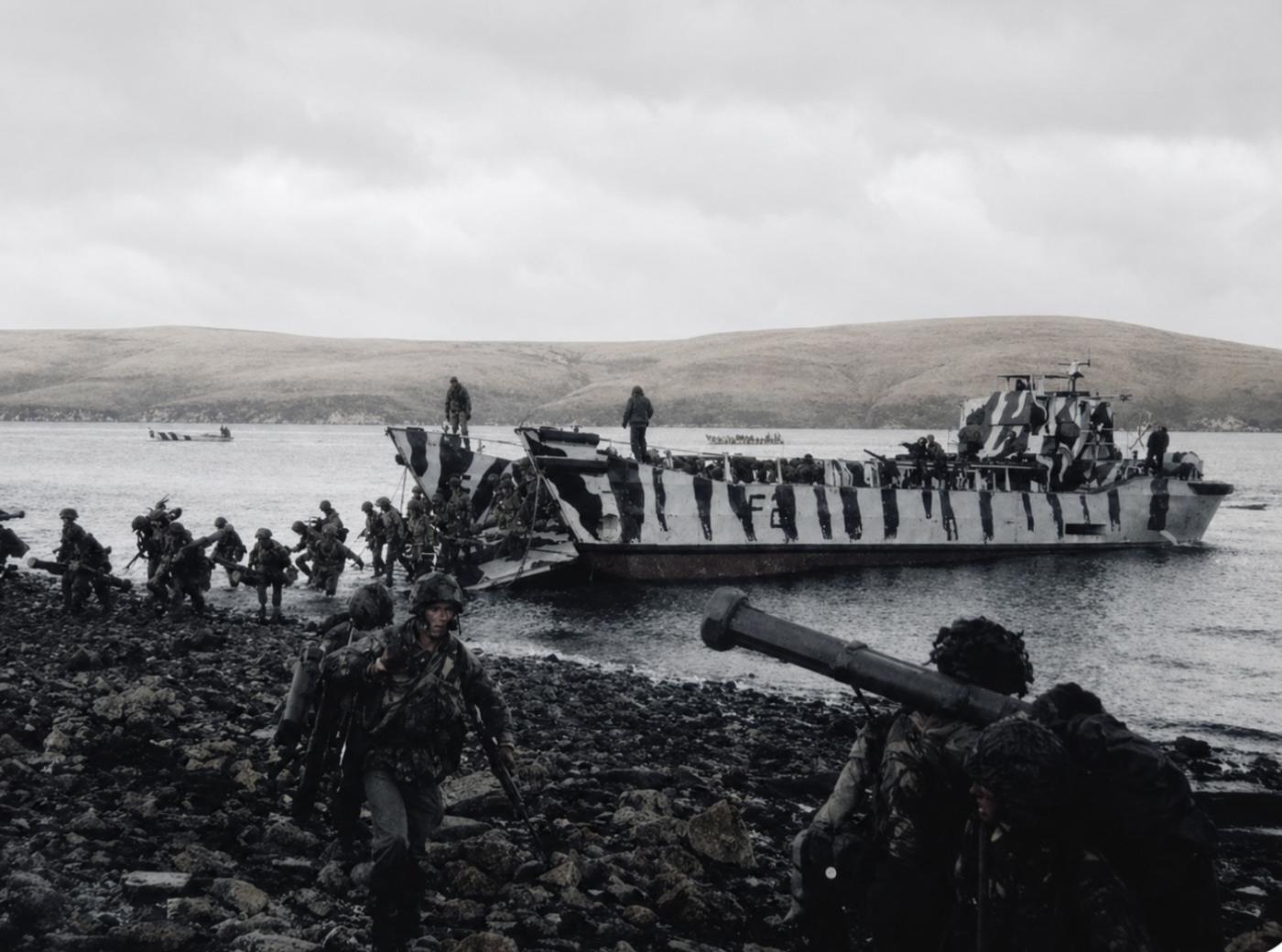
The landings at San Carlos on 21 May 1982 were the moment the Falklands campaign truly became a battle fought face to face on the ground. Until then the war had been fought largely by ships, submarines and aircraft across a vast stretch of the South Atlantic, but Operation Sutton changed everything. It was one of the boldest amphibious assaults carried out by British forces since the Second World War, and many of the men involved knew they were sailing directly into danger with almost no guarantee they would survive the first day.
The British task force had travelled nearly 8,000 miles from home after Argentina invaded the Falkland Islands on 2 April 1982. By May the fleet was gathered east of the islands waiting for the right moment to land troops. The chosen landing site was San Carlos Water on the western side of East Falkland. The narrow inlet offered some protection from the open sea and from Argentine radar, but it was also surrounded by hills which created a deadly trap if enemy aircraft got in low enough. The troops soon gave it another name, Bomb Alley.
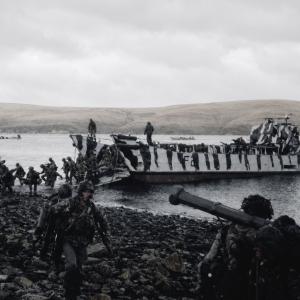
The force that went ashore included Royal Marines, the Parachute Regiment, artillery units, engineers, SAS and SBS teams and large amounts of equipment that had to be unloaded rapidly before Argentine aircraft arrived. The landings began in darkness during the early hours of 21 May. Royal Navy ships crept through Falkland Sound at night in difficult conditions, carrying thousands of soldiers aboard amphibious ships and landing craft. Navigation was tense because nobody could be certain there were no mines in the area and the narrow waters made the ships vulnerable.
Special forces had already been operating ahead of the main assault. SBS teams had reconnoitred beaches and landing areas while SAS patrols gathered intelligence deeper inland. Some of these men had already endured terrible weather and difficult movement over peat bogs and mountains. Their information helped planners decide where troops could safely land and where Argentine positions were weakest.
The first troops ashore encountered little resistance. Argentine defenders in the San Carlos area were thinly spread and were surprised by the scale of the landing. British forces quickly secured beachheads and established defensive positions on surrounding high ground. Rapier missile batteries were brought ashore to provide air defence, though they were not always reliable in the difficult terrain and weather. Within hours helicopters were ferrying men and supplies inland while engineers struggled to organise unloading operations under growing threat from the air.
Then the Argentine Air Force struck.
Throughout 21 May and the days that followed, waves of Argentine jets attacked the ships crowded into San Carlos Water. Pilots flew at extremely low level, often only feet above the sea, to avoid radar detection. They came in through the hills at tremendous speed before releasing bombs and cannon fire at almost point blank range. British sailors watched aircraft appear suddenly over ridgelines with only seconds to react. Many of the attacks became desperate close range battles involving missiles, anti-aircraft guns and even rifles fired from ship decks.
The Argentine pilots showed extraordinary courage. Many knew their chances of survival were slim because they had to fly long distances from the mainland with limited fuel, often through terrible weather and against a fleet packed with missiles and guns. Several aircraft returned to base with almost no fuel left at all. Some never made it home. British troops watching from shore later admitted they had been deeply impressed by the determination of the attacking pilots.
Several British ships were hit during the landings. HMS Ardent was attacked repeatedly and eventually sank after fierce air assaults. HMS Antelope was badly damaged by bombs that failed to explode initially. Later, while bomb disposal experts attempted to defuse one of the bombs aboard, it detonated catastrophically, killing two men and setting the ship ablaze before she exploded and sank. HMS Coventry was lost a few days later while helping shield the landing force from air attack. Images of burning ships in San Carlos became some of the defining scenes of the war.
One of the most remarkable features of Operation Sutton was the sheer speed with which the British unloaded supplies despite constant attacks. Thousands of men, vehicles, ammunition crates, artillery pieces and fuel supplies had to be moved ashore quickly before ships became easy stationary targets. Landing craft crews worked almost continuously while helicopters carried loads inland. Men often unloaded ships while air raid sirens sounded and explosions echoed around the bay.
The RAF Harriers played a vital role in protecting the fleet. Operating from aircraft carriers HMS Hermes and HMS Invincible, the Sea Harriers intercepted Argentine aircraft whenever possible. The Harrier’s Blue Fox radar and Sidewinder missiles proved extremely effective. British pilots achieved a high kill ratio during the campaign and helped prevent even heavier losses in San Carlos. Yet the Harriers could not be everywhere at once, and some Argentine aircraft still got through at terrifyingly low level.
The geography around San Carlos made conditions miserable for the troops. The ground was cold, wet and uneven, with peat bogs swallowing boots and equipment. Many soldiers carried extremely heavy loads because helicopters were in short supply. The sinking of the transport ship Atlantic Conveyor by Exocet missiles had already deprived the British of many heavy lift helicopters, forcing troops to march long distances across the islands later in the campaign. Soldiers joked bitterly that they had become “yomping marines” because of the endless exhausting marches.
An often overlooked aspect of Operation Sutton was how close it came to disaster. If Argentine forces had mounted a stronger immediate ground counterattack, or if more bombs dropped by Argentine aircraft had exploded correctly, British casualties and ship losses might have been devastating. Many Argentine bombs failed to detonate because they were released too low for their fuses to arm properly. British crews later realised with horror that unexploded bombs lodged inside ships could easily have sunk far more vessels had they functioned correctly.
Despite the attacks, the British beachhead held firm. Once enough troops and artillery were ashore the initiative slowly shifted in Britain’s favour. From San Carlos the British began the advance eastward across East Falkland toward Port Stanley. Battles at Goose Green, Mount Longdon, Two Sisters and Tumbledown all grew out of the foothold established during Operation Sutton.
The operation also showed how much the Royal Navy still depended on courage and improvisation even in the missile age. Sailors fought fires, carried wounded comrades through smoke filled compartments and continued operating damaged ships under attack. Young helicopter crews flew repeated missions through terrible weather and enemy fire. Marines and paratroopers dug defensive positions while bombs exploded nearby in the anchorage behind them.
Many veterans later said San Carlos was the most intense experience of their lives. The constant air attacks created an atmosphere of tension that lasted for days with little sleep and almost no certainty of survival. Men described hearing the scream of jet engines bouncing off the hills before explosions shook the ground and ships burned in the narrow waterway.
Operation Sutton succeeded because of planning, determination and the willingness of ordinary servicemen to continue working under extreme danger. Without the successful landings there could have been no British advance on Port Stanley and no eventual victory in the Falklands War. Even today military historians regard San Carlos as one of the most daring amphibious operations of the modern era, carried out at the edge of the world in freezing weather under relentless enemy attack.