Rudolf Hess peace mission
On the evening of 10 May 1941, one of the most bizarre and controversial घटनाओं of the Second World War unfolded when Rudolf Hess, Adolf Hitler’s long-time deputy, secretly flew a German aircraft from southern Germany to Scotland on a self-appointed mission to negotiate peace with Britain. Acting entirely on his own initiative, and without formal approval from the Nazi leadership, Hess undertook a journey that stunned both sides of the war and has remained the subject of speculation ever since.
Hess departed from Augsburg, where he had been preparing for the flight in secrecy for weeks. The aircraft he used was a Messerschmitt Bf 110, a twin-engine heavy fighter adapted for long-range travel. He had trained intensively to handle the aircraft himself, even though he was not an experienced combat pilot. The plane had been specially modified with additional fuel tanks to give it the range needed to reach the British Isles. Hess took off alone; despite later rumours and conspiracy theories, there is no credible evidence that anyone else accompanied him on the flight.
Flying at low altitude to avoid detection by radar and British air defences, Hess navigated across the North Sea toward Scotland. He relied on basic navigation techniques, maps, and landmarks rather than sophisticated instruments. By the time he reached Scotland, he was running low on fuel and had difficulty locating his intended destination. His target was the estate of the Duke of Hamilton, a British aristocrat whom Hess believed might be sympathetic to peace negotiations.
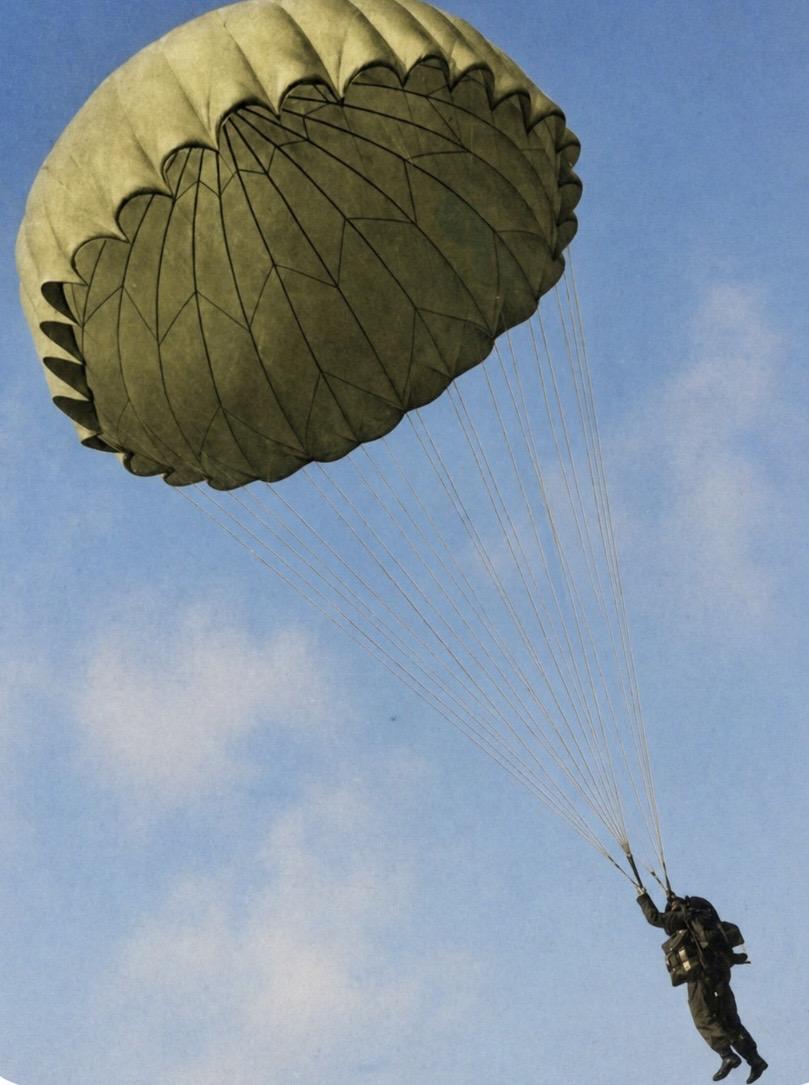
Eventually, near midnight, Hess bailed out of his aircraft over the Scottish countryside. He parachuted down near the village of Eaglesham, south of Glasgow. The plane itself crashed nearby, leaving wreckage scattered across the landscape. Hess landed awkwardly and injured his ankle, but he was quickly discovered by a local farmer, David McLean. When approached, Hess initially gave a false name, claiming to be “Alfred Horn,” but soon revealed his true identity and demanded to be taken to the Duke of Hamilton.
He was taken into custody by the British authorities and transferred under guard. The Duke of Hamilton, a serving RAF officer, did meet Hess, but the British government, led by Winston Churchill, had no interest in negotiating peace under such circumstances. Hess was treated as a prisoner of war and interrogated extensively. The British quickly concluded that he had acted alone and that his mission had no official backing from Berlin.
Back in Germany, the reaction was immediate and dramatic. Adolf Hitler was reportedly furious and shocked when he learned of Hess’s flight. The Nazi regime publicly declared Hess to be mentally unstable, attempting to distance itself from his actions. Hitler stripped him of all his titles and positions, including his role as Deputy Führer, and ordered that any trace of his influence be removed. Martin Bormann quickly rose to fill the power vacuum Hess left behind.
German propaganda portrayed Hess as having suffered from delusions, and the official line was that he had acted without authorization and against orders. Privately, however, there was concern within the Nazi leadership about what Hess might reveal under interrogation. His defection was an embarrassment and a propaganda victory for Britain, demonstrating disarray at the highest levels of the Nazi regime.
Hess spent the rest of the war in British custody, held in various locations under tight security. After the war, he was tried at the Nuremberg Trials, where he was found guilty of crimes against peace and conspiracy. He was sentenced to life imprisonment and eventually held at Spandau Prison in Berlin, where he remained until his death in 1987.
The flight itself has been the subject of endless debate. Some historians view it as the act of a loyal but misguided Nazi attempting to secure peace before Germany became overstretched. Others see it as evidence of internal divisions within the Nazi leadership. There have also been conspiracy theories suggesting secret negotiations or British intelligence involvement, but no definitive proof has ever supported these claims.
What is certain is that Hess’s solo flight stands as one of the strangest episodes of the war, combining elements of personal obsession, political intrigue, and high-stakes diplomacy. His belief that he could personally broker peace between two nations at war was wildly unrealistic, yet it reveals much about his character and the chaotic inner workings of the Nazi regime at that point in the conflict.