Recon Mosquito Plane
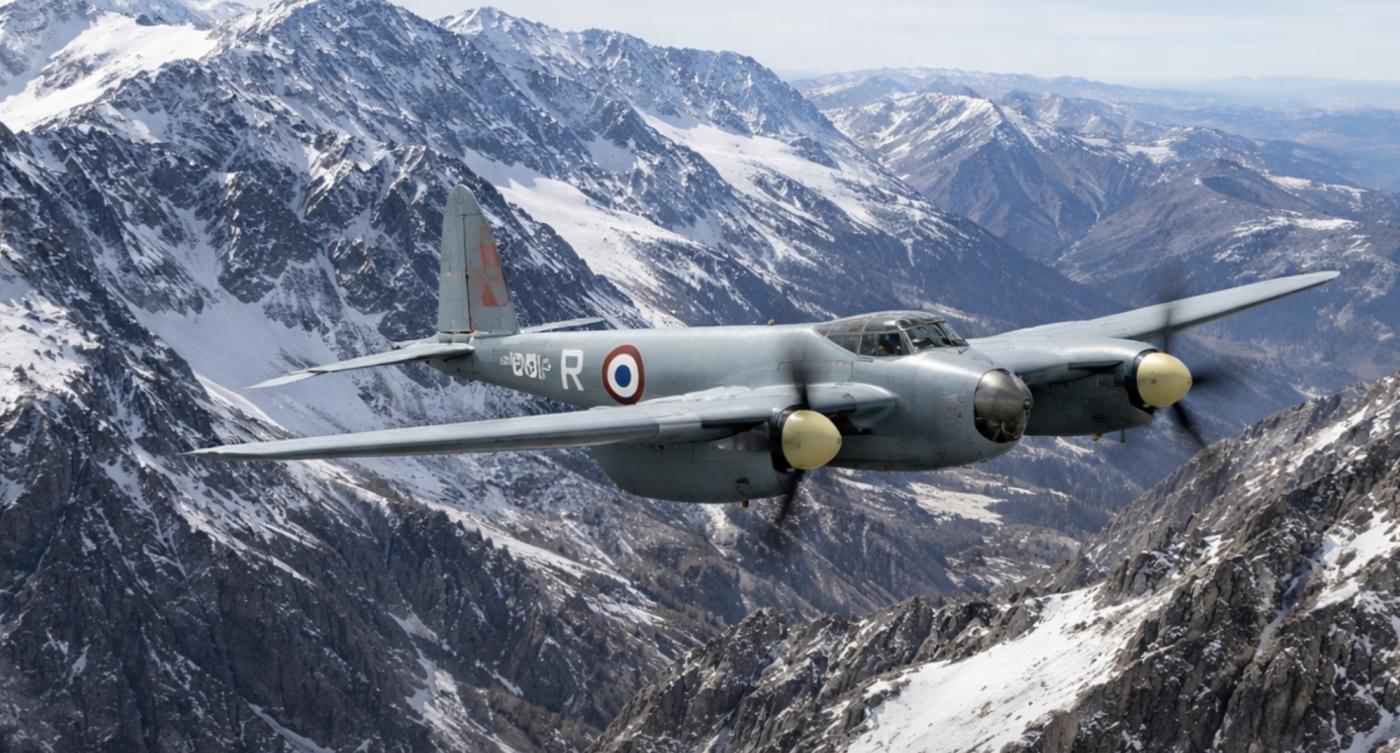
The photo-reconnaissance version of the Mosquito was one of the most valuable aircraft of the Second World War, even though it carried no weapons at all. While many aircraft were designed to fight, the PR Mosquito was designed to see, and what it saw helped shape almost every major Allied decision in the later years of the war.
The idea behind it was simple but highly effective. By removing guns, ammunition, and heavy armour, the aircraft became lighter, faster, and able to fly higher. Instead of weapons, it carried cameras and extra fuel. This meant it could travel long distances deep into enemy territory, take detailed photographs, and return before enemy fighters could catch it. Speed and altitude were its only protection, and in most cases, that was enough.
Compared to the total number of Mosquito aircraft built, the reconnaissance versions were quite rare. Only small numbers of early variants were produced, and although later types increased production, they still made up a relatively small portion of the overall fleet. Around ten early PR Mk I aircraft were built, followed by roughly thirty converted PR Mk IV. Later came more specialised versions, including about 90 PR Mk IX, around 435 PR Mk XVI, just a handful of the very high-altitude PR Mk 32, and about 181 long-range PR Mk 34 aircraft. Altogether, these reconnaissance machines were limited in number, but their contribution was enormous.
Inside the aircraft, the most important equipment was the camera installation. These were not simple cameras but highly advanced systems for the time. The most common types were the F24 and F52 cameras. The F24 was versatile and often used for general photography, while the larger F52 was designed for high-altitude work, capturing wide areas in great detail. Many aircraft carried several cameras at once. Some pointed straight down for map-like images, while others were angled to the side or forward to give a more three-dimensional view of targets.
The level of detail these cameras could capture was remarkable. From heights of 20,000 to over 35,000 feet, they could clearly photograph factories, railways, airfields, and even individual buildings. Analysts could study these images to measure structures, track changes over time, and identify new construction. This made it possible to monitor enemy industry, detect secret weapon sites, and plan bombing raids with far greater accuracy than ever before.
The extra fuel carried by PR Mosquitoes gave them exceptional range. Some versions could fly over 2,500 miles on a single mission. This allowed them to reach deep into Germany and occupied Europe, as well as operate in North Africa, the Mediterranean, and later the Far East. They were often based in Britain for missions over Europe, but as the war progressed, they operated from a wide range of locations to cover different theatres.
Despite flying alone and unarmed, these aircraft were surprisingly difficult to shoot down. Their high speed, often over 400 miles per hour, combined with their ability to fly at very high altitudes, made interception extremely hard. Enemy fighters struggled to catch them, and anti-aircraft fire was less effective at those heights. As a result, the PR Mosquito had a strong survival rate compared to many other types of aircraft performing dangerous missions.
The information they brought back was vital. Their photographs were used to plan bombing raids, assess damage after attacks, and track enemy movements. They played a key role in identifying important targets such as factories, submarine bases, and missile development sites. Without this constant flow of accurate intelligence, many Allied operations would have been far less effective.
In the end, the PR Mosquito proved that knowledge could be just as powerful as firepower. Though relatively few in number, these aircraft gave the Allies a clear view of the enemy’s capabilities and intentions. Their speed, range, and advanced cameras made them one of the most effective reconnaissance aircraft of the war, and their influence continued long after the conflict had ended.