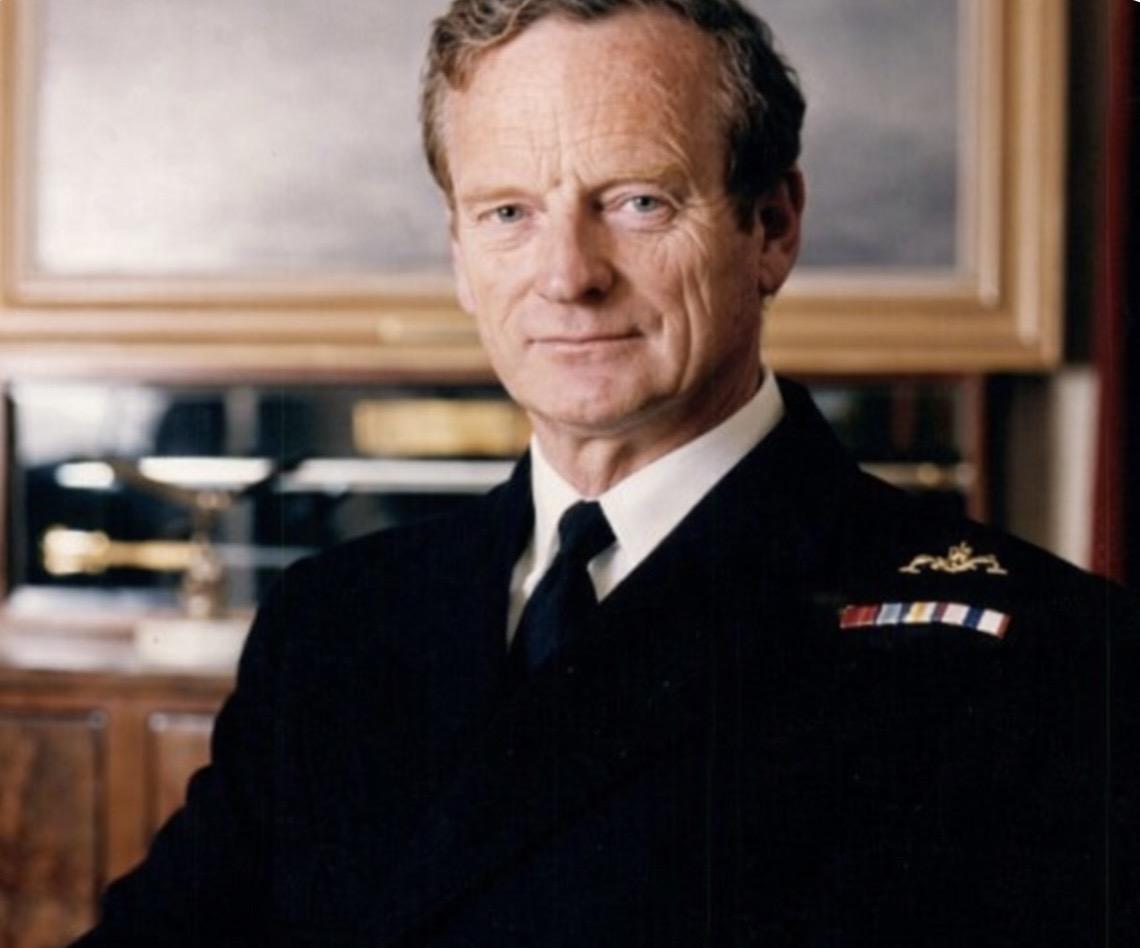
Admiral Sandy Woodward
Sandy Woodward, formally known as John Forster "Sandy" Woodward, is one of the most notable British naval commanders of the late twentieth century, best remembered for his leadership during the Falklands War in 1982. His life and career reflect a combination of technical expertise, operational experience, and calm decision-making under extreme pressure.
He was born on 1 May 1932 in Penzance, Cornwall, England, into a period shaped by the looming tensions of the Second World War. Growing up in a coastal environment, Woodward developed an early familiarity with the sea, something that would later align naturally with a naval career. His education took place at Stubbington House School, a preparatory school known for producing naval officers, followed by the Royal Naval College at Dartmouth, where he entered as a cadet in 1946 at the age of just fourteen. This early start placed him firmly within the traditional pipeline of Royal Navy leadership.
Woodward’s formative years in the navy were shaped by the post-war transition period, when Britain was redefining its global role. He initially trained as a seaman officer but soon moved into submarines, a decision that would heavily influence his later career. The Submarine Service was known for its demanding standards and emphasis on independent thinking, and Woodward excelled in this environment. He qualified as a submariner in the 1950s and gained experience commanding conventional submarines during a time when underwater warfare was becoming increasingly strategic due to Cold War tensions.
A key turning point came when he transitioned into nuclear submarines, an elite and highly technical branch of the Royal Navy. He commanded HMS Warspite, one of Britain’s early nuclear-powered submarines, and later HMS Churchill. These commands required not only tactical skill but also a deep understanding of nuclear propulsion systems and stealth operations. His performance in these roles marked him as a capable and forward-thinking officer.
Throughout the 1960s and 1970s, Woodward steadily rose through the ranks. He held a variety of staff and operational positions, including roles within NATO structures, which broadened his strategic outlook. He attended the Royal Naval Staff College, further refining his leadership and planning skills. By the late 1970s, he had reached senior command positions, including Flag Officer Submarines, where he oversaw Britain’s submarine fleet. This role placed him at the center of Cold War naval strategy, particularly in relation to the Soviet Union.
His promotion to Rear Admiral in 1981 set the stage for the defining moment of his career. In April 1982, following Argentina’s invasion of the Falkland Islands, Woodward was appointed commander of the British Task Force sent to retake the territory. Operating from the aircraft carrier HMS Hermes, he faced an extraordinarily complex challenge: projecting power over 8,000 miles from the United Kingdom with limited resources, under constant threat from Argentine air and naval forces.
During the Falklands War, Woodward demonstrated a combination of caution and aggression that proved decisive. One of his most controversial and significant decisions was the authorization of the sinking of the Argentine cruiser ARA General Belgrano by a British submarine, HMS Conqueror. This action removed a major threat to the task force but also sparked political debate due to the circumstances under which it occurred.
Woodward’s leadership was particularly evident in his management of carrier-based air power. The British relied heavily on Sea Harrier jets, which operated from relatively small carriers compared to those of larger navies. Despite this limitation, the Sea Harriers achieved remarkable success against Argentine aircraft, largely due to effective tactics and the use of advanced air-to-air missiles. Woodward coordinated naval movements, air defense, and amphibious operations in a high-risk environment where losses were inevitable. Several British ships, including HMS Sheffield and HMS Coventry, were sunk during the conflict, underscoring the intensity of the campaign.
He maintained a careful balance between protecting the carriers, which were vital to the operation, and supporting ground forces during the landings and subsequent battles. His decisions often involved significant risk, and he later reflected on the immense pressure he faced, knowing that the loss of a carrier could have resulted in mission failure.
Following the successful recapture of the Falkland Islands in June 1982, Woodward was widely praised for his command. He was appointed Knight Commander of the Order of the Bath (KCB) in recognition of his service. His reputation as a thoughtful and effective commander was firmly established, and he continued to serve in senior roles within the Royal Navy.
He was promoted to Vice Admiral and later served as Deputy Supreme Allied Commander Atlantic within NATO, a role that reflected both his operational experience and his strategic insight. He retired from active service in 1989, concluding a career that had spanned over four decades.
Beyond his military career, Woodward became known for his candid reflections on the Falklands War. His memoir, "One Hundred Days," provides a detailed and often personal account of the conflict, offering insights into the decision-making processes and challenges faced by the task force. He did not shy away from discussing mistakes, uncertainties, and the human cost of war, which added depth to his legacy.
One of the more interesting aspects of Woodward’s character was his analytical mindset, likely shaped by his submarine background. He was known for carefully weighing risks and probabilities, often thinking several steps ahead of both allies and adversaries. This approach was crucial during the Falklands War, where information was limited and decisions had to be made quickly.
He also had a reputation for dry humor and a pragmatic attitude, qualities that helped him maintain morale among his staff during long and stressful periods at sea. Despite the seriousness of his responsibilities, he was able to communicate clearly and maintain focus among those under his command.