Murdered Sqn Leader
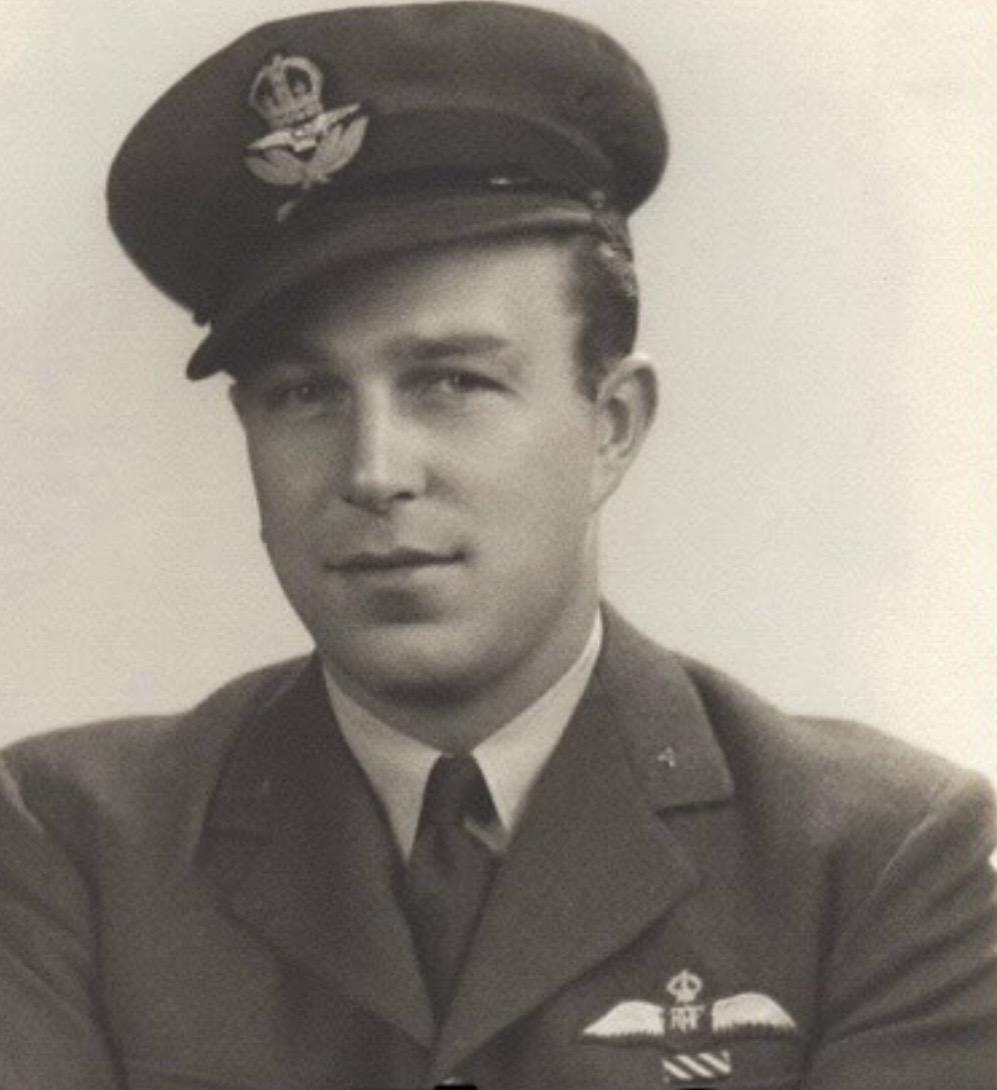
Squadron Leader Roger Bushell was one of the most remarkable Royal Air Force officers of the Second World War and became internationally famous as the leader of the prisoner-of-war breakout later known as the Great Escape from the German camp Stalag Luft III in March 1944. His courage, determination and leadership made him one of the most respected figures among Allied prisoners of war. His full name was Roger Joyce Bushell and he was born on 30 August 1910 in Springs in the Transvaal region of South Africa, where his father worked as a gold-mining engineer.
Bushell spent his early childhood in South Africa but was sent to Britain for his education while still young. He attended Wellington College in Berkshire, a well-known British public school where he developed an interest in sport, competition and adventure. After finishing school he went on to study law at Pembroke College, Cambridge beginning in 1929. During his time at Cambridge he proved to be an excellent athlete. He played rugby and was also an outstanding skier. He became such a skilled downhill skier that he competed internationally and was regarded as one of the fastest British skiers of his time.
After completing his university education he qualified as a barrister and began legal work in London. At the same time he developed a strong interest in aviation and joined the Royal Auxiliary Air Force. This organisation allowed civilians to train as military pilots on a part-time basis. In 1932 he became a pilot with No. 601 Squadron of the Royal Auxiliary Air Force. This squadron later became famous within the RAF and was sometimes nicknamed the “Millionaires’ Mob” because many of its early members were wealthy and came from privileged backgrounds.
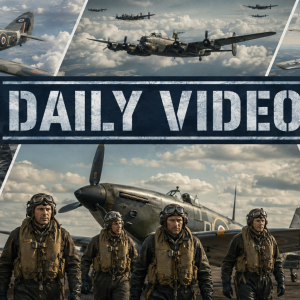
Bushell soon proved himself to be a capable and confident pilot. As his experience increased he rose through the ranks and eventually reached the rank of Squadron Leader. By the outbreak of the Second World War in 1939 he had been given command of No. 92 Squadron of the Royal Air Force. This was a fighter squadron equipped with the Supermarine Spitfire, one of the most famous British fighter aircraft of the war. As squadron commander he was responsible for leading combat operations as well as training and commanding the pilots in his unit.
During the early part of the war Bushell and his squadron were stationed at RAF bases in Britain as part of Fighter Command, carrying out patrols and operations against German forces. In the early air fighting of the war and during the campaign over France in 1940 he took part in several combat engagements with German aircraft. During these operations Bushell is believed to have shot down at least one German aircraft during aerial combat, demonstrating his skill as a fighter pilot.
In May 1940, during the German invasion of France and the fighting around Dunkirk, Bushell again flew operational sorties over northern France. On 23 May 1940 he was flying a Supermarine Spitfire during combat operations near Calais when his aircraft was attacked by German fighters. During the engagement his aircraft was shot down. It has long been believed that the German pilot responsible may have been the Luftwaffe fighter ace Wilhelm Balthasar, a highly experienced pilot flying the Messerschmitt Bf 109 who had already achieved numerous victories at that stage of the war. Although the exact identity of the pilot who shot him down has never been proven with complete certainty, Balthasar is often mentioned as the most likely opponent involved in the engagement.
Bushell survived the crash landing but was quickly captured by German troops shortly afterwards and became a prisoner of war. After his capture he was taken to Dulag Luft near Frankfurt, which was the main Luftwaffe interrogation centre for captured Allied airmen. Prisoners arriving there were questioned about their aircraft, units and missions. Bushell followed the standard military code of conduct and gave only the basic information required under the Geneva Convention, which was his name, rank and service number.
Even at this early stage of captivity Bushell demonstrated the determination that later made him famous. Many RAF officers believed it was their duty to attempt escape whenever possible, partly to return to active service but also to force the Germans to devote resources to guarding prisoners.
During his time as a prisoner he was transferred between several camps. These included Stalag Luft I at Barth on the Baltic coast and the officers’ camp Oflag X-C at Lübeck. The Germans frequently moved prisoners who repeatedly attempted to escape, especially those considered to be persistent troublemakers.
Eventually Bushell was transferred to Stalag Luft III, a specially constructed Luftwaffe prisoner-of-war camp near the town of Sagan in what was then Germany and is now in Poland. The camp held captured Allied air force officers and had been built with many security features intended to prevent escape attempts.
At Stalag Luft III Bushell became the senior organiser of escape planning among the prisoners. He was known by the code name “Big X”, meaning he was the chief escape coordinator within the camp. In this role he supervised a large secret organisation of prisoners whose purpose was to organise escape attempts, gather intelligence and maintain resistance against captivity.
In March 1944 a major escape attempt took place from the camp involving many Allied prisoners. Roger Bushell was one of the officers who left the camp during this event. After escaping he travelled through Germany disguised in civilian clothing with a French officer named Bernard Scheidhauer.
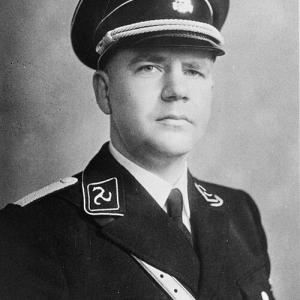
The German authorities launched a massive search operation across Germany and occupied Europe in order to capture the escaped prisoners. Most of the men were eventually recaptured. Bushell and Scheidhauer were arrested by the Gestapo and taken to Saarbrücken for interrogation.
Adolf Hitler reacted with anger when he learned of the escape and ordered severe punishment for the captured officers. In a serious violation of the Geneva Convention he ordered that many of the recaptured prisoners should be executed.
On 29 March 1944 Roger Bushell and Bernard Scheidhauer were taken by Gestapo officers to a remote wooded area near Ramstein in Germany where they were shot and killed. They were among fifty Allied officers who were murdered after being recaptured following the escape from Stalag Luft III.
After the war Allied investigators uncovered the truth about the killings. The remains of the murdered officers were recovered and given proper military burials. Roger Bushell was cremated and his ashes were buried at the Poznań Old Garrison Cemetery in Poland where a memorial honours the fifty officers who were executed.