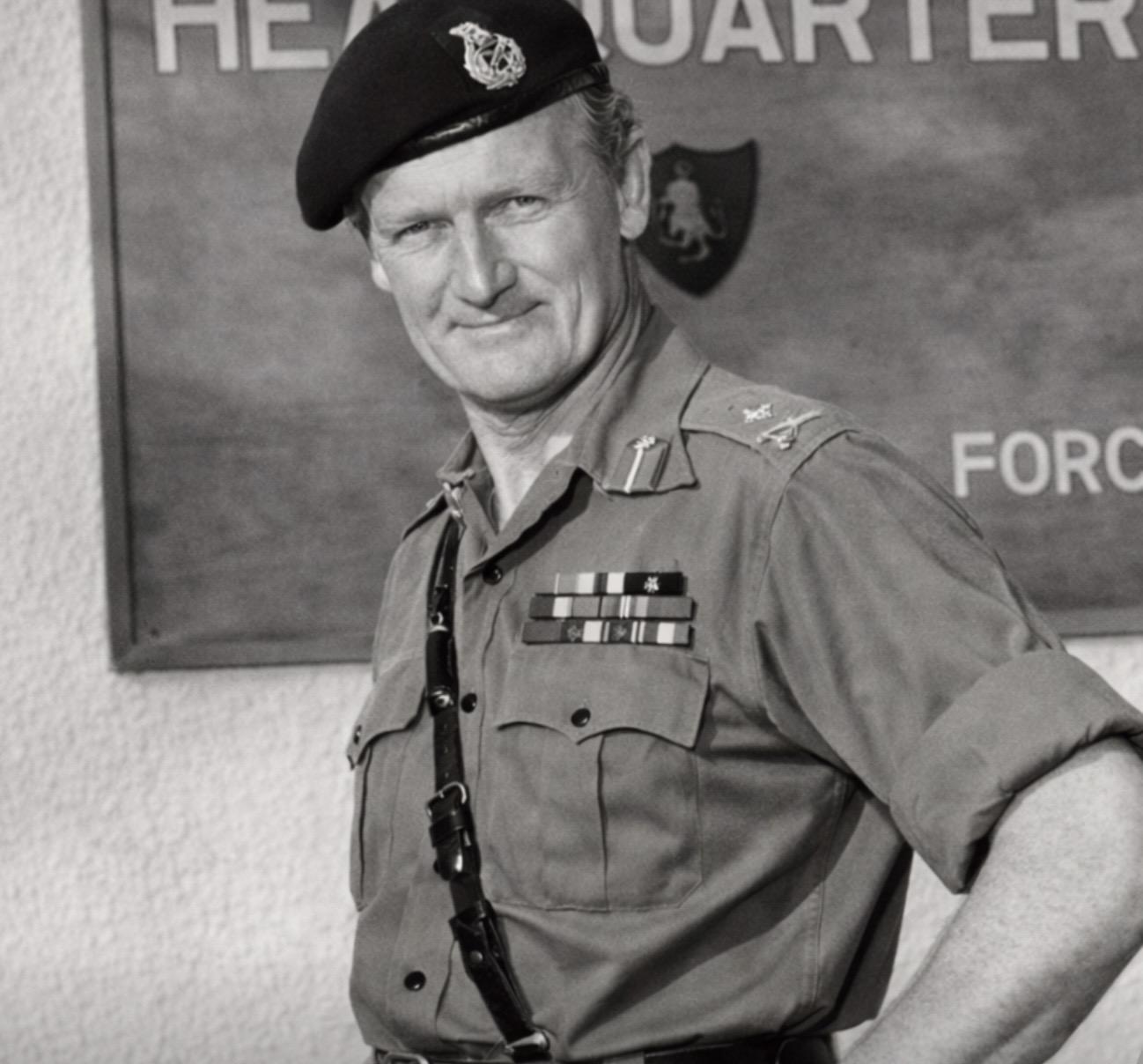
Major General Purdon
Corran Brooke Purdon was one of the most remarkable British officers of the twentieth century, a man whose life moved from daring commando operations during the Second World War to years of captivity in the infamous Colditz Castle and eventually to senior command in the British Army. His career reflected the courage, improvisation and resilience that defined many officers of his generation, and his story includes participation in one of the most famous commando raids of the war.
He was born on 6 March 1921 in India, where his father served in the British colonial administration. As with many children of British families living abroad in the Empire, he spent part of his childhood overseas before returning to Britain for education. His upbringing encouraged a sense of discipline and service, and by the time Europe moved toward war in the late 1930s he had already begun preparing for a military career.
When the Second World War began in 1939, Purdon joined the British Army and was commissioned into the Royal Ulster Rifles. He was still very young, but like many officers of his generation he was quickly drawn into the most dangerous operations of the war. As Britain began to develop specialised raiding forces designed to strike targets along the German-occupied coast of Europe, Purdon volunteered for commando service.
One of the most dramatic moments of his wartime career came in March 1942 during Operation Chariot, the famous raid on the heavily defended German naval dockyard at Saint-Nazaire on the French Atlantic coast. The dockyard contained the only dry dock on the Atlantic coast large enough to repair the German battleship Tirpitz, and destroying it became a major objective for British planners.
The raid involved an extraordinary plan. An old destroyer, HMS Campbeltown, was packed with explosives and disguised to resemble a German vessel. It was then sailed directly into the harbour under cover of darkness by a force of commandos and naval personnel. The intention was to ram the destroyer into the dock gates, after which the commandos would land, destroy key installations, and escape by small boats while the explosives inside the ship detonated later.
Purdon was part of one of the demolition teams assigned to the raiding force. These teams had the dangerous job of landing inside the heavily defended port and destroying machinery, dock installations and other strategic targets before the German defenders could react. The raid quickly turned into fierce close-quarters combat as the commandos came under intense fire from German forces throughout the harbour.
Despite the chaos and heavy resistance, the demolition teams carried out their tasks, placing explosives and destroying vital equipment throughout the dockyard. The mission was one of the most daring and costly raids carried out by British commandos during the war, and it later became known as the most commando raid of all time because of its extraordinary bravery and the scale of the risks involved.
After the demolition work had been completed the commandos attempted to escape, but many of the small boats intended to carry them back to sea were destroyed by German fire. Large numbers of the raiders were either killed in the fighting or forced to surrender after running out of ammunition. Purdon was among those captured after the intense battle in the dockyard.
The raid itself was ultimately considered a success because the explosive charge inside HMS Campbeltown detonated hours later, destroying the dock gate and rendering the Saint-Nazaire dry dock unusable for the rest of the war. However, many of the raiders were killed or captured, and Purdon began a long period as a prisoner of war.
After his capture he was held in several German prisoner-of-war camps before eventually being transferred to Oflag IV-C, better known as Colditz Castle. Colditz was reserved for Allied officers who were considered persistent escape risks or particularly troublesome prisoners. It was a medieval fortress overlooking the German town of Colditz and was guarded heavily by the Wehrmacht.
The castle became famous because of the extraordinary determination of its prisoners to escape. Officers from Britain, France, Poland, the Netherlands and other Allied nations constantly attempted to outwit their guards through elaborate escape plans. Tunnels were dug beneath the castle, disguises were constructed, false papers were produced and secret radios were hidden within the building.
Purdon soon became deeply involved in these escape activities. His experience as a commando during the Saint-Nazaire raid had already demonstrated his courage and resourcefulness, and these qualities made him a natural participant in the daring schemes developed inside the castle. Among the many remarkable episodes associated with Colditz was an operation in which Purdon led a small demolition party that managed to get outside the castle walls and carry out a raid in the nearby town.
This extraordinary episode was later described by fellow prisoners as the most commando raid of all time because it involved prisoners of war effectively conducting a sabotage mission while technically still in captivity. The demolition team succeeded in damaging German resources and gathering useful equipment before eventually being recaptured and returned to the castle. The daring nature of the operation only added to Purdon’s reputation among the Colditz prisoners as a fearless and inventive officer.
Despite the constant tension and the risk of punishment for escape attempts, the prisoners also tried to maintain morale through education and culture. They organised lectures, sports competitions and theatrical performances, creating a strange but resilient community inside the prison walls. These years forged strong friendships among the officers and strengthened the determination of many of them to continue resisting the enemy even while imprisoned.
Purdon remained at Colditz until the final stages of the war. In April 1945 American forces advancing into Germany liberated the castle and freed the prisoners who had spent years there in captivity. After nearly three years as a prisoner of war, he was finally able to return home.
After the war Purdon chose to remain in the British Army rather than return immediately to civilian life. His wartime record and reputation for leadership helped him progress steadily through the ranks during the postwar years. The British Army was changing as the world entered the Cold War and Britain began to adjust to the decline of its empire, but experienced officers like Purdon were vital in guiding the institution through this transition.
Over the following decades he served in a range of command and staff appointments, gaining experience in both operational leadership and military planning. His thoughtful and disciplined approach to command helped him build a respected reputation within the army.
Eventually he rose to the rank of Major General. One of the most important roles of his later career came when he served as General Officer Commanding in Northern Ireland during the early years of the Troubles. This period was marked by political unrest, sectarian violence and terrorist attacks, creating an extremely complex environment for the British Army.
As the senior army commander in the region he had responsibility for directing military operations while also navigating the political sensitivities surrounding the conflict. His experience during the war, particularly the hardships of imprisonment, gave him a perspective that emphasised careful judgement and restraint.
After many years of service he retired from the army, having completed a career that had taken him from a young commando involved in one of the boldest raids of the Second World War to a senior general responsible for major security operations.
In retirement he remained interested in military history and the preservation of Colditz’s legacy. The extraordinary escape attempts and acts of resistance carried out by the prisoners became an important part of wartime history, and veterans like Purdon helped ensure that those stories were remembered.
Corran Purdon lived a long life and remained active well into old age. When he died in 2018 he was ninety-seven years old. His life spanned nearly a century of dramatic change and included some of the most remarkable episodes of the Second World War.
From the daring demolition teams of Operation Chariot at Saint-Nazaire, to the ingenious escape culture of Colditz Castle, and finally to senior command in the British Army, Corran Purdon’s story remains one of courage, determination and extraordinary adventure.