
On this day in military history…
On 8 April 1950, in the tense early months of the Cold War, a United States Navy Consolidated PB4Y-2 Privateer reconnaissance aircraft disappeared over the Baltic Sea after being intercepted and shot down by Soviet fighters, an incident that became one of the first direct military confrontations between the two superpowers in the post-war era.
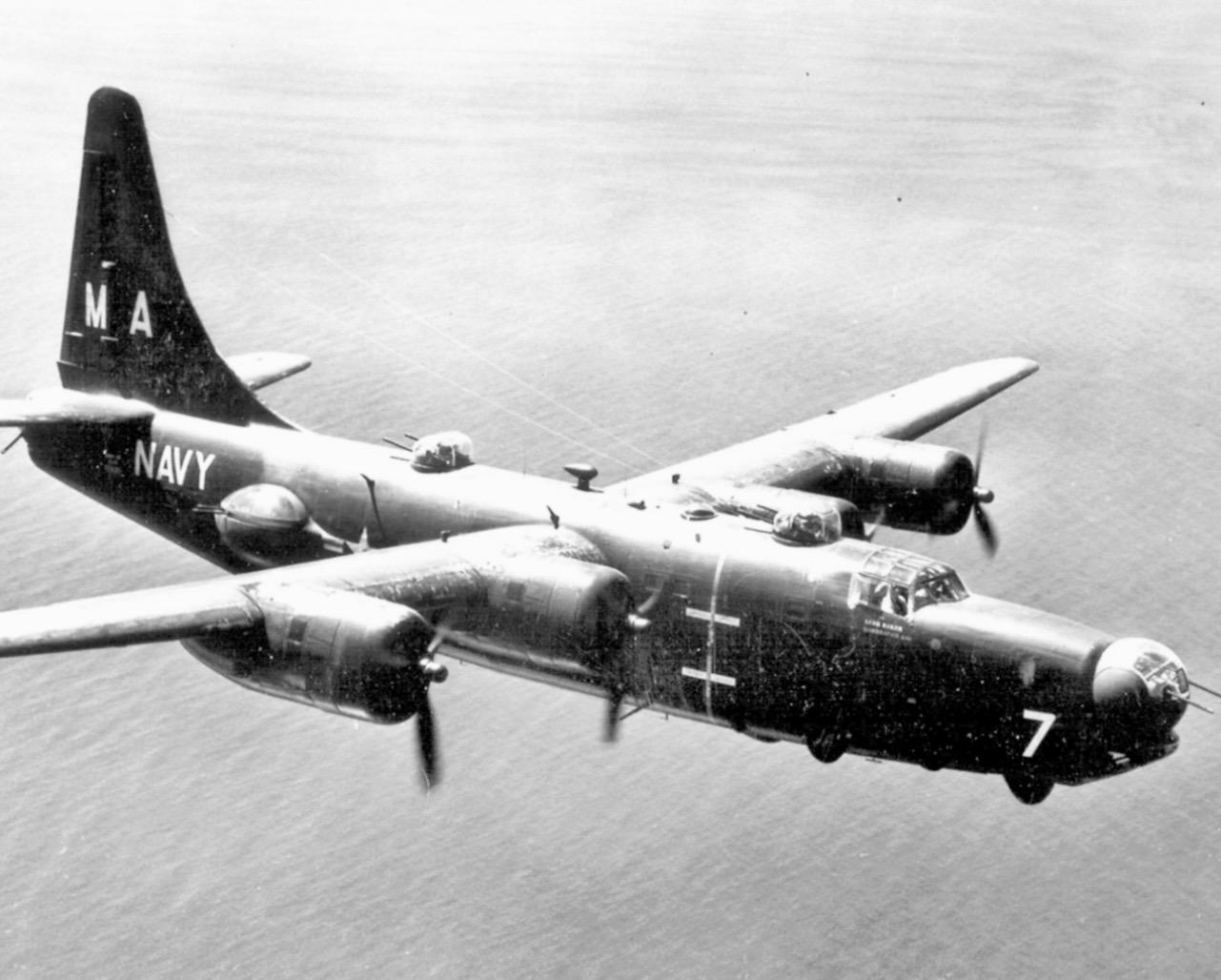
The aircraft involved, Bureau Number 59645 and nicknamed “Turbulent Turtle,” had taken off from Wiesbaden in West Germany on what was officially described at the time as a routine flight over the Baltic. In reality, it was part of a highly secret signals intelligence mission aimed at monitoring Soviet naval activity and electronic communications, particularly submarine operations in the region. These missions were increasingly common as both sides sought to probe each other’s capabilities without openly entering into war.
The PB4Y-2 Privateer itself was a long-range maritime patrol bomber derived from the B-24 Liberator, modified for naval use and later adapted for electronic reconnaissance roles. By 1950, aircraft like this had become crucial tools in the growing intelligence war, flying close to Soviet borders to gather information while attempting to remain in international airspace.
After crossing the German coastline and heading out over the Baltic, the aircraft was intercepted by Soviet Lavochkin La-11 fighters somewhere off the coast of Liepāja in what is now Latvia. According to reconstructed timelines, the encounter occurred well out to sea, although the exact position would later become the central point of dispute between Washington and Moscow. The Soviet pilots attacked and shot down the American aircraft, which crashed into the sea, killing all ten crew members on board.
No distress call was successfully transmitted and no wreckage or survivors were recovered despite search efforts that continued for several days before being abandoned. The crew were officially listed as missing and presumed dead, a status that remains unchanged, and the incident is still counted among Cold War losses with personnel unaccounted for.
Almost immediately, the incident triggered a sharp diplomatic confrontation. The United States government issued a formal protest, stating that the aircraft had been unarmed and flying over international waters, and accusing the Soviet Union of attacking without warning in violation of international law. American officials insisted that strict orders had been followed to avoid Soviet territory and that the plane had never crossed into Soviet airspace.
The Soviet response was entirely different. Moscow claimed that the aircraft had violated Soviet airspace by a significant margin, ignored orders to land, and even opened fire on intercepting fighters, forcing them to shoot it down. This version of events was repeated in official Soviet communications and never formally withdrawn. The conflicting narratives became typical of Cold War incidents, where both sides used propaganda and secrecy to support their positions.
Behind the public statements, the truth was more complex. It was not until decades later, in the 1970s, that the United States acknowledged the aircraft had indeed been conducting a covert intelligence mission rather than a routine training flight. This admission reflected the broader pattern of Cold War reconnaissance operations, which frequently pushed the limits of international boundaries and carried significant risk.
Speculation persisted for years about the fate of the crew. Some reports and rumours suggested that a number of the airmen might have survived the shootdown and been captured, possibly sent to Soviet prison camps, though no conclusive evidence has ever been found to support this. Officially, all ten men are still regarded as lost at sea.
The incident also had a wider impact on military policy and Cold War strategy. It demonstrated how quickly reconnaissance missions could escalate into deadly confrontations and contributed to the development of more advanced, higher-altitude and eventually satellite-based intelligence systems designed to reduce such risks. Nevertheless, similar shootdowns continued throughout the 1950s and beyond, showing that the dangers never fully disappeared.
In terms of immediate consequences, there was no direct military retaliation. The response remained confined to diplomatic protests and propaganda exchanges, reflecting both sides’ desire to avoid open conflict while still asserting their positions. However, the event marked a significant escalation in tensions and is often considered the first shootdown of an American military aircraft by the Soviet Union during the Cold War.
Over time, the incident has been commemorated rather than resolved. Memorials have been erected, particularly in Latvia near the site of the crash, honouring the ten crew members who were lost. Their disappearance remains one of many unresolved cases from the early Cold War, a period when intelligence gathering and brinkmanship frequently brought the superpowers dangerously close to direct confrontation.