Jungle clearers
The nickname “Jungle Eaters” captured both the mission and the attitude of the 60th Land Clearing Company during the Vietnam War. This U.S. Army engineer unit was created for a very specific purpose: to destroy the natural concealment that gave opposing forces a constant advantage. Dense jungle did not just make movement difficult; it hid bunkers, tunnel entrances, supply routes, base camps, and entire troop formations. The men of the 60th were tasked with changing the battlefield itself, turning jungle into open ground where observation, firepower, and mobility favored conventional forces.


The area where the 60th Land Clearing Company became most closely associated with this mission was the Iron Triangle, a region northwest of Saigon that had resisted years of military pressure. The Iron Triangle was flat, thickly forested, and riddled with hidden defensive works. Beneath the surface lay extensive tunnel systems used for command posts, hospitals, weapons storage, and protected movement. Above ground, dense vegetation made aerial observation unreliable and ground movement slow and dangerous. For American planners, the Iron Triangle was not just jungle; it was a fortified sanctuary that allowed enemy forces to strike near Saigon and then disappear.
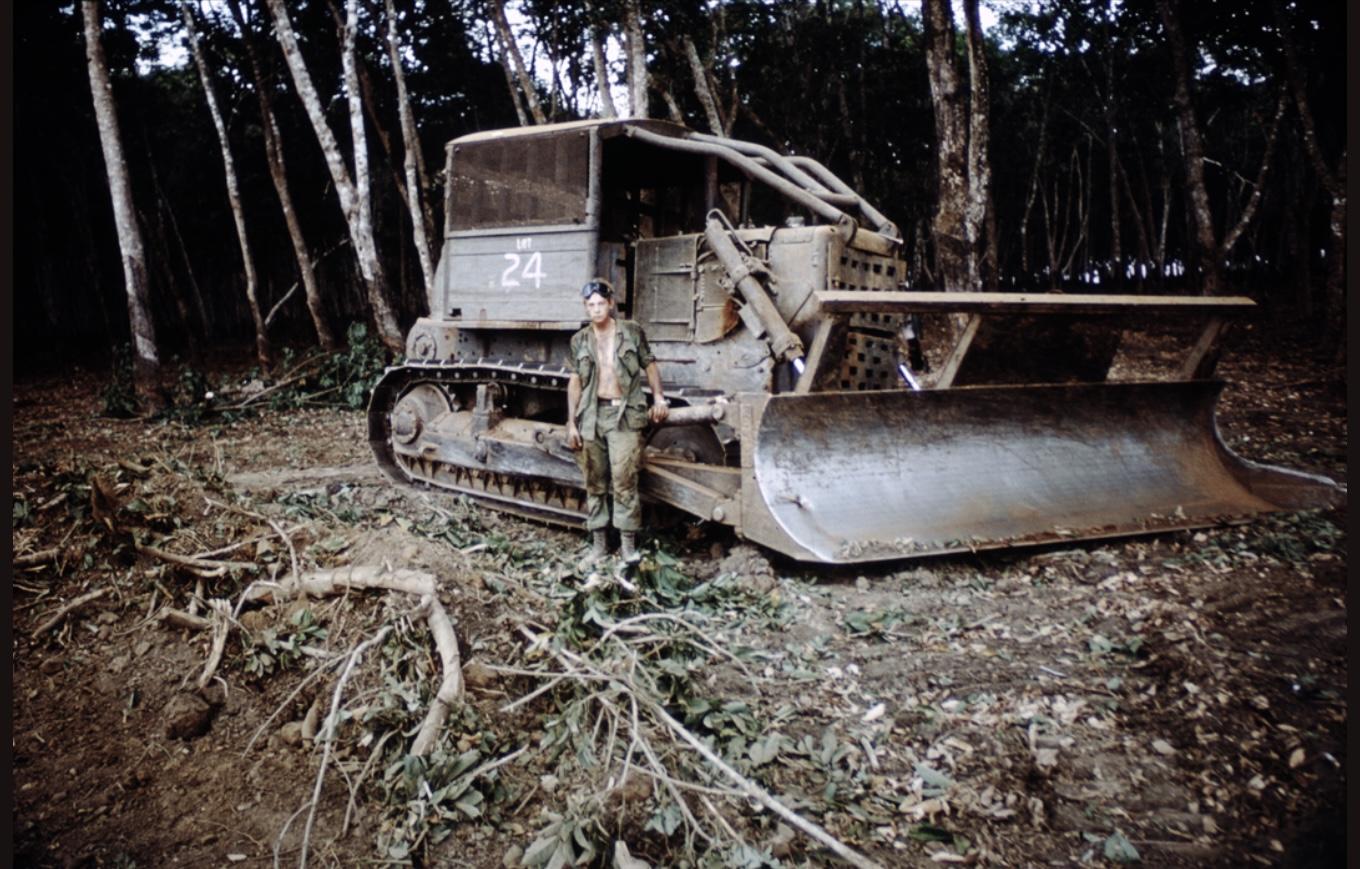
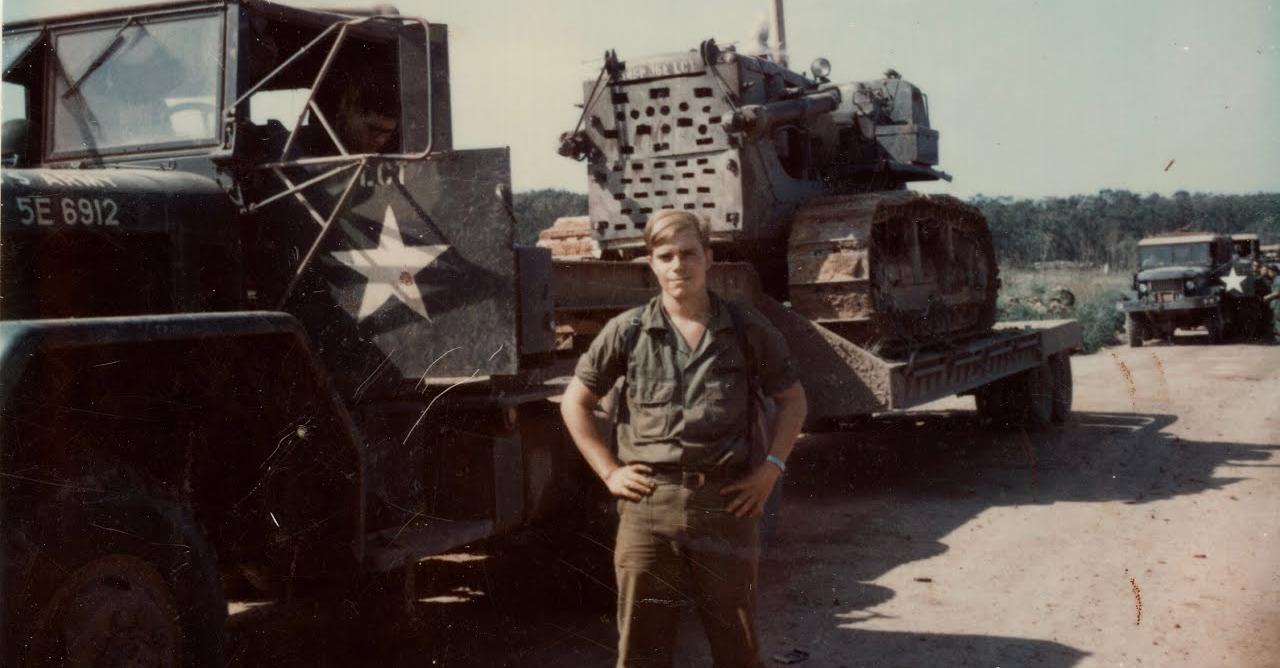
The solution adopted by U.S. command was blunt but logical. If the jungle itself was a weapon, then removing it would weaken the enemy’s ability to survive and operate. The 60th Land Clearing Company was equipped with specialized bulldozers fitted with Rome plow blades, massive steel blades with a protruding central stinger designed to split trees and tear through heavy growth. These were not ordinary construction machines. The bulldozers were heavily modified for combat conditions, with armor plating to protect the driver from small-arms fire and debris, reinforced components, and exhaust and cooling systems adapted for constant low-speed, high-stress work in tropical heat.
Land clearing operations around the Iron Triangle were conducted with the mindset of combat missions rather than engineering projects. Rome plows moved forward in lines, chewing through jungle that had often stood untouched for decades. Infantry and armored vehicles provided security, scanning the tree line and watching for ambushes, mines, or rocket fire. The noise was immense, and the work exhausting. Drivers often spent long hours inside armored cabs, advancing yard by yard, knowing that the jungle they were destroying might conceal explosives, booby traps, or enemy fighters.
The reasons for this destruction went beyond simple visibility. Clearing vegetation denied cover for ambushes along roads and rivers, exposed tunnel entrances that could be destroyed, and prevented regrowth from quickly restoring concealment. It also allowed helicopters to land where none could before, opened areas for patrol bases and artillery positions, and made it far harder for large forces to move unseen. In areas like the Iron Triangle, the goal was not just to disrupt enemy units temporarily but to permanently reduce the area’s usefulness as a base of operations.
There were also psychological effects. The sudden transformation of jungle into barren, churned earth sent a powerful message that long-held sanctuaries were no longer safe. For U.S. troops operating nearby, cleared zones reduced anxiety about surprise attacks. For opposing forces, the loss of familiar terrain and carefully prepared hiding places forced changes in tactics and movement.
Interesting details emerged from life inside a land clearing unit. Rome plow operators developed their own techniques for reading terrain, recognizing unnatural tree patterns that might indicate tunnels or bunkers, and adjusting blade angles to maximize destruction while keeping the machine stable. The work was physically demanding despite being mechanized, and maintenance crews were just as critical as drivers, keeping engines and tracks running in conditions that rapidly wore down equipment. The sight of Rome plows advancing in formation, escorted by tanks and infantry, became one of the most striking symbols of the war’s effort to impose control by reshaping the landscape itself.
The legacy of the 60th Land Clearing Company and similar units remains controversial. While land clearing achieved immediate tactical goals, it caused long-lasting environmental damage and permanently altered large areas of countryside, leaving scars that were still visible long after the fighting ended.