Henry shrapnel
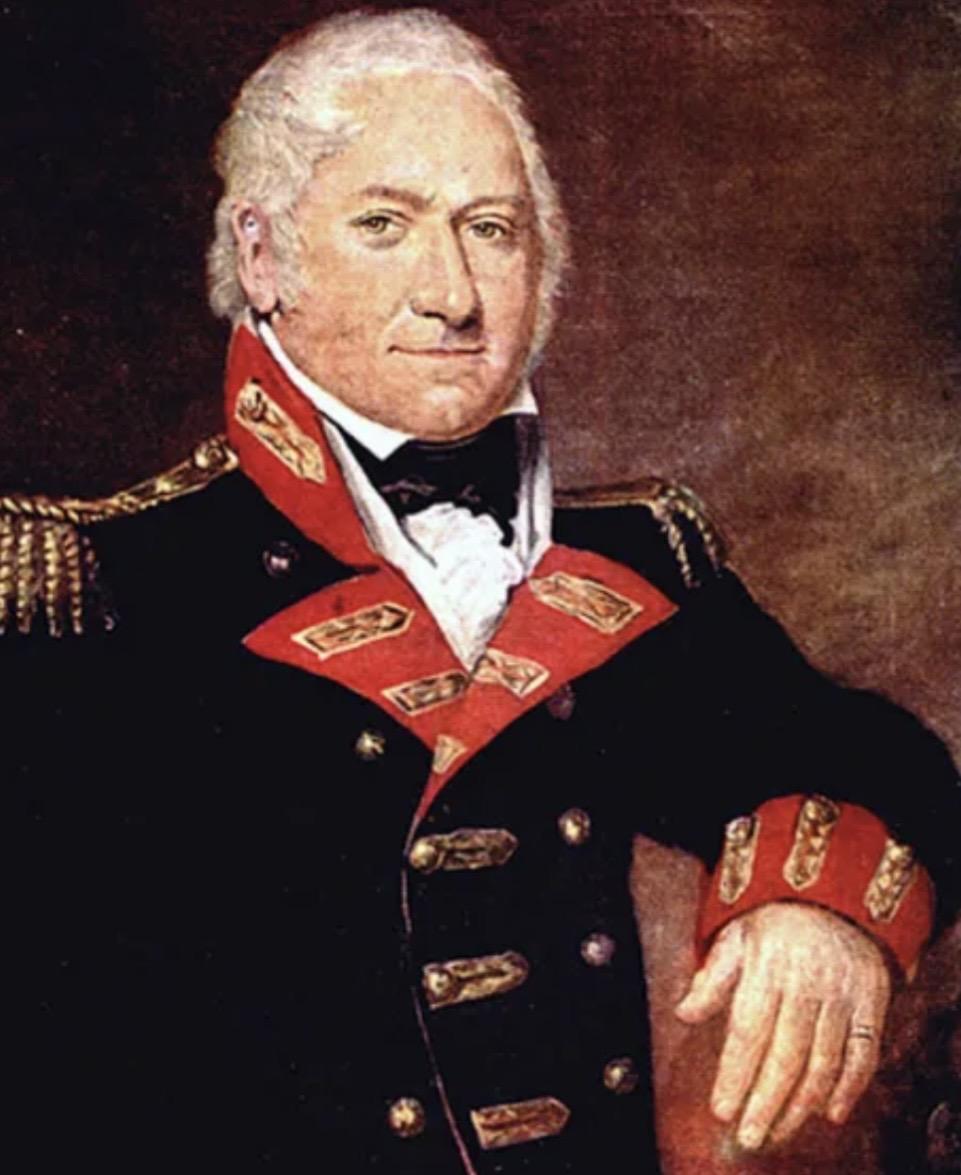
Henry Shrapnel was a British Army officer whose name became permanently associated with one of the most significant artillery innovations of the late eighteenth and early nineteenth centuries. His invention of the shrapnel shell transformed battlefield tactics and gave the British Army a powerful new weapon that would remain in use, in modified forms, for more than a century. Born into the Georgian era and serving through the turbulent years of the Napoleonic Wars, Shrapnel’s life spanned a period of rapid military and technological change, and his work reflected the growing importance of scientific thinking in warfare.
Henry Shrapnel was born on 3 June 1761 in Bradford-on-Avon in Wiltshire, England. He came from a respectable but not aristocratic background. His father, Zachariah Shrapnel, was a successful clothier and businessman, and his family enjoyed a comfortable position within the local community. From an early age, Henry displayed a strong interest in mathematics and mechanics, subjects that were essential for anyone pursuing a career in artillery. Unlike many infantry officers who relied on patronage and social standing, artillery officers were expected to possess technical skill and scientific understanding, making the Royal Artillery one of the most intellectually demanding branches of the British Army.
Shrapnel entered the Royal Military Academy at Woolwich, the institution responsible for training officers for the Royal Artillery and Royal Engineers. The academy provided instruction in mathematics, ballistics, fortification, and engineering, equipping its cadets with the knowledge necessary to manage and deploy artillery effectively. After completing his studies, Shrapnel was commissioned as a second lieutenant in the Royal Artillery in 1779, at a time when Britain was engaged in the American War of Independence. Although he did not see extensive action in America, his early service exposed him to the practical challenges of artillery warfare and the limitations of existing ammunition.
During the late eighteenth century, artillery shells were typically hollow iron spheres filled with gunpowder and fitted with a fuse. When fired from a cannon or mortar, these shells exploded upon impact or after a timed delay, scattering fragments of iron casing. While effective against fortifications and dense troop formations, such shells were often unreliable and limited in their ability to cause casualties over a wide area. Solid cannonballs, meanwhile, were effective against structures and tightly packed troops but lacked the ability to disperse lethal fragments over distance. Shrapnel became increasingly interested in finding a way to combine the destructive power of explosive shells with the wide-area effect of small projectiles.
While serving in various garrisons, including postings in Gibraltar and the Caribbean, Shrapnel began experimenting with new types of ammunition. His goal was to create a shell that could burst in mid-air and scatter a large number of small metal balls over enemy formations. This would allow artillery to inflict heavy casualties on troops at longer ranges than conventional canister shot, which was only effective at close distances. Canister shot essentially turned a cannon into a giant shotgun, firing a container of musket balls that spread out upon leaving the barrel. However, its short range limited its usefulness in many battlefield situations.
Shrapnel’s design involved a hollow spherical shell filled not only with a small bursting charge of gunpowder but also with numerous lead or iron balls. A carefully timed fuse would ignite the bursting charge while the shell was still in flight, causing it to open and release the balls at high velocity. Because the shell retained much of its forward momentum when it burst, the projectiles would continue travelling toward the target, creating a deadly spray over a wide area. This concept was revolutionary because it effectively extended the range at which artillery could deliver anti-personnel fire.
Developing this new type of ammunition was not straightforward. Shrapnel faced technical challenges in designing a fuse that would function reliably and burst the shell at the correct moment. If the fuse burned too quickly, the shell might explode prematurely; if too slowly, it might strike the ground before bursting. He conducted numerous experiments at his own expense, refining the composition of the bursting charge, the thickness of the shell casing, and the arrangement of the internal projectiles. His persistence eventually paid off, and by the 1780s he had produced a working prototype.
In 1784 he formally presented his invention to the British authorities. After trials demonstrated its effectiveness, the British Army adopted the new shell, initially known as “spherical case shot.” This name reflected its design as a spherical casing filled with smaller projectiles. Over time, however, the shell became widely known simply as “shrapnel,” in recognition of its inventor. The adoption of his design marked a significant step forward in artillery technology, allowing gunners to engage enemy infantry at ranges previously considered safe from such weapons.
Shrapnel’s career advanced steadily as his invention gained recognition. He continued to serve in the Royal Artillery and was promoted through the ranks over the following decades. In 1803 he was promoted to major, and his reputation as both an officer and an innovator grew. His shell proved particularly valuable during the Napoleonic Wars, when British forces faced large, disciplined armies across Europe and beyond. The ability to disrupt enemy formations at longer ranges gave British artillery a notable advantage on the battlefield.
In 1814 Shrapnel was promoted to lieutenant colonel, and his invention had by then become an established part of British artillery equipment. The government recognized the importance of his contribution and awarded him a financial stipend for his work. This was a significant acknowledgment, as many military inventors of the era received little or no compensation for innovations adopted by the state. Shrapnel’s shell continued to be improved by other engineers and officers, but the fundamental concept remained his.
He eventually rose to the rank of lieutenant general in the British Army, a remarkable achievement for an artillery officer whose fame rested largely on technical innovation rather than battlefield command. His rise through the ranks reflected both his long service and the value of his contribution to military effectiveness. By the time he reached senior rank, the name “shrapnel” had entered common military usage, and his invention had influenced artillery design across Europe.
After retiring from active military service, Shrapnel lived quietly, benefiting from the recognition and financial support he had received. Although he did not remain directly involved in further technical developments, his work continued to shape artillery tactics throughout the nineteenth century. The concept of a shell that dispersed multiple projectiles in flight would evolve with advances in metallurgy and explosive technology, eventually leading to more sophisticated forms of high-explosive and fragmentation ammunition.
Henry Shrapnel died on 13 March 1842 at the age of 80. By the time of his death, his invention had become an essential component of modern artillery, and his name was permanently embedded in military vocabulary. The shrapnel shell would remain in widespread use through the nineteenth century and into the First World War, where it played a major role in the devastating artillery barrages that characterized trench warfare. Although later developments in explosive shells and fragmentation technology eventually replaced traditional shrapnel, the principle he pioneered marked a turning point in the history of artillery.