Handley Page Halifax Bomber
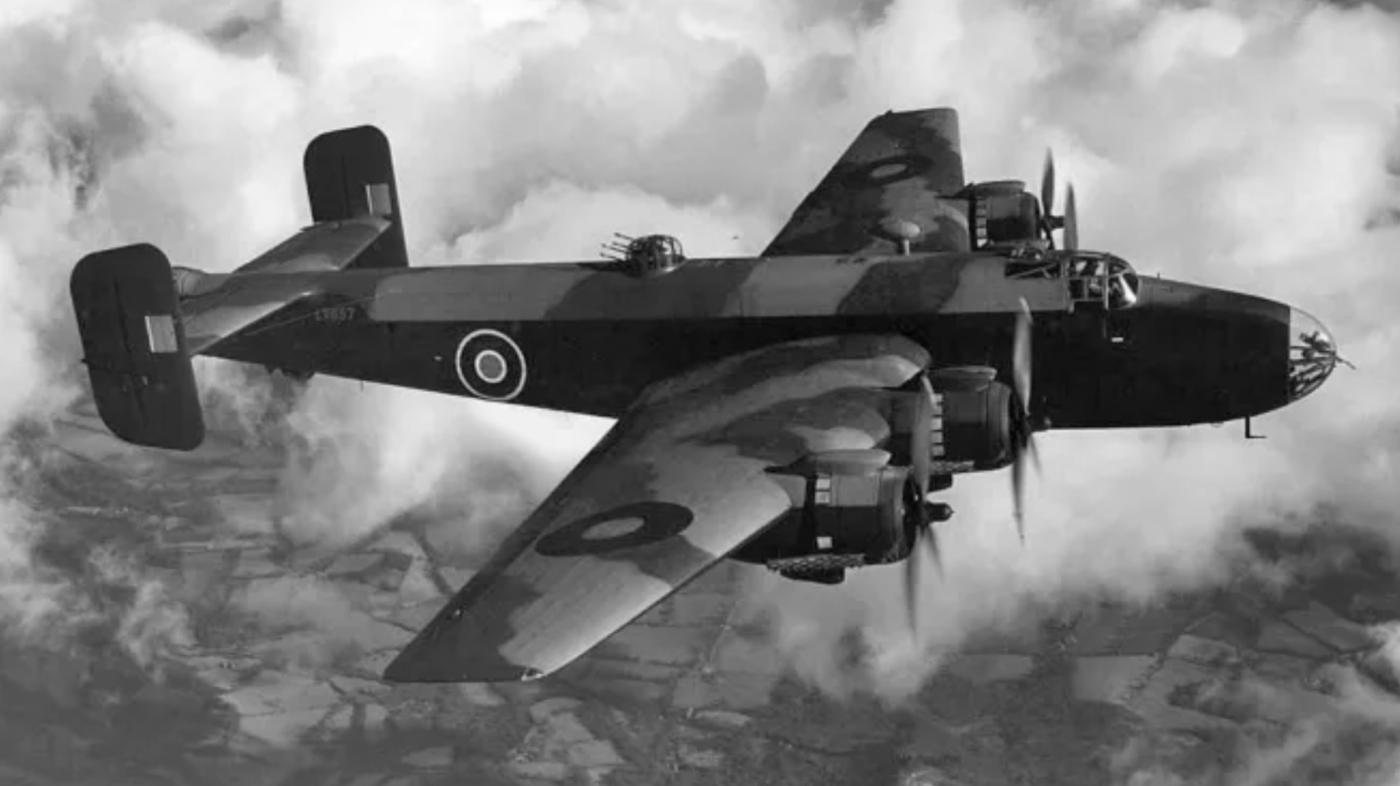
The Handley Page Halifax was one of the Royal Air Force’s principal four-engined heavy bombers of the Second World War and played a major part in the long air offensive against Nazi Germany. It was designed by the Handley Page Aircraft Company under the leadership of George Volkert in response to an Air Ministry requirement issued in the mid-1930s for a modern long-range bomber. The design began as a twin-engined aircraft but was soon reworked into a four-engined machine to meet increasing demands for range, payload and performance. The prototype flew on 25 October 1939, only weeks after the outbreak of war, and production aircraft entered service toward the end of 1940.
This large and imposing aircraft had a wingspan of just over 104 feet and in its early versions was powered by four Rolls-Royce Merlin engines, the same type used in famous fighters such as the Spitfire and Hurricane. Later marks used Bristol Hercules radial engines, which improved reliability and performance in certain conditions. Its deep fuselage and long bomb bay gave it a solid, purposeful look and it quickly became a familiar sight on bomber stations across Britain, especially during the difficult early years of the war.
Production was a vast industrial effort spread across Britain. Handley Page led the programme from its factories at Cricklewood and Radlett, but demand for heavy bombers meant many other firms were brought into the scheme. English Electric built large numbers at Samlesbury and Preston, Fairey Aviation assembled aircraft at Stockport, Rootes Motors produced them at Speke near Liverpool, and the London Aircraft Production Group brought together a network of factories around Leavesden. Hundreds of smaller subcontractors produced parts and assemblies which were then brought together for final construction. At peak output the system was so efficient that completed bombers were being turned out at a remarkable rate. In total, 6,176 were built between 1940 and 1945.
The normal crew consisted of seven men. Up front were the pilot and flight engineer, with the navigator and wireless operator seated behind. In the nose was the bomb aimer, who also operated the front gun when required. The rear of the aircraft was manned by the tail gunner, and many versions carried a mid-upper gunner in a dorsal turret. Each crew member had a clearly defined job and survival depended on discipline, teamwork and calmness under pressure.
Bomb carrying capacity varied according to range and mission, but a typical load on long-distance operations was around 13,000 pounds. On shorter flights it could lift even more. Its long central bomb bay and wing bomb cells allowed it to carry a wide range of weapons, from high explosive bombs to incendiaries and naval mines. During the height of the strategic bombing campaign these aircraft delivered thousands of tons of ordnance against industrial targets, ports, transport systems and military installations across occupied Europe and Germany.
Defensive firepower was heavy for its time. Early versions were fitted with two .303 Browning machine guns in the nose and four in the tail turret. As enemy night fighter tactics improved, extra protection was added. Many aircraft carried a four-gun dorsal turret, bringing the total defensive armament to eight machine guns. Some early machines also had beam guns in the fuselage sides. Even with this protection, night operations were extremely dangerous and losses could be severe, especially in the early years of the bombing offensive.
The first operational mission took place on the night of 10 March 1941, when aircraft were sent to bomb the port of Le Havre in occupied France. This marked the beginning of a long and demanding combat career. From then on the type became a regular participant in major raids on enemy cities and industrial centres such as Hamburg, Berlin and the Ruhr. Over the course of the war more than 80,000 sorties were flown and well over 200,000 tons of bombs dropped.
One of the most interesting features of this bomber was its versatility. Although designed for heavy bombing, it proved adaptable to many other roles. It laid mines in enemy waters, hunted submarines, dropped agents and supplies to resistance groups and towed gliders carrying troops during the D-Day landings and later airborne operations. Some were converted into transport aircraft after the war and continued flying in military and civilian service for several years.
It also developed a reputation for toughness. Crews often told stories of returning home with severe battle damage, engines out and sections of structure shot away, yet still managing to land safely. It may not have had the sleek lines or later fame of the Lancaster, but it was dependable, capable and carried a huge share of the burden during the air war.
By the end of the conflict this four-engined bomber had secured its place in aviation history. With more than six thousand built and an immense operational record, it stood as one of Britain’s most important wartime aircraft and a central part of Bomber Command’s effort. Though sometimes overshadowed in popular memory, its contribution was enormous and its crews played a vital role in the Allied victory.