German Spy
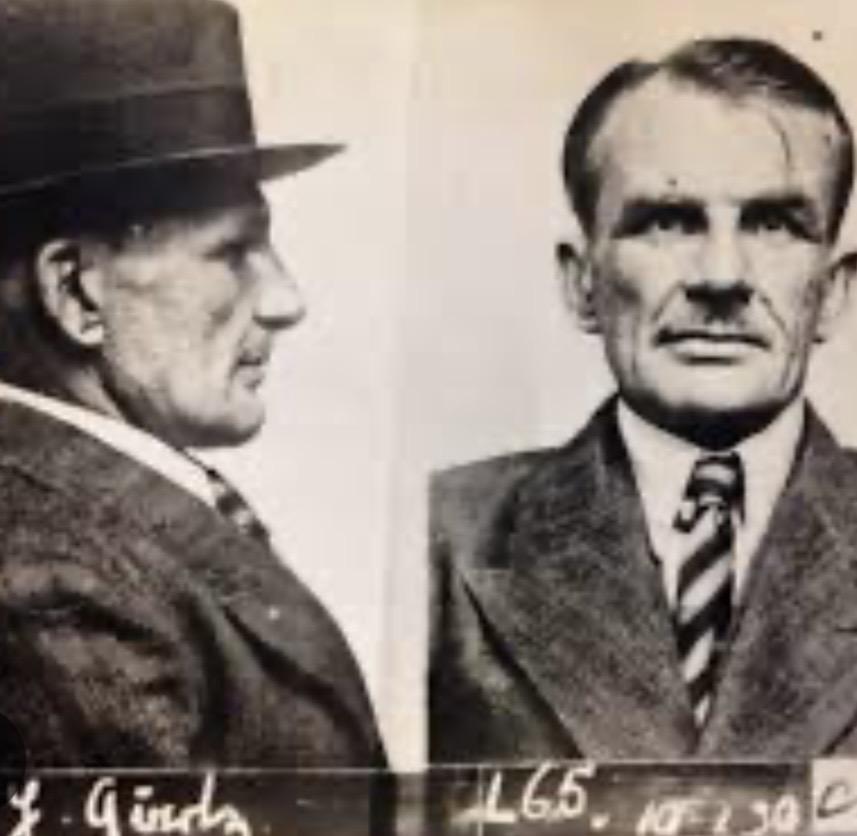
In the early years of the Second World War, neutral Ireland became an unexpected arena for intelligence operations carried out by both the Allies and Nazi Germany. One of the more unusual episodes involved the German spy Günther Schütz, sometimes incorrectly recorded in English sources as “Gunther Schultz.” His mission to Ireland in 1941 quickly went wrong and became one of the strangest intelligence stories connected with the war.
Schütz was an agent of the German military intelligence service, the Abwehr. During the war the Abwehr attempted to place several spies in Ireland, partly because the country was neutral and partly because of its proximity to Britain. Germany hoped to gather intelligence about shipping in the Atlantic, British military movements, and weather conditions that could affect submarine warfare and air operations.
On the night of 12 March 1941 Schütz was flown from German-occupied Europe toward Ireland aboard a German aircraft, most likely a Heinkel He 111. The mission plan was for him to parachute into a rural area near Newbridge in County Kildare. The choice of location was strategic. The area was close enough to transport routes that he could travel discreetly, but rural enough to allow a covert landing.
However, the operation immediately went wrong. Due to navigation errors the aircraft crew dropped him far from the intended drop zone. Instead of landing in County Kildare, Schütz came down roughly one hundred miles away in County Wexford in the southeast of Ireland. He landed near the village of Taghmon during the early hours of the morning. The unexpected arrival of a parachuting stranger quickly attracted attention in the countryside, where such an event was unheard of.
Schütz was carrying a number of items intended to support his mission. Among them were forged identification papers, a quantity of Irish currency, a short-wave radio transmitter and receiver for communicating with Germany, codes for sending encrypted messages, and written instructions outlining his intelligence tasks. Some accounts also mention that he carried survival equipment, maps, and a pistol. The radio set was particularly important, as it would allow him to send regular signals and reports back to Germany once he was established.
His instructions from the Abwehr were relatively limited but still important to German wartime planning. He was expected to send meteorological observations and general intelligence about shipping and coastal activity. Weather information from the Atlantic was extremely valuable to German submarine commanders operating in the Battle of the Atlantic, and Ireland’s western position made it useful for monitoring Atlantic weather systems. He was also supposed to gather economic and military information about Britain through contacts and observation.
Schütz never had a chance to begin the mission properly. Local people quickly reported the suspicious parachutist to the Irish authorities. Ireland maintained a strong internal security system during the war despite its neutrality. The national police force, the Garda Síochána, together with the military intelligence branch known as G2, acted quickly. Schütz was arrested only a few hours after landing, before he could make contact with anyone or hide his equipment.
After his capture he was interrogated by Irish authorities. The Irish government was determined to prevent either side in the war from using Irish territory for espionage or military activity. Although Ireland was neutral, its leadership under Éamon de Valera enforced strict security laws to keep foreign agents under control.
Schütz was interned under Ireland’s wartime emergency powers. He was sent to Mountjoy Prison in Dublin and later to the Curragh internment camp in County Kildare. The Curragh camp held a mixture of people connected to wartime security concerns, including members of the Irish Republican Army and foreign military personnel who had landed in Ireland during the war.
During his imprisonment Schütz managed to establish connections with IRA prisoners. Some members of the IRA were hostile to Britain and therefore sometimes willing to assist German agents, believing that Germany’s conflict with Britain might advance Irish republican goals. Although the Irish government strongly opposed such cooperation, small numbers of IRA members did attempt to help German agents during the war.
In 1942 Schütz took part in a dramatic escape. With assistance from IRA prisoners and sympathisers, he managed to get out of detention. The escape was carefully planned and relied on outside contacts who were willing to provide shelter and transport. For a short time he was free and moving around Ireland while attempting to avoid the authorities.
The escape did not last long. Irish intelligence and police launched an intensive search for the missing spy. Because Ireland had a relatively small population and tight wartime security controls, it was extremely difficult for a foreign agent to remain hidden. Schütz was eventually located and arrested again by Irish authorities. After his recapture he was returned to internment and kept under stricter supervision for the remainder of the war.
Unlike spies captured in many other countries during wartime, Schütz was not executed. Ireland’s policy toward captured agents was usually internment rather than capital punishment, particularly because the country was neutral and did not want to escalate tensions with Germany. As a result, Schütz spent the rest of the war detained but alive.
When the war ended in 1945 the Irish government began releasing or repatriating various foreign internees. Schütz was eventually deported from Ireland and returned to Germany. After the collapse of Nazi Germany and the end of the Abwehr, many former intelligence officers simply returned to civilian life. Schütz largely disappeared from the historical record after his return to Germany, and little reliable information survives about his later life.