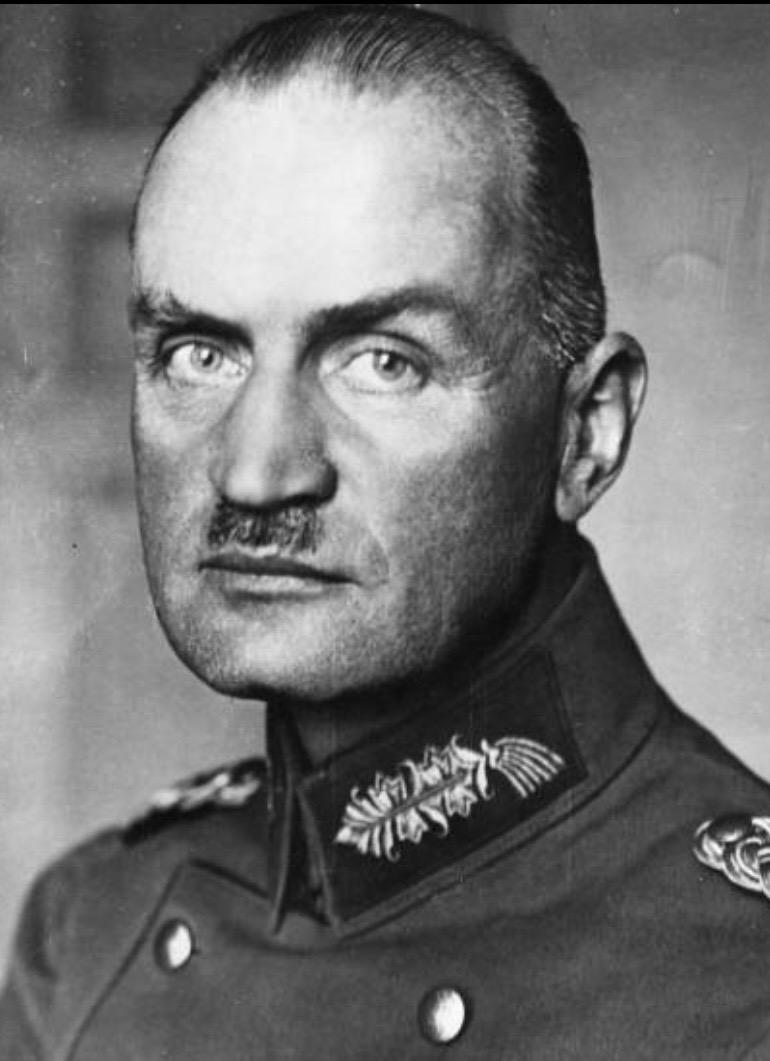
General Johannes Blaskowitz
Johannes Blaskowitz was one of the more professional and morally conflicted senior officers in the German Army during the Second World War. He was born on 10 July 1883 in Paterswalde in East Prussia, a region that produced many officers for the Prussian military tradition. His upbringing was shaped by a disciplined, conservative environment, and he entered the army as a cadet in 1901.
His early military career followed a steady and methodical path. During the First World War, he served mainly in staff roles, gaining valuable organisational experience and earning decorations. After Germany’s defeat, he was retained in the Reichswehr, which reflected his competence, as only a small number of officers were kept. Over the interwar years, he steadily rose through the ranks, becoming known as a disciplined and careful planner. By the start of World War II, he had reached the rank of Generaloberst.
At the outbreak of the war, he commanded the German 8th Army during the invasion of Poland, playing a key role in the campaign. Afterward, he became Commander-in-Chief of German forces in occupied Poland. During this time, he took the unusual step of formally protesting against atrocities committed by SS and police units against civilians and Jews. He submitted reports criticising these actions, which brought him into conflict with Heinrich Himmler and Adolf Hitler. As a result, his career suffered and he was temporarily sidelined.
He later returned to important commands in Western Europe, including leadership roles in France and the Netherlands. One of his most significant positions was commanding Army Group G in southern France following Operation Dragoon. Facing strong Allied forces, he managed an organised withdrawal, though defeat was inevitable.
He was known for being disciplined, methodical, and committed to maintaining order. His leadership style was strict but fair, and he focused on careful planning rather than risky operations. His protests against SS crimes also suggest a concern for military ethics, which set him apart from some other German commanders.
At the end of the war, he surrendered to Allied forces in the Netherlands. He was later put on trial as part of proceedings connected to the Nuremberg Trials. However, before the trial concluded, he died on 5 February 1948 after falling from a balcony at the courthouse, officially ruled as suicide.
His legacy remains complex. He was a professional soldier who served Nazi Germany, yet his recorded objections to brutality highlight a degree of moral conflict, making him a distinctive figure among German generals of the period.