French “Black Tigers”
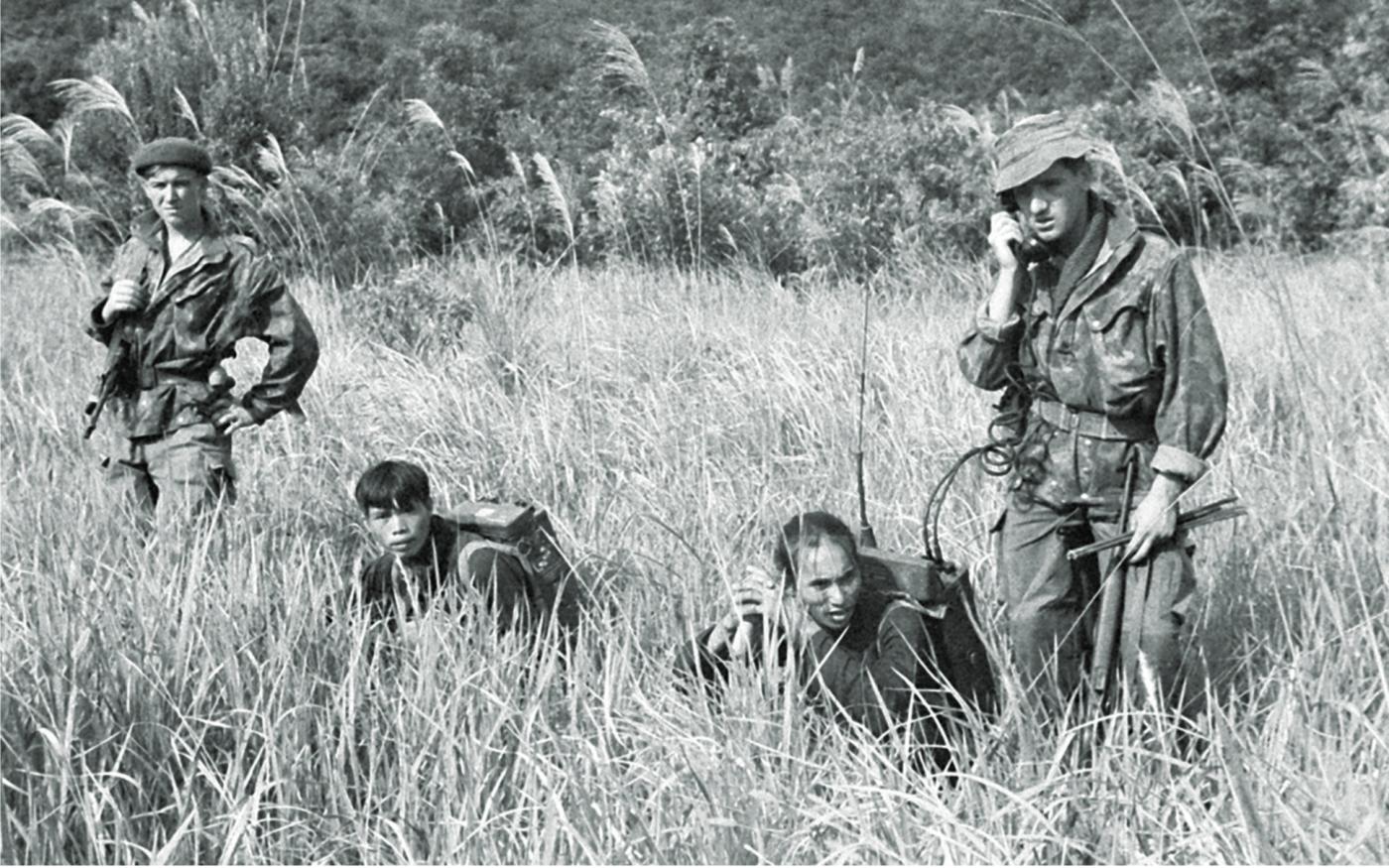
The force often described as the French “Black Tigers” was not a single official regiment but a nickname given to elite French-led commando formations that operated during the First Indochina War from the late 1940s to the early 1950s. These units emerged from the need to counter Viet Minh guerrilla warfare and were composed of French officers and NCOs leading locally recruited fighters drawn from minority groups such as the Nùng, T’ai, Meo (Hmong), and other highland peoples. The nickname came from their black clothing, stealth operations, and reputation for sudden and violent attacks carried out at night or from concealed positions.
The creation of these commando-style formations began after 1946 as French commanders recognised that conventional infantry tactics were ineffective against Viet Minh guerrillas who moved in small units, blended with local populations, and avoided direct battle unless conditions favoured them. In response, the French authorised the formation of highly mobile mixed commandos capable of deep reconnaissance, sabotage, and surprise assault. These groups were later formalised under structures such as the Groupement de Commandos Mixtes Aéroportés, commonly known as the GCMA, and other special irregular formations operating throughout Tonkin, northern Vietnam, Laos, and border regions.
There was never a single unit officially titled “Black Tigers.” The term applied broadly to several commando groups that shared similar methods and appearance. By the early 1950s, these mixed commando and irregular forces collectively numbered several thousand men across Indochina. Individual groups were usually small, ranging from around 50 to 300 fighters, enabling them to operate independently behind enemy lines. They were organised for flexibility rather than conventional military structure and were often inserted into remote areas by parachute, river craft, or long overland marches.
Their tactics centred on mobility, deception, and surprise. These commandos rarely engaged in static defence or large-scale conventional battles. Instead they operated in small detachments, often moving at night and wearing dark clothing to blend into the jungle. Many carried captured Viet Minh weapons alongside French and American arms so they could disguise themselves if necessary and use ammunition obtained in the field. They specialised in ambushes against supply columns, raids on isolated camps, destruction of supply depots, and intelligence gathering deep inside Viet Minh-controlled territory.
Disguise and infiltration were key elements of their method. Commandos frequently dressed as peasants or Viet Minh fighters, allowing them to approach enemy positions without immediate suspicion. Once inside a target area they would strike at command posts, supply stores, or communications points before withdrawing quickly. Their training emphasised silent movement, close combat, and rapid disengagement. Psychological warfare also formed part of their operations, as sudden night attacks and disappearances created a reputation for unpredictability and lethality that spread among opposing forces.
One of the most notable leaders associated with these commando formations was Roger Vandenberghe, a French NCO of Flemish origin who commanded a mixed commando unit largely composed of Nùng fighters in northern Vietnam. His formation embodied the methods and reputation that led to the “Black Tigers” nickname. Operating primarily in the Tonkin delta and surrounding regions between 1950 and 1952, his unit carried out frequent night raids, ambushes, and deep penetration missions against Viet Minh positions. They often travelled by river using small boats or advanced through jungle terrain on foot, striking quickly and withdrawing before larger enemy forces could respond.
Vandenberghe placed great emphasis on deception and infiltration. His commandos sometimes wore captured uniforms and carried enemy weapons to move through contested territory unnoticed. They specialised in approaching Viet Minh camps or controlled villages under cover of darkness or disguise, then launching close-range attacks designed to create confusion and maximum impact in a short time. Their operations destroyed supply caches, captured intelligence, and inflicted steady losses on Viet Minh units operating in the region.
A well-known episode illustrates the boldness of these methods. A bounty had reportedly been placed on Vandenberghe by the Viet Minh due to his effectiveness. He used this to stage a deception in which he posed as a wounded or captured prisoner. Believing they were delivering him to claim the reward, enemy personnel escorted him into a Viet Minh camp. Once inside and at close range to key targets, he produced a concealed weapon and opened fire, killing several fighters. At the same moment his commandos launched a coordinated assault, overwhelming the camp before withdrawing rapidly. The operation demonstrated the reliance on surprise, infiltration, and speed that defined these commando groups.
Throughout their existence these French-led commando formations conducted numerous similar operations across northern Vietnam and Laos. They sabotaged supply routes, gathered intelligence on enemy movements, rescued isolated personnel, and carried out targeted strikes on Viet Minh leadership and logistics. Their effectiveness lay not in holding territory but in constant harassment and disruption of enemy operations. They forced the Viet Minh to divert resources to security and counter-infiltration efforts, complicating their control over remote regions.
Despite their tactical success and fearsome reputation, these units could not change the overall strategic outcome of the war. The Viet Minh continued to expand their forces and improve organisation and supply, particularly after receiving external support from China. Nevertheless, the so-called Black Tigers remained among the most capable and respected formations on the French side throughout the conflict.
Roger Vandenberghe became one of the most decorated soldiers of the Indochina War due to his leadership and repeated acts of bravery. His career ended in 1952 when he was killed by an infiltrator who penetrated his own formation, highlighting the constant risks of operating in an environment where deception and infiltration were used by both sides. The commando groups he represented left a lasting influence on French special operations doctrine and demonstrated the effectiveness of small, highly trained units using irregular warfare tactics against guerrilla forces.