Free French SAS
The Free French Special Air Service was one of the most remarkable and unconventional units to emerge during the Second World War, combining the daring philosophy of British special forces with the determination of French soldiers who refused to accept defeat after the fall of France in 1940. Their story begins with the broader movement led by Charles de Gaulle, who called on French troops and citizens to continue the fight alongside the Allies after the German occupation.
The origins of the Free French SAS can be traced to 1942, when a small number of Free French volunteers were integrated into the British Special Air Service, a unit founded by David Stirling in North Africa. Stirling believed in using small, highly trained teams to conduct deep-penetration raids behind enemy lines, targeting airfields, supply routes, and communication networks. This concept appealed strongly to the Free French, who lacked large conventional forces but had many motivated volunteers eager to strike back at the Axis powers.
The key figure in the formation of the Free French SAS was Georges Bergé, an officer who became the first commander of French paratroopers in the SAS structure. Bergé and his men were initially trained in the United Kingdom after being evacuated from the Middle East. Their early training took place in Scottish and English locations used by British airborne and commando units, where they learned parachuting, sabotage, demolition, navigation, and guerrilla warfare tactics. Training was intense and often dangerous, reflecting the experimental nature of airborne operations at the time. Equipment was limited, and much of their work required improvisation.
The first French SAS unit was officially formed as the 1st Free French Parachute Company. Over time, this expanded into larger formations, eventually becoming the 3rd and 4th SAS Regiments within the British Army structure. These units were composed entirely of French volunteers but operated under British command, maintaining close cooperation with other Allied special forces. By the later stages of the war, several hundred men served in the Free French SAS, with numbers growing as more volunteers joined from liberated territories and overseas colonies. Estimates suggest that around 600 to 800 men passed through these units during the war, though exact numbers vary depending on how they are counted.
Training camps were spread across Britain, with some of the most important facilities located in Scotland, where the rugged terrain provided ideal conditions for preparing troops for infiltration and survival behind enemy lines. Ringway Airfield near Manchester was a key parachute training center, where many French SAS soldiers made their first jumps. Other training locations included commando schools and secret facilities used for instruction in explosives, silent killing, and radio communication. Later in the war, additional training and staging areas were established in southern England in preparation for operations in occupied Europe.
The Free French SAS first saw action in North Africa, where they conducted raids against German airfields, destroying aircraft on the ground and disrupting Axis logistics. These missions were often carried out at night, with small teams infiltrating enemy positions using jeeps or parachuting in. Their effectiveness quickly earned them a reputation for daring and precision.
One of their most significant contributions came during the liberation of France in 1944. In the lead-up to D-Day and the subsequent Allied advance, Free French SAS units were dropped into Brittany and other regions of occupied France to support the Resistance. They organized local fighters, coordinated sabotage operations, and disrupted German troop movements. These missions were extremely dangerous, as captured SAS soldiers were often executed under Hitler’s Commando Order, which denied them the protections normally given to prisoners of war.
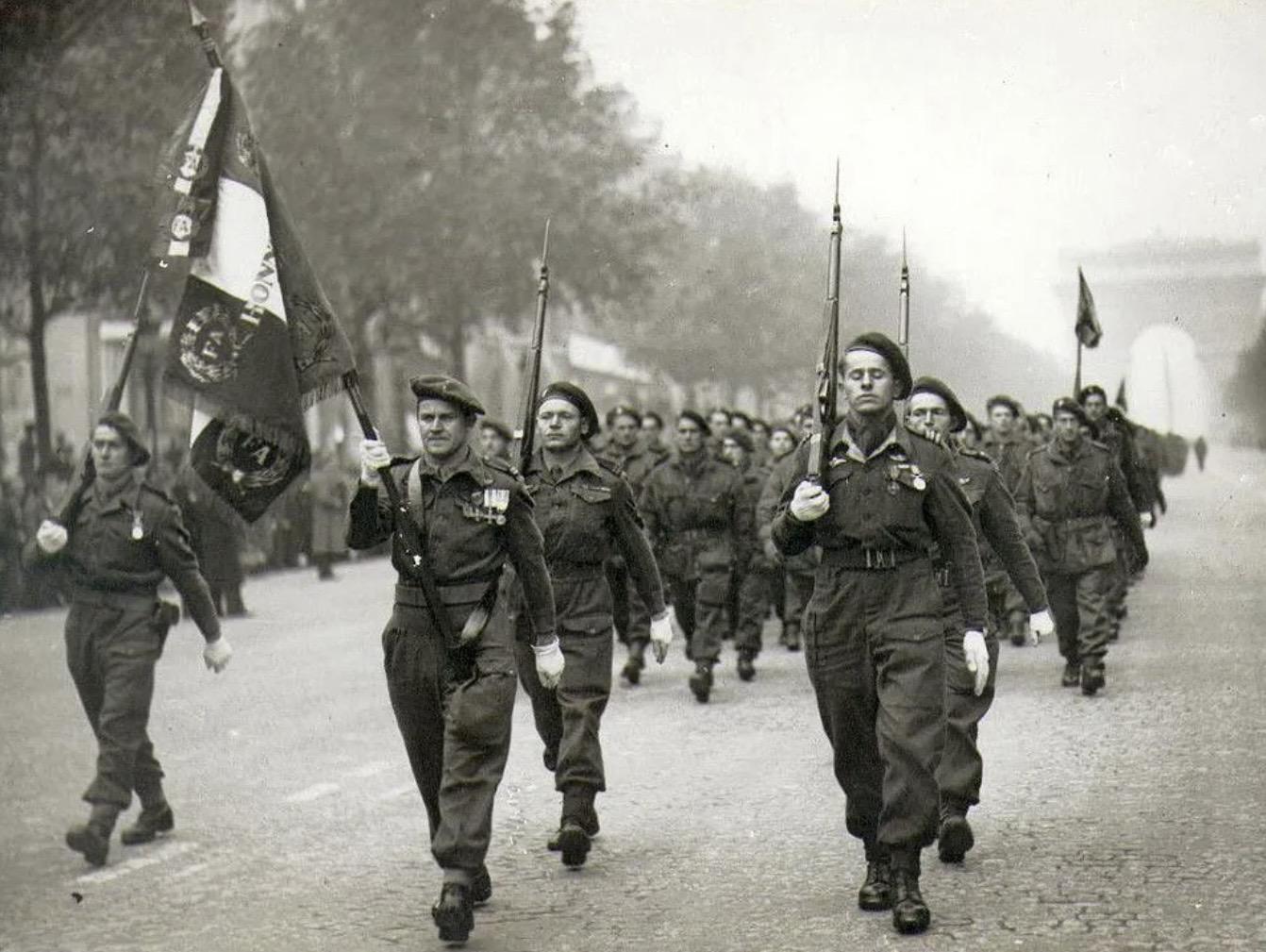
The leadership of the Free French SAS evolved over time, with Bergé playing a foundational role and later commanders continuing to expand and refine the force. Their close integration with the British SAS meant they adopted much of its structure and doctrine, while still maintaining a strong French identity and purpose. They wore the distinctive SAS wings and beret but often combined them with French insignia, symbolizing their dual role.
The camps they were based at shifted depending on operational needs, but Britain remained their primary base for training and planning. After D-Day, forward bases were established in liberated areas of France to support ongoing operations. These included temporary camps used for coordinating with Resistance groups and launching further missions deeper into enemy-held territory.
The Free French SAS distinguished themselves not only through their combat achievements but also through their adaptability and resilience. Many of their members had already experienced the defeat of France, exile, and the uncertainty of fighting in a foreign command structure. Despite this, they became one of the most effective special operations forces of the war, contributing significantly to Allied success in both North Africa and Western Europe.