First Concentration Camp
On 21 March 1933 one of the earliest Nazi concentration camps opened in the German town of Oranienburg, about 20 kilometres north of Berlin. The camp appeared only weeks after Adolf Hitler became chancellor on 30 January 1933 and during the rapid transformation of Germany from a democratic state into a Nazi dictatorship. The opening of this camp marked one of the first steps in what would eventually become the vast network of concentration camps that spread across Germany and later across Nazi-occupied Europe.
The camp at Oranienburg was created by the Sturmabteilung, commonly known as the SA or “Brownshirts”, the Nazi Party’s paramilitary organisation. Local SA leaders were responsible for its creation, particularly members of SA Regiment 208. The decision to open the camp was not initially part of a centralised plan but rather came from local Nazi authorities who wanted somewhere to imprison political opponents. In the weeks after Hitler took power, thousands of people were arrested across Germany, especially Communists and Social Democrats. The existing prison system quickly became overcrowded, and Nazi authorities began establishing makeshift detention centres which became known as the early concentration camps.
The idea behind these camps was closely linked to the political situation in Germany following the Reichstag Fire in February 1933. The Nazi government used the fire as justification to suspend civil liberties and arrest large numbers of political opponents. With police jails filling rapidly, SA units and local authorities began converting buildings such as factories, warehouses, and abandoned industrial sites into detention centres. Oranienburg was one of the earliest and most significant examples of this system.
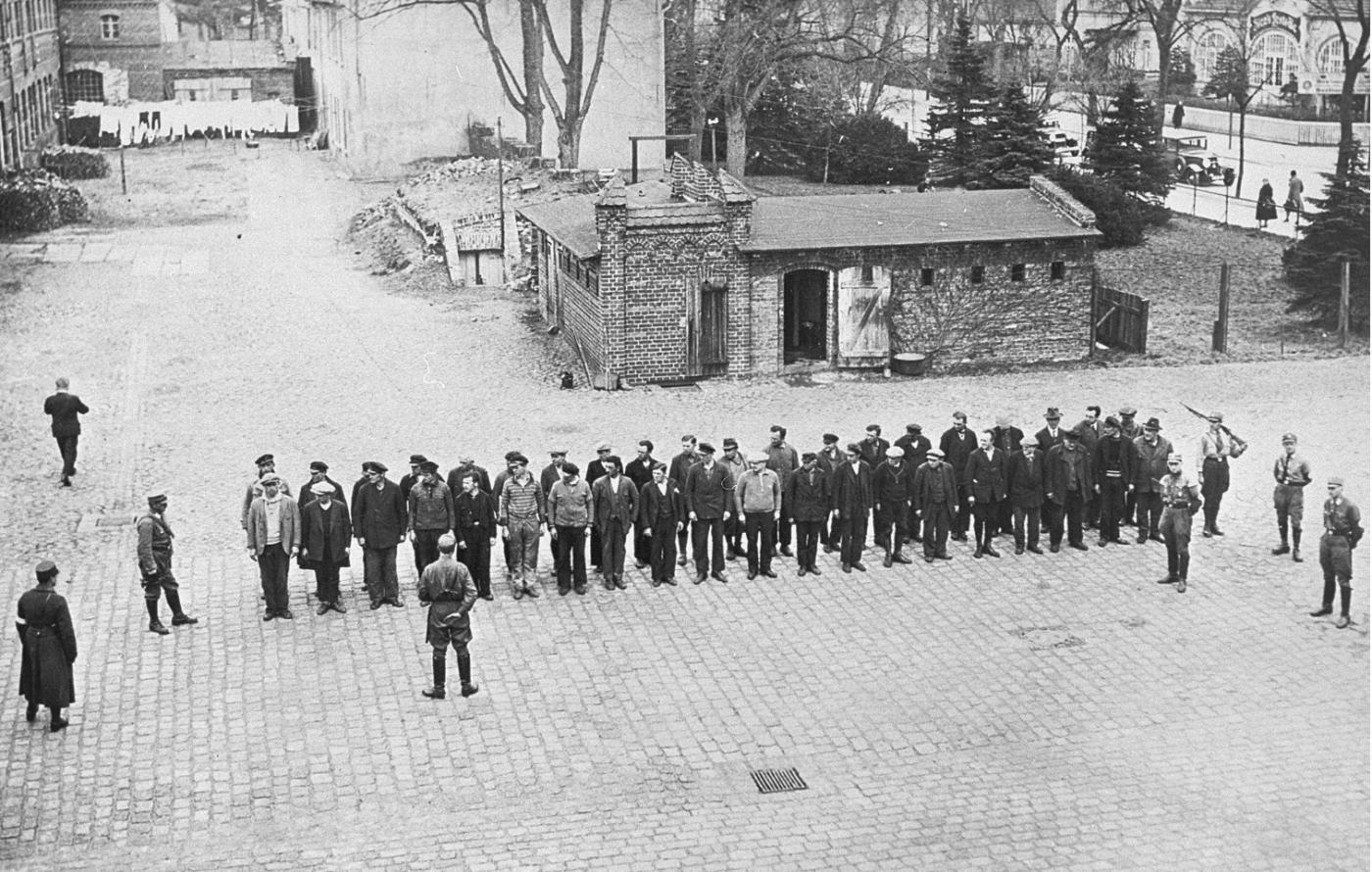
The camp was located in the centre of the town of Oranienburg itself, on the grounds of a former brewery and factory complex. Unlike many later camps which were deliberately isolated in remote areas, this camp was highly visible. It stood along a main road leading to Berlin, and local residents could see prisoners being marched through the streets or working outside under guard. Because of this open location, the camp served as a very visible demonstration of Nazi power and intimidation. The authorities wanted the population to see what could happen to those who opposed the new regime.
The first prisoners arrived on the evening of 21 March 1933. Around forty men were brought to the camp that night. Most of them had been arrested in Berlin during the wave of arrests that followed the Reichstag Fire. The majority were members of the Communist Party or the Social Democratic Party, but others included trade union leaders, journalists, lawyers, and individuals who had spoken publicly against the Nazis. As the months passed, the number of prisoners increased significantly. By the summer of 1933 the camp held several hundred prisoners, and during its existence roughly 3,000 people were imprisoned there.
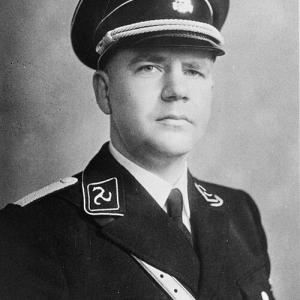
The camp was commanded by SA officer Werner Schäfer, who had previously worked as a policeman and had joined the Nazi Party early. Another important figure was SA Standartenführer Werner Schulze-Wechsungen, who played a major role in organising the camp’s establishment. Although it had been created by the SA, within a short time the camp came under the authority of the local government administration in Potsdam, which meant that the guards and operations were funded by the state. This gave the camp an official status even though its methods were often violent and lawless.
Daily life in the camp was harsh and dangerous for the prisoners. Guards frequently beat inmates and subjected them to humiliating punishments. Prisoners were forced to perform exhausting exercises, stand motionless for long roll calls, and carry out heavy labour. Many were forced to work outside the camp on projects for the town, such as construction or cleaning work. Prisoners often had to march through the streets under guard, which further served to intimidate the local population.
Interrogations were a regular part of life in the camp. Prisoners suspected of political activities were taken to interrogation rooms where SA men attempted to force confessions or information from them. Beatings were common, and some prisoners were subjected to particularly brutal treatment. Guards sometimes used clubs, fists, or rifle butts, and prisoners were occasionally deprived of sleep or forced to stand for long periods as punishment.
The camp also contained a special interrogation department which developed a reputation for brutality. Prisoners who were taken there often returned severely injured. In some cases camp doctors attempted to conceal evidence of violence or falsely record causes of death. The brutality of the guards created an atmosphere of constant fear inside the camp.
At the same time, the Nazi authorities attempted to present the camp to the outside world in a more controlled way. Because Oranienburg was close to Berlin, it occasionally received visits from journalists or foreign observers. During these visits the camp leadership carefully staged what the visitors saw. Prisoners were ordered to behave calmly, exercises were organised to appear disciplined and orderly, and the worst conditions were hidden. The aim was to create the impression that the camp was a place of strict but fair detention rather than a centre of terror.
Some prisoners later managed to reveal what was actually happening inside the camp. One of the most notable was the Social Democratic politician Gerhart Seger, who escaped from Oranienburg in December 1933. After fleeing Germany he wrote a detailed account of the camp and the treatment of prisoners. His testimony became one of the earliest descriptions of Nazi concentration camps published abroad.
Although the camp held thousands of prisoners during its existence, it remained relatively small compared with the massive camps built later. At least sixteen prisoners died there as a result of violence, abuse, or the conditions inside the camp. One of the most famous victims was the German writer and anarchist Erich Mühsam, who had been arrested shortly after the Nazis took power. In July 1934 he was murdered by guards inside the camp.
The camp also reflected the internal power struggles within the Nazi regime. In June and July 1934 Hitler carried out a major purge of the SA leadership in an event known as the Night of the Long Knives. After this purge the SA lost much of its influence, and control over many concentration camps passed to the Schutzstaffel, or SS. This marked an important turning point in the development of the concentration camp system.
Shortly afterwards the Oranienburg camp was closed. In 1936 the SS constructed a new and much larger concentration camp nearby called Sachsenhausen, which became one of the central camps of the Nazi concentration camp network. The earlier camp at Oranienburg therefore represents the first stage in the evolution of the Nazi camp system, when camps were still improvised, locally organised, and used primarily to terrorise political opponents.
Despite its relatively short existence, the Oranienburg camp was historically significant. It demonstrated how quickly the Nazi regime moved to eliminate opposition and establish instruments of repression. The camp also served as an early model for later camps, showing how detention, forced labour, intimidation, and propaganda could be combined into a system designed to crush political resistance and spread fear throughout German society.