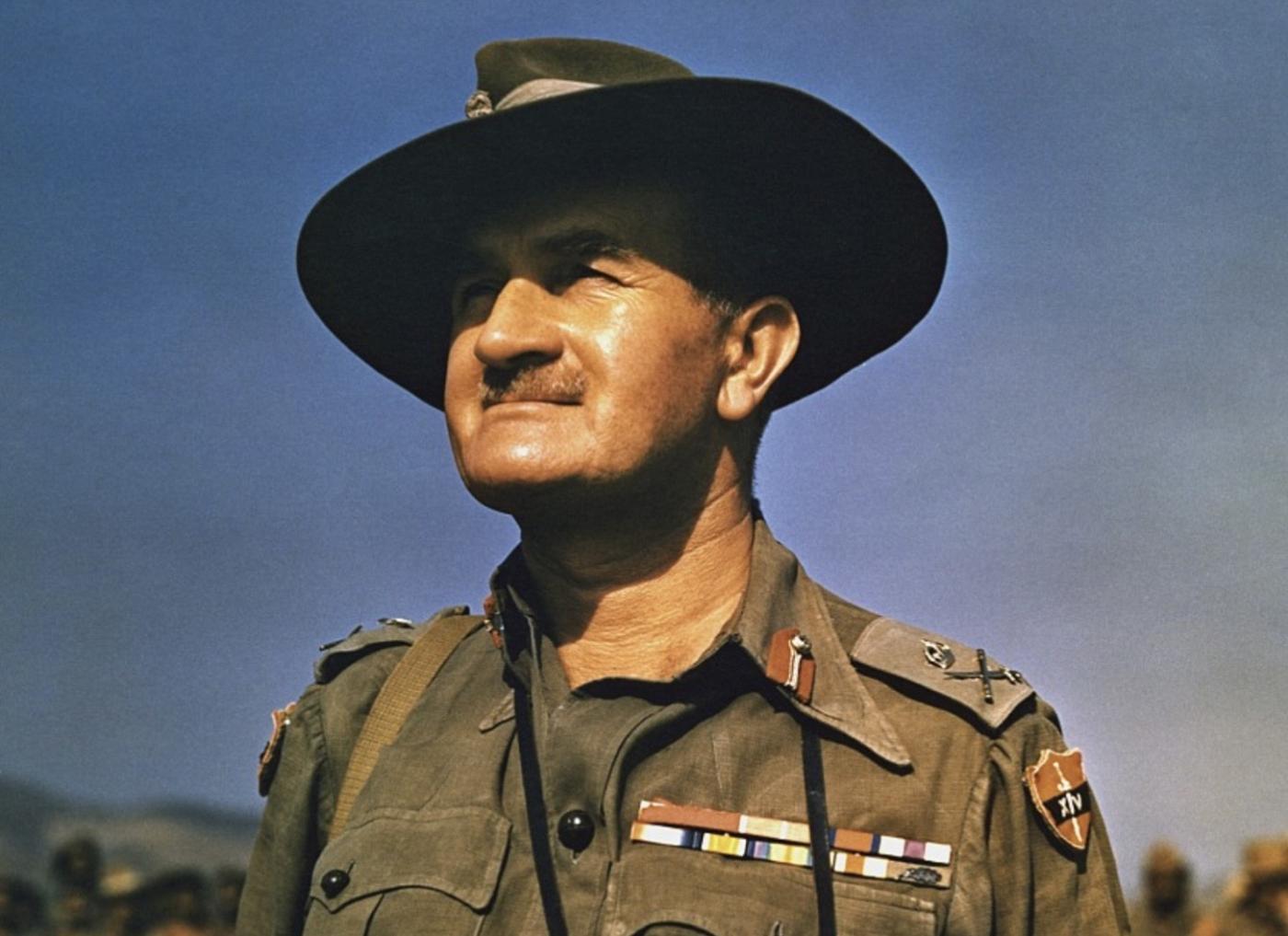
Field Marshal William Slim
William Slim was one of the most respected British commanders of the Second World War, admired for both his battlefield success and his understanding of leadership and morale. Unlike many senior officers of his time, he came from a modest background and rose through ability and experience rather than privilege.
He was born in 1891 in Bristol, England, into a lower middle-class family. His father worked as a clerk, and his early life gave little indication of future military distinction. He was educated at a grammar school and worked first as a teacher and later as a clerk. His entry into the army came through the Officer Training Corps at the outbreak of the First World War, rather than through elite institutions.
He was commissioned into the Royal Warwickshire Regiment and saw action at Gallipoli, where he was wounded, and later in Mesopotamia, where he was wounded again. These early experiences exposed him to the hardships of war and poor leadership at higher levels, shaping his later approach. After the war, he transferred to the Indian Army, where opportunities for advancement were greater.
During the interwar years, he built a steady career, serving in India and Burma and gaining valuable experience in jungle and frontier conditions. He attended the Staff College at Quetta and developed a reputation as a thoughtful and capable officer. By the late 1930s, he had reached the rank of lieutenant colonel.
With the outbreak of the Second World War, his responsibilities increased. He commanded a brigade in East Africa against Italian forces, demonstrating skill in difficult conditions. He was then sent to Burma, where British and Indian forces faced the advancing Japanese army.
The early Burma campaign was marked by defeat and retreat in 1942. Commanding Burma Corps, he managed a difficult withdrawal, preventing total collapse and preserving the core of the force. From this experience, he recognised the need to adapt tactics to jungle warfare and improve morale and supply systems.
He was appointed commander of the Fourteenth Army, later known as the “Forgotten Army.” He focused on training troops for jungle fighting, improving logistics, and restoring confidence after earlier setbacks. One of his key innovations was the use of air supply, allowing forces to operate in remote areas without relying on vulnerable ground routes. He also encouraged troops to stand and fight even when surrounded, countering Japanese tactics.
A major turning point came at the battles of Imphal and Kohima in 1944. Japanese forces launched an offensive into India, but Allied troops held their positions under intense pressure. At Imphal, forces were supplied entirely by air despite encirclement, while at Kohima fierce fighting halted the advance. These victories marked the beginning of a sustained Allied push.
Following this, the Fourteenth Army advanced through Burma, capturing key locations such as Mandalay and pushing toward Rangoon. By 1945, Japanese resistance had collapsed in the region, and the campaign was regarded as a decisive success.
His rise during the war was significant, progressing from brigadier to general and eventually field marshal. His leadership was marked by practicality, calm judgment, and a strong connection with his troops.
After the war, he held senior military roles, including Commander-in-Chief of Allied Land Forces in Southeast Asia. In 1953, he became Governor-General of Australia, serving until 1960 and earning widespread respect for his character and approachability.
He later wrote Defeat Into Victory, a highly regarded account of the Burma campaign and his leadership experiences. He was elevated to the peerage as Viscount Slim and remained known for his modesty despite his achievements. He died in 1970, remembered as one of Britain’s most effective and respected commanders.