Ferdinand Schörner
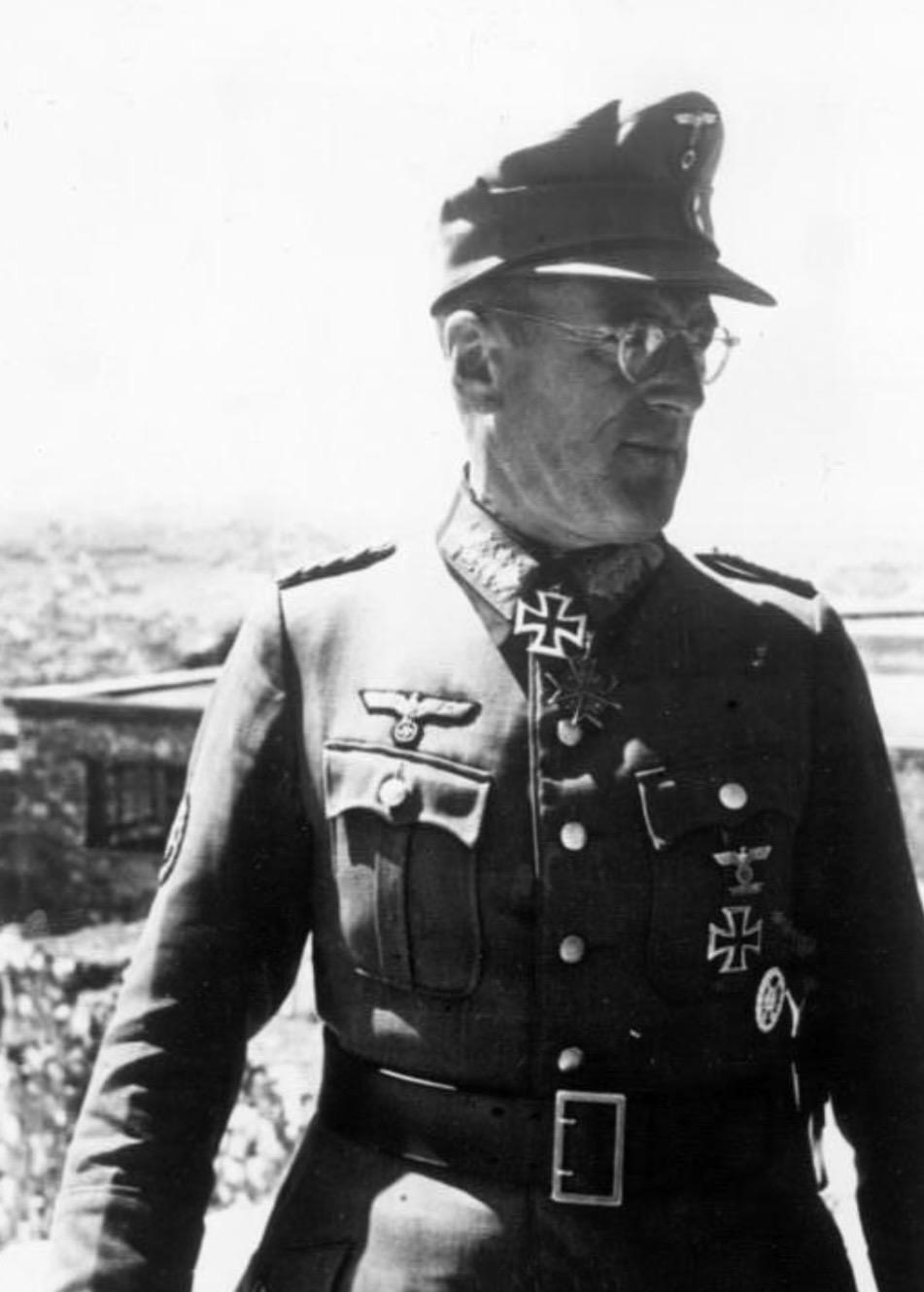
Ferdinand Schörner was one of the most controversial and hardline commanders in Nazi Germany’s military during the Second World War, known for his ruthlessness toward his own troops and his loyalty to Adolf Hitler. His life traces a path from a modest Bavarian upbringing to the highest rank in the Wehrmacht, followed by disgrace and imprisonment.
He was born on June 12, 1892, in Munich, the son of a police officer. Unlike many senior German officers, he did not come from an aristocratic or military elite background. His upbringing emphasized discipline and obedience, traits that would later define his leadership style. He joined the Bavarian Army in 1911 and served in World War I, fighting on multiple fronts and earning decorations for bravery while being wounded several times.
After the war, he remained in the Reichswehr during the Weimar Republic. Promotion was slow due to strict limits imposed by the Treaty of Versailles, but his competence allowed steady advancement. He also pursued studies in geography and economics, helping shape his strategic thinking. His career accelerated after the rise of the Nazi Party, which he joined in 1937, aligning himself closely with the regime.
During World War II, he gained recognition in Poland, the Balkans, and especially in mountain warfare, commanding elite Gebirgsjäger units. He became known for operating effectively in difficult terrain and later for his defensive skills on the Eastern Front as German forces retreated under Soviet pressure.
His reputation, however, was marked by extreme harshness. He enforced strict discipline, often ordering executions of soldiers accused of desertion or cowardice. These methods sometimes stabilized collapsing units but made him widely feared and unpopular. Despite this, Hitler valued his ability to restore order in desperate situations.
By 1945, he had risen to field marshal and was given command of Army Group Center. In the final days of the war, Hitler even appointed him Commander-in-Chief of the German Army. However, as defeat became inevitable, he fled westward to surrender to American forces, a decision seen as contradictory to his rigid discipline.
Captured by the Americans and later handed to the Soviet Union, he was convicted as a war criminal and imprisoned. After being transferred to West Germany, he was tried again and served additional time for ordering unlawful executions of his own troops.
Released in the 1960s, he lived quietly until his death on July 2, 1973, in Munich. His legacy remains deeply controversial: a capable defensive commander in military terms, but widely condemned for his fanatic loyalty to Hitler and his brutal methods, which reflected the darker nature of command within Nazi Germany.